
Vandaag of morgen in huis

Kwaliteit gegarandeerd

Welkomstaanbiedingen ontgrendelen: GRATIS bezorging | Tot 80% korting | Gratis 30 dagen JoyPlus-proefperiode
Download de app
A storage cabinet can quickly create extra space in a bedroom, kitchen, utility room, garage or office. However, not every cabinet or shelving unit is suitable for every situation. A model that looks spacious in a product photo may actually be too deep, have insufficient load capacity or be difficult to position safely.
So pay particular attention to these common pitfalls:
The right choice depends on what you want to store and how often you need to access it. Open compartments or a kitchen organiser are handy for everyday items. Storage boxes and containers offer better protection against dust for clothes, toys or seasonal items. In a garage or shed, a metal shelving unit is often a more sensible choice than a lightweight living-room cabinet.
A compact shelf can make use of unused height without taking up much floor space. A storage rack with two or three levels is suitable for spice jars, food storage containers, toiletries or towels. Measure the depth of the worktop beforehand and check that the surface is level.
For drawers, drawer organisers in different sizes are practical. They keep cutlery, make-up, cables or small accessories separate. For damp areas, preferably choose plastic and dry the organisers regularly.
For storing clothes, lidded boxes or fabric baskets are a flexible solution. When choosing an insert for a cabinet, check the standard size of your compartments. For example, a 31 × 31 × 31 cm storage basket will not automatically fit every compartment, even if the cabinet appears spacious enough.
A stackable plastic storage box is suitable when you want to find the contents quickly. Transparent models make the contents visible, while opaque boxes create a tidier appearance.
For tools, paint tins and supplies, a garage storage rack or metal shelving unit is generally more practical. Check the following:
A tall shelving unit must stand on a stable, level surface. Use the supplied fixing kit according to the instructions and place heavy items as low down as possible.
Make a note of the maximum width, height and depth of the available space. Also consider the dimensions of the items themselves. A pantry cabinet with deep shelves is not always efficient for small packages; drawer organisers or smaller storage boxes may work better.
A stated load capacity is only useful when it is clear what it applies to. Some products specify the weight per shelf, while others state it per box or for the complete unit. Do not exceed the stated limit and distribute heavy items evenly.
For example, the product information for the JOYFURNOS shelving unit below states a maximum of 120 kg per shelf and 600 kg for the complete unit. These are product specifications; actual stability also depends on assembly, the surface and how the load is distributed.
Also pay attention to warnings relating to heat, naked flames, stacking height and wall anchoring. This information should be included in the product description.
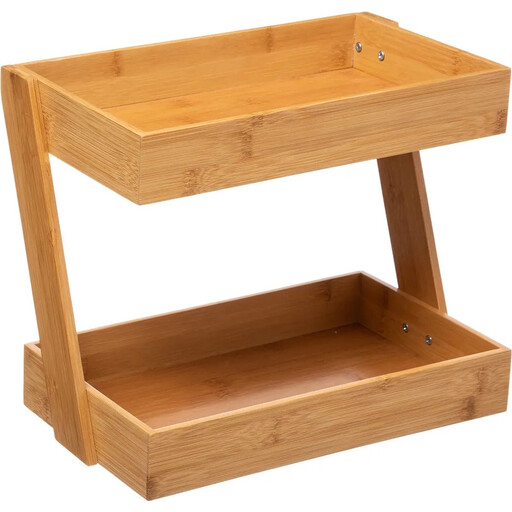
Why it suits this profile: This compact shelf takes up little space and can be used in a kitchen, student room, bathroom or home office.
The dimensions of 31.5 × 22.5 × 26 cm are clearly stated. This means you can check in advance whether the shelf will fit on your worktop or in a cabinet compartment.
Two levels, bamboo, MDF and steel; assembly is required. The maximum load capacity is not specified, so use this shelf for lightweight items.

Why it suits this profile: A household looking to organise small items neatly gets three boxes with clip-on lids and a transparent design.
You can see the contents without opening the lid. The product information also states a maximum load of 5 kg per box.
Set of three, stackable with lids and nestable without lids; capacity per box 14 litres.
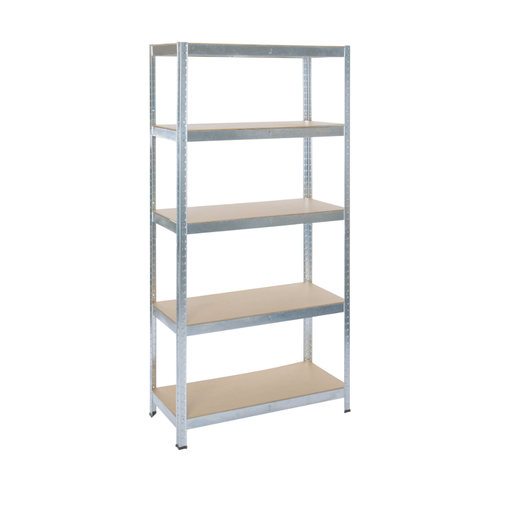
Why it suits this profile: For a garage, workshop, cellar or shed where tools, boxes and supplies need to be stored efficiently.
The load capacity is specified as a maximum of 175 kg per shelf and 875 kg in total. Wall mounting is recommended; fixings are not included.
Five adjustable MDF shelves, a galvanised steel frame and a screwless click system. In damp areas, MDF shelves require additional protection.
We have put together a complete, up-to-date list of products that fully meet these strict selection criteria and the applicable European safety regulations.
Before ordering, create a simple plan:
For a family, several plastic storage boxes may be useful, while a student may get more from a compact shelf or foldable basket. A DIY enthusiast is more likely to choose an adjustable metal shelving unit with clearly stated load capacities.
That depends on the available space and the items you want to store. Measure the width, height and depth, and leave room for doors, drawers and ventilation. Do not place a tall cabinet directly in front of a door or on an uneven floor.
Its lifespan depends on the material, load, moisture and assembly. Plastic boxes are easy to maintain, while MDF shelves must be kept dry. Check the fixings regularly and do not use a cabinet beyond its stated load capacity.
Often, yes, for tools, supplies and heavy boxes, provided the floor is level and the shelving unit is assembled correctly. Use an anti-tip safety feature when one is supplied or recommended. Protect MDF shelves from water and condensation in damp areas.
