
Vandaag of morgen in huis

Kwaliteit gegarandeerd

Welkomstaanbiedingen ontgrendelen: GRATIS bezorging | Tot 80% korting | Gratis 30 dagen JoyPlus-proefperiode
Download de app
A storage cabinet can quickly bring order to a bedroom, hallway, bathroom, kitchen or home office. Yet many people buy a cabinet that proves less useful than expected after just a few weeks. The problem is often not its appearance, but its dimensions, load capacity and how it will be used.
This guide helps Dutch households, students and families compare storage furniture offers critically. That way, you can choose a cabinet that suits your space and what you want to store in it.
A cabinet that is 40 cm deep may seem compact, but doors, skirting boards and handles can require additional space. So measure more than just the available wall space:
For a small hallway, a narrow shoe rack may be more practical than a deep cabinet. In a student room, a mobile storage cabinet may sometimes work better than a fixed wardrobe.
Having lots of shelves does not automatically mean that you can put heavy books, crockery or tools on them. Check whether the manufacturer specifies the maximum static load per shelf, drawer or top surface. It is best to put heavy items at the bottom and distribute the weight evenly.
For a cabinet with drawers, the load capacity per drawer is also important. Fabric drawers are suitable for lightweight clothing and accessories, but less suitable for heavy shoes or books.
Assembling a cabinet without tools sounds convenient, but the surface must be level and all connections must be properly secured. Tall, narrow models and cabinets with doors or drawers often need to be attached to the wall using the supplied anti-tip fittings.
This is not a minor detail. Do not let children climb on shelves or stand in drawers. Also, do not move a fabric wardrobe while it is full unless the product instructions expressly allow it.
First decide what you want to store:
An adjustable shelf is practical when you want to store both low boxes and tall bottles or files.
A cabinet made from MDF, chipboard, metal, plastic or fabric will have different properties. Metal and plastic are generally easy to wipe clean. MDF and chipboard require more care in damp areas, so check whether the product is intended for bathroom use.
A fabric cabinet can be lightweight and easy to move. According to the product specification, the cover of JOYFURNOS wardrobes is made from 120 g/m² non-woven fabric, with 16 mm metal tubes. The hanging rail has a stated maximum static load of 15 kg, while each shelf can hold 5 kg. These details are more useful than a general description such as “extra sturdy”.
Check whether the package includes an anti-tip kit and whether you can attach the cabinet to a suitable wall. This is particularly important for a tall bookcase or a heavy storage cabinet.
Also pay attention to the assembly method. Some models use numbered parts, while others use click-fit connections or magnetic closures. Keep the instructions and, after assembly, check that all shelves are properly positioned and that the doors do not stick.
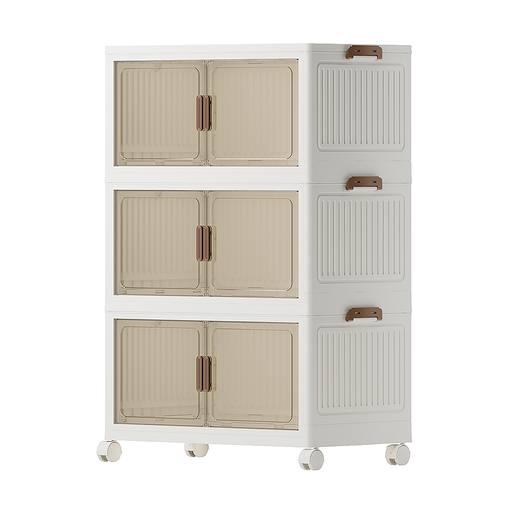
Why it suits this profile: This compact plastic model is designed for books, toiletries, snacks or office supplies, making it a flexible first storage solution.
The three tiers make the layout easy to see, while the smooth PP plastic is simple to wipe clean. Use the model on a level surface and do not exceed the stated load capacity.
Tool-free click assembly, a compact design and plastic that can be cleaned with a soft cloth.
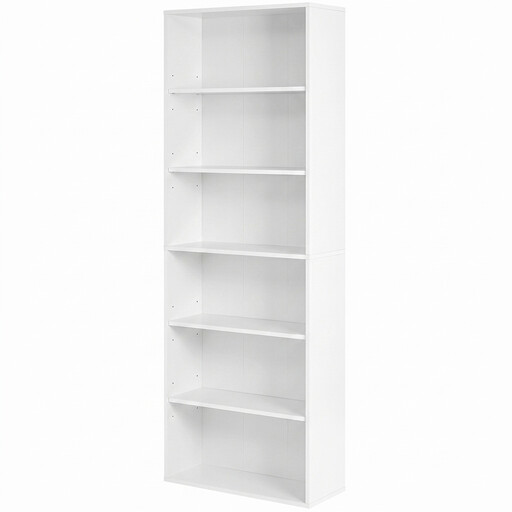
Why it suits this profile: The tall, narrow bookcase makes good use of vertical space in a living room, dining room or home office and provides six open compartments.
The product specification states dimensions of 24 x 60 x 178,5 cm and a maximum static load of 5 kg per shelf. This helps you distribute books and decorations more realistically.
Four internal shelves are height-adjustable, and the supplied anti-tip kit allows the unit to be secured to the wall.
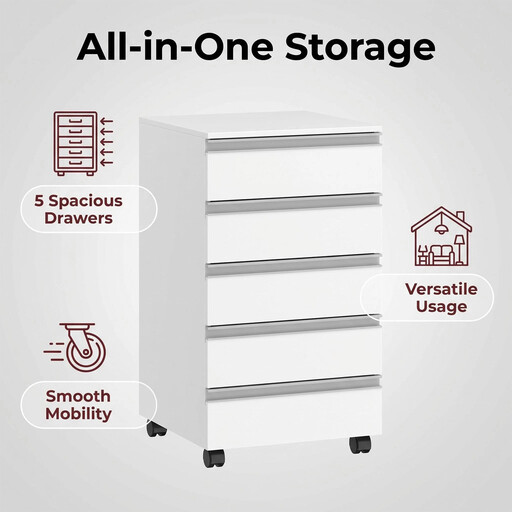
Why it suits this profile: This mobile storage unit is designed for offices, studios and workshops where documents, tools or materials are regularly moved around.
The specification lists five deep drawers, reinforced drawer runners and a total maximum load of 50 kg. Even so, distribute heavy contents evenly and check the stability before moving it.
Dimensions of approximately 40,5 x 40,5 x 65,5 cm, lockable castors at the front and a flat top surface for small equipment.
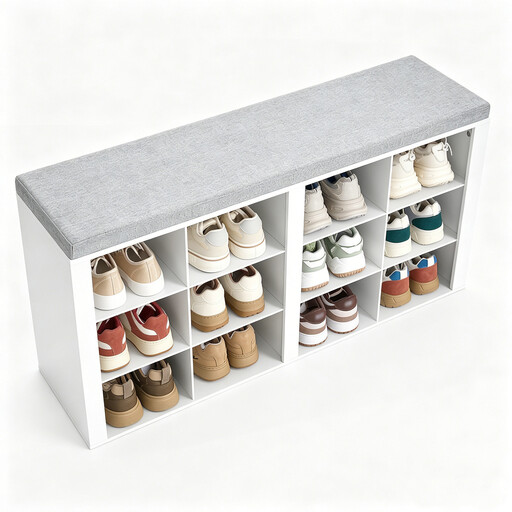
Why it suits this profile: This shoe rack with bench is ideal for a hallway where shoes, seating and everyday accessibility come together.
The shelves are height-adjustable, so tall shoes and boots do not automatically have to be left outside the cabinet. However, check the available space in your hallway.
Twelve compartments, dimensions of 30,5 x 104,5 x 49,5 cm and a stated load capacity of 150 kg for the unit.
We have put together a complete, up-to-date list of products that fully meet these strict selection criteria and the applicable European safety regulations.
Start by considering the available width and depth. A tall bookcase, narrow wardrobe or wheeled cabinet makes good use of vertical space without taking up much floor area. Always check that doors and drawers can still open fully.
Place the cabinet on a level surface, put heavy items at the bottom and use the supplied anti-tip fittings. When securing it to a wall, the plugs and screws must be suitable for the type of wall. Follow the assembly instructions and do not move a filled cabinet without good reason.
Its lifespan depends on the material, load, moisture levels and assembly. Follow the stated load capacity, avoid prolonged exposure to moisture or direct sunlight, and clean surfaces according to the product instructions. A cabinet designed for lightweight items will not automatically remain suitable for heavy boxes or tools.
