
Vandaag of morgen in huis

Kwaliteit gegarandeerd

Welkomstaanbiedingen ontgrendelen: GRATIS bezorging | Tot 80% korting | Gratis 30 dagen JoyPlus-proefperiode
Download de app
A storage cabinet may seem like a simple purchase, until the doors won’t close properly, the shelves start to sag or the cabinet turns out to be too deep for the space available. If you focus only on colour and price, you could end up with a cabinet that’s not very useful in practice.
The most common pitfalls are:
So use verifiable product specifications as your starting point. The right storage cabinet depends on what you want to store, how often you need to access it and where you plan to put it.
Note down not only the available width and height, but also the depth. A storage cabinet with doors also needs enough room for them to open. A wall cabinet may be more practical than a freestanding model in a narrow workspace. If you’re mounting it on a wall, check that the wall can support its weight and use fixings suitable for the wall type.
A cabinet measuring 40 × 60 × 90 cm may suit an office or garage, while a model measuring 100.5 × 32 × 100.5 cm offers more vertical storage space. Also check the packaging dimensions if the cabinet needs to go up a narrow staircase or through a doorway.
A metal storage cabinet is practical for a garage, workshop or office where moisture, dust and frequent use are factors. Product descriptions for various metal models say that steel is easy to clean and moisture-resistant; always check the specific details for the product you choose.
A cabinet made from chipboard or engineered wood often works better in a home or workplace. For example, a wall cabinet with doors can keep documents, media equipment or household items out of sight. For heavy items, the load capacity of each shelf and the construction are just as important as the overall load capacity.
A storage cabinet with adjustable shelves makes it easier to store tall boxes, ring binders or tool cases. A lockable model is useful if documents, materials or personal belongings need to be kept out of other people’s reach. Check that the lock is included and that keys come with the product.
A filing cabinet on wheels can be useful in a home office if you regularly move documents or accessories between work areas. Check the type of wheels, whether they have brakes and how stable the cabinet is when the drawers are open. A filing cabinet with drawers is particularly suitable for paperwork, while a garage cabinet with adjustable shelves is more versatile for tools and supplies.
The options below are matched to the stated dimensions, materials, load capacities and features. Product claims are based on the relevant product descriptions, so features such as moisture resistance or rust resistance are not presented as independently verified performance.
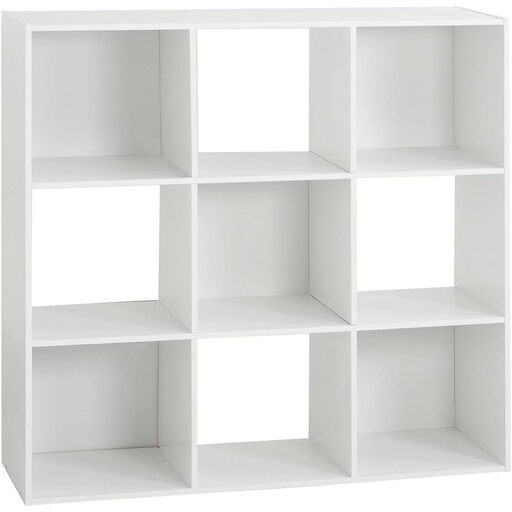
Why it suits this need: This slim cabinet takes up little floor space and has three doors to keep your belongings out of sight. It’s a good fit for a hallway, study, garage or small storage area.
The dimensions and maximum load are specified: 34.4 × 32 × 100.5 cm and up to 60 kg. This lets you check the cabinet against your available space and the items you plan to store.
Three doors, a maximum load of 60 kg, an FSC mention in the product information and a relatively shallow depth.
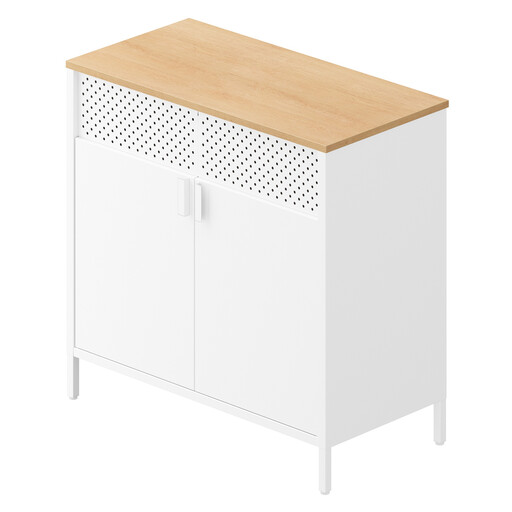
Why it suits this need: This model combines a steel cabinet with an adjustable shelf and double doors. It’s well suited to a home office, living room or multipurpose workspace.
The shelf is adjustable, so you’re not limited to a single compartment height. The product information also lists an anti-tip kit; follow the instructions to secure the cabinet to the wall.
Steel construction, dimensions of 40 × 80 × 76 cm, an adjustable shelf and a maximum static load capacity of 50 kg for the top panel.
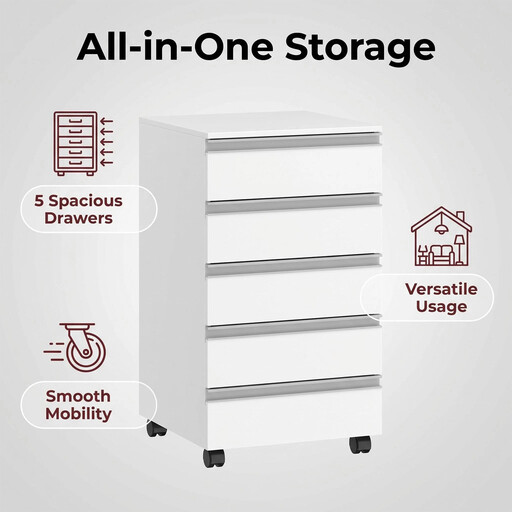
Why it suits this need: This mobile drawer cabinet is designed for documents, drawings, tools and office supplies that you often move or organise. According to the product description, the top can be used for small equipment.
Rather than one large compartment, this model has five drawers and 360° swivel wheels. According to the product information, the front wheels can be locked to keep the cabinet in place.
Five drawers, wheels, approximate dimensions of 40.5 × 40.5 × 65.5 cm and a stated total load capacity of 50 kg.
We’ve put together a complete, up-to-date list of products that meet these strict selection criteria and the applicable European safety requirements.
A filing cabinet on wheels, a cabinet with doors or a slim filing cabinet are all practical options for a home office. Choose drawers for documents you need often, and doors for equipment or supplies you’d rather keep out of sight. Check that the cabinet will fit under or beside your desk.
Put heavy items at the bottom, distribute the weight across the shelves and secure tall cabinets to the wall if the instructions recommend it. For a wall cabinet, use screws and wall plugs that are suitable for your wall. After assembly, check that the cabinet is stable and the fixings are secure.
Its lifespan depends on the material, load, assembly and frequency of use. A metal cabinet may be practical in a frequently used space, while engineered wood may suit everyday use indoors. Avoid overloading it, handle drawers and doors with care, and follow the manufacturer’s care instructions.
