
Vandaag of morgen in huis

Kwaliteit gegarandeerd

Welkomstaanbiedingen ontgrendelen: GRATIS bezorging | Tot 80% korting | Gratis 30 dagen JoyPlus-proefperiode
Download de app
A storage cabinet needs to do more than keep things out of sight. In a Dutch home, every centimetre counts: a cabinet needs to fit in a narrow hallway, support the weight of books or crockery and be suitable for the humidity in a bathroom. Yet many buyers focus mainly on colour and price, which can lead to predictable problems.
A cabinet that’s 32 cm deep may look compact, but remember to check the skirting board, doors and clearance needed to move around it. Measure the available space in three places: height, width and depth. Also leave room for assembly and, if applicable, for opening doors or drawers.
The stated load capacity doesn’t always apply to each shelf. It may refer to the whole unit, or there may be a separate limit for each compartment. For example, a cabinet with a maximum load capacity of 35 kg may have a limit of 5 kg per shelf. Spread heavy items across several levels and store books, tools or supplies on the bottom shelves.
An open cabinet, bookcase or cube storage unit is easy to access, but dust is more noticeable. For documents, an A4 file holder may be more practical than loose piles. Not every wooden cabinet is suitable for a bathroom: MDF and chipboard can swell if exposed to moisture for long periods. Check the recommended use and dry surfaces promptly.
Choose the layout based on what you want to store:
For a tall or narrow cabinet, check whether wall fixing is recommended. A cabinet with a high centre of gravity can topple if heavy items are stored at the top or someone hangs from it.
Chipboard and MDF are common materials for affordable indoor furniture. They’re easy to wipe clean, but need protecting from excessive moisture. Bamboo has a different look and is often used for a bamboo storage cabinet in the bathroom or bedroom. Good ventilation is still important.
A transparent storage rack is handy when you want to see what’s inside at a glance. A cabinet with doors keeps items more out of sight and reduces visual clutter. Check the following for every model:
Self-assembly is common for compact cabinets. Check whether you can assemble it on your own or will need another person to help. Place the unit on a level surface and retighten the fixings after a while if the instructions recommend it. Suitable anti-tip hardware is important for a tall cabinet. Use the right fixings for plasterboard, brick or concrete walls.
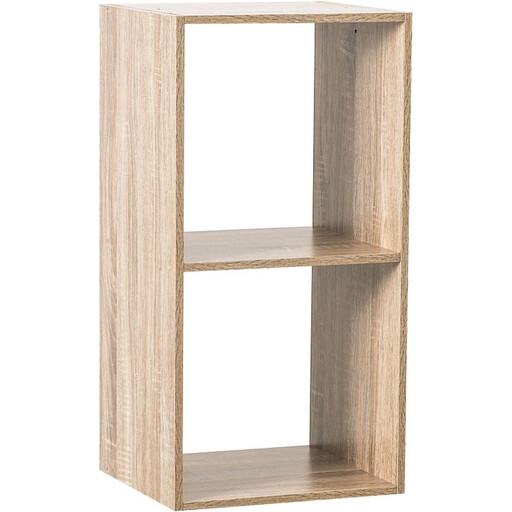
Why it suits this buyer: At 34.5 cm wide and 67.6 cm high, this compact cabinet fits neatly in a bedroom, hallway or home office. According to the product information, it’s designed to be assembled by one person and takes around 30 minutes to put together.
The external dimensions and maximum load capacity of 25 kg are clearly stated. This makes it easier to decide in advance whether the cabinet is suitable for light accessories, books or documents.
Open compartments, one shelf and an indoor unit with an FSC label; its dimensions make it a good fit for smaller spaces.
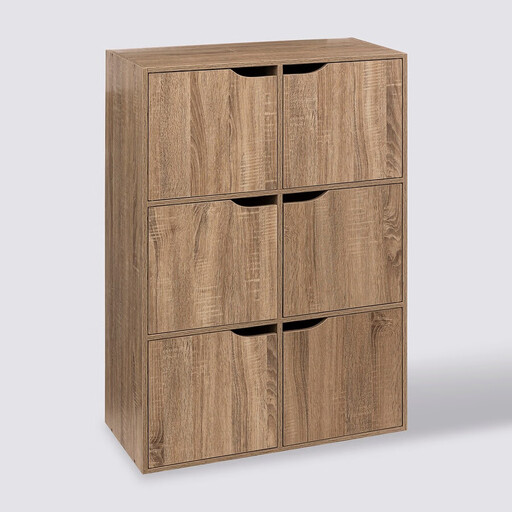
Why it suits this buyer: This model has six compartments behind doors and measures 67.5 cm wide and 100.5 cm high. It’s a good choice if you want to keep items out of sight and value a higher stated total load capacity.
The product information states a maximum load capacity of 90 kg, that assembly requires two people and that it takes around 60 minutes. Make sure you distribute the weight evenly.
Six doors, an MDF back panel, chipboard construction and an FSC label; ideal for organised, closed storage indoors.
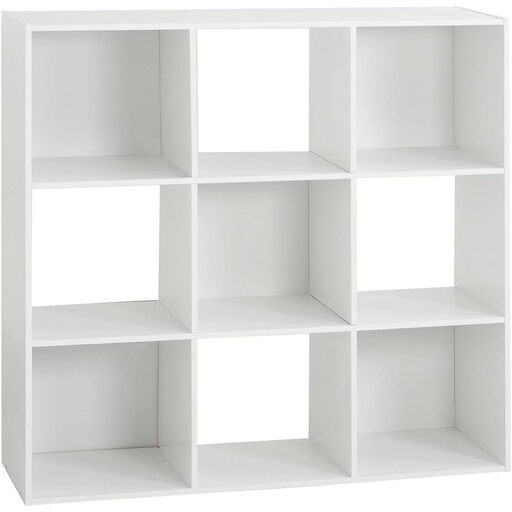
Why it suits this buyer: The nine compartments give toys, baskets, books or household items a place of their own. Measuring 100.5 × 32 × 100.5 cm, this cube storage unit makes use of a wide stretch of wall without taking up extra depth.
You can check the layout and maximum load capacity of 65 kg in advance. According to the product information, the unit can be fixed to the wall or placed on the floor.
Nine compartments, a back panel and an FSC label; ideal for families who want to keep different categories separate.
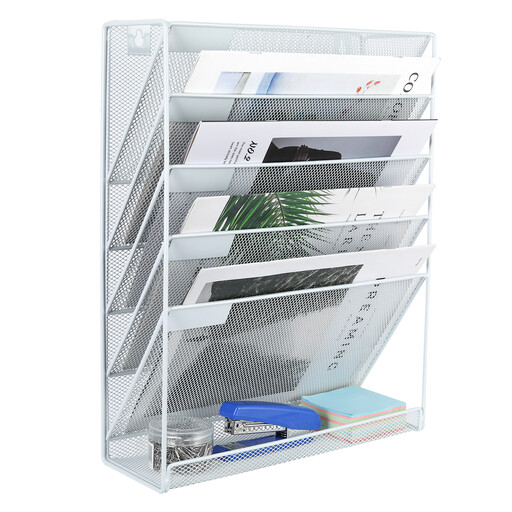
Why it suits this buyer: If you handle bills, post and work documents every day, making use of vertical space can help. This metal wall organiser has six A4-sized compartments and, according to the product information, can also stand freely on a desk.
The internal width, A4 format and dimensions of 32.5 × 10.5 × 40.5 cm are stated. This lets you check in advance whether folders and envelopes will fit.
Powder-coated metal, six compartments, label holders and a lower compartment for small office supplies.
We’ve put together a complete, up-to-date list of products that meet these strict selection criteria and current European safety regulations.
First, measure the available width and depth. A slim cabinet around 32 cm deep may suit a hallway or bedroom. If floor space is limited, consider a wall organiser or a tall cabinet, but secure a tall model to the wall according to the instructions.
Its lifespan depends on the material, load, assembly and care. Use a cabinet indoors if that’s what it’s designed for, don’t exceed its load capacity, and protect chipboard, MDF and bamboo from prolonged exposure to moisture. Check the screws and joints regularly.
A standard storage cabinet doesn’t use electricity. The main costs are the purchase price, assembly and any fixings you may need. A wall organiser may require suitable wall plugs and screws, depending on the type of wall.
