
Vandaag of morgen in huis

Kwaliteit gegarandeerd

Welkomstaanbiedingen ontgrendelen: GRATIS bezorging | Tot 80% korting | Gratis 30 dagen JoyPlus-proefperiode
Download de app
A storage cabinet may seem like a simple purchase, but the wrong dimensions, unclear weight limits and awkward doors can cause daily frustration. This applies whether you’re choosing a cabinet for your living room, garage, bedroom, office or home office.
Marketing copy often highlights “large capacity” or “sturdy construction”. Always check the technical details. A cabinet that looks spacious in the product photo may be too deep for your desk in real life. A mobile storage cabinet may seem convenient, but without locking castors it can move around while you’re using it. And a lockable cabinet will only protect documents if its construction, lock and assembly are suitable for your needs.
A tall bookcase may look slim, but it often needs more clearance than you’d expect. Measure more than just the floor space. Check:
Also check the difference between the product dimensions and the packaged dimensions. With a bookcase, it’s also important to find out whether it needs to be fixed to the wall.
“Plenty of storage space” doesn’t tell you much without a maximum weight for each shelf, drawer or the whole unit. Books, tools and ring binders weigh considerably more than clothes or lightweight accessories. It’s best to put heavier items on lower shelves, and never exceed the stated weight limit.
Some products only state the total static load capacity. This isn’t the same as the load capacity per shelf, so check which figure is relevant to your needs.
A mobile storage cabinet or filing cabinet on castors is useful if you regularly rearrange your space. However, castors also bring an extra safety consideration. Check whether they have brakes, whether the floor is level and whether the cabinet needs to be secured to the wall according to the instructions.
An anti-tip device is important for a tall cabinet, a metal storage cabinet with doors or a cabinet in a home with children. Use it as directed by the manufacturer.
Claims about durability, water resistance or wear resistance come from the product description. Treat them as information provided by the seller, and choose according to the stated specifications and care instructions.
A filing cabinet for an office is useful for documents and small essentials. Full-extension runners make the back of a drawer easier to reach, but check whether the drawer load capacity is stated. A cabinet with adjustable shelves gives you more flexibility for ring binders, boxes and equipment.
An open shelving unit keeps things within easy reach, but doesn’t protect them from dust. A cabinet with doors keeps items out of sight. For confidential documents, a lockable cabinet with a clearly specified lock is a sensible choice. A lock won’t automatically prevent theft, so make sure you also place the cabinet somewhere suitable and stable.
Before ordering, check:
Quick assembly is only useful if the parts are clearly numbered and the instructions are easy to understand. If recommended in the instructions, retighten the fixings after the cabinet has been in use for a while.
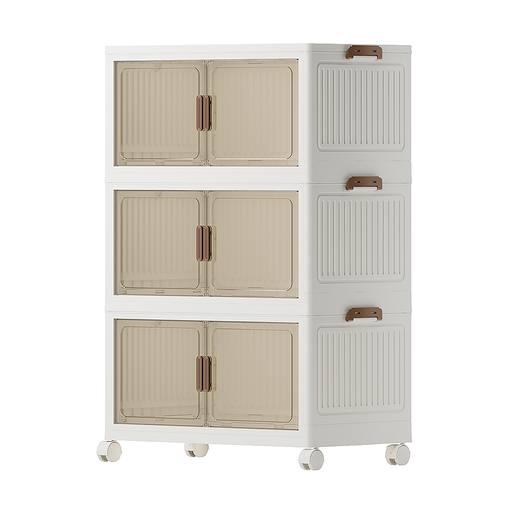
Why it suits this type of user: This compact plastic cabinet is designed for lightweight items in a student room, bathroom, kitchen or home office.
The product information describes a compact design, a smooth surface and tool-free assembly. Be sure to check the maximum load per shelf.
PP plastic, three tiers and a smooth surface that, according to the product description, can be cleaned with a damp cloth.
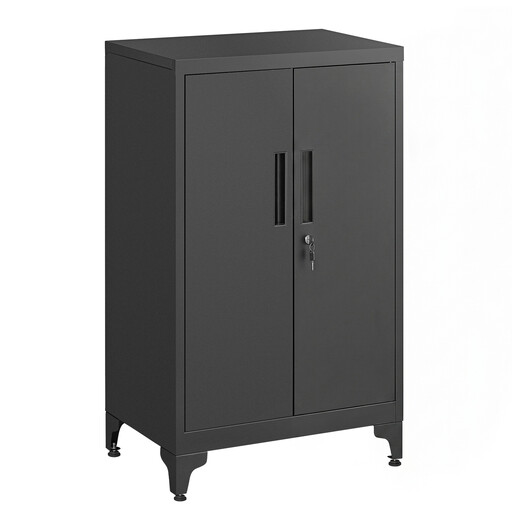
Why it suits this type of user: This metal storage cabinet is a good fit for an office, garage or hobby room where adjustable storage and a lock are important.
The adjustable shelves listed mean you’re not restricted to a single compartment height. The included anti-tip kit helps keep the cabinet securely in place.
Steel housing, a lock with keys and a stated load capacity of 25 kg per adjustable shelf.
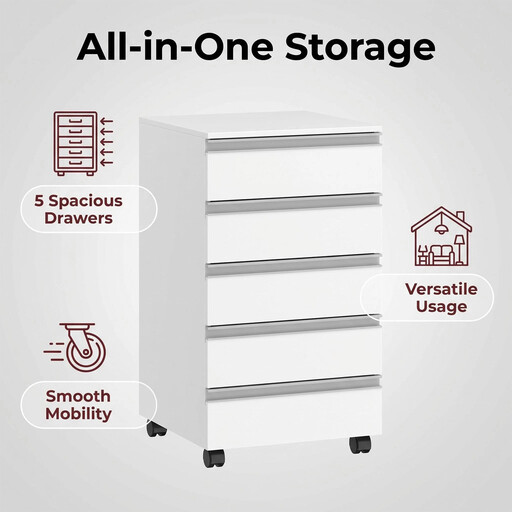
Why it suits this type of user: The five drawers and castors are designed for studios, workshops and offices where materials are moved around frequently.
The specifications mention lockable front castors and reinforced drawer runners. Check the stated dimensions carefully: the title and specifications give different heights.
Five deep drawers, a top measuring approximately 40 × 40 cm and a stated total load capacity of 50 kg.
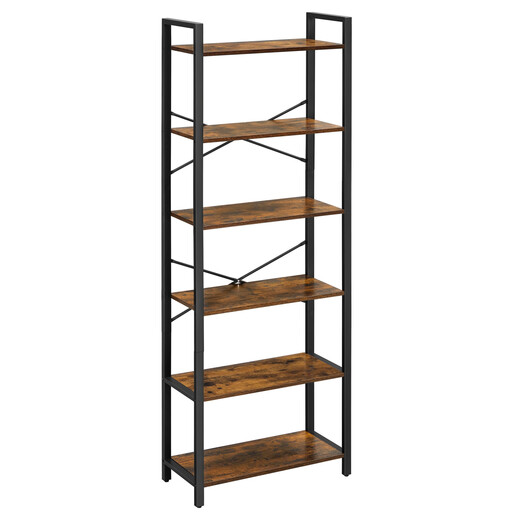
Why it suits this type of user: Its vertical design makes good use of height, making it a good choice for a living room, study or bedroom with limited floor space.
The product information mentions an X-frame, adjustable feet and an anti-tip kit. Secure the cabinet to the wall according to the instructions.
Six tiers, a height of 186 cm and a stated maximum static load capacity of 60 kg.
Start by organising items according to how often you use them. Keep everyday documents and pens in the top drawer or on an easily accessible shelf. Put archive folders and heavier boxes at the bottom. Use labels to stop your storage cabinet becoming a dumping ground where everything gets mixed together.
In a home office, how far the cabinet is from your desk matters more than the number of compartments. A mobile cabinet can sit next to your desk and later be wheeled to another workspace. Always check the castor brakes and the floor surface.
An open bookcase works well for books and storage boxes you want to keep on display. Drawers or doors are often more practical for cables, spare supplies and household items. If you need to store items in different sizes, adjustable shelves are more useful than fixed compartments.
We’ve put together a complete, up-to-date list of products that meet these strict selection criteria and the applicable European safety regulations.
First, measure the available width, depth and height. For documents, the internal width of a drawer or shelf is particularly important. Also leave enough room to open doors and drawers fully.
Its lifespan depends on the material, load, assembly and how it’s used. A metal cabinet may be suitable for frequent use, while plastic can work well for lighter items. Never exceed the stated load capacity, and check the screws, castors and shelves regularly.
It can be, especially if you regularly change your workspace. If possible, choose a model with locking castors and place it on a level surface. For heavy equipment or a tall cabinet, a fixed cabinet may be more stable.
