
Vandaag of morgen in huis

Kwaliteit gegarandeerd

Welkomstaanbiedingen ontgrendelen: GRATIS bezorging | Tot 80% korting | Gratis 30 dagen JoyPlus-proefperiode
Download de app
A storage cabinet may seem simple to buy, until you discover that the drawers do not fit, the cabinet is too deep or its load capacity is insufficient. This is particularly important in a small bedroom, narrow hallway or compact living room, where incorrect dimensions can take up a great deal of space. Marketing terms such as “sturdy”, “spacious” and “multifunctional” also mean very little without specific details.
Pay particular attention to these three common pitfalls:
Measure the area where the cabinet will stand at three points: width, height and depth. Also take skirting boards, doors, radiators and sockets into account. With a chest of drawers, there must be enough space in front of the cabinet to open the drawers fully.
A slim storage cabinet approximately 32 cm deep can be useful in a hallway or next to a desk. A wider cabinet generally offers more capacity, but also takes up more floor space. For a bedroom cabinet, the combination of cabinet depth and the clearance beside the bed is particularly important.
Many affordable cabinets are made from particle board, also known as chipboard. This material can be suitable for normal indoor use, provided the maximum load is respected. Check each of the following separately:
Steel drawer runners can be practical for everyday use, but on their own they say nothing about the maximum load. Use the official product specifications as your guide and distribute heavy items across several compartments.
A cabinet with drawers is suitable for clothes, accessories, underwear and small everyday items. An open bookcase or compartment cabinet works better for books, baskets and ornaments, but everything remains visible and dust can build up more quickly.
A wooden storage cabinet, or a cabinet with a wood-effect finish, can easily complement a range of interiors. However, check whether it is made from solid wood, veneer or particle board. These materials differ in weight, maintenance requirements and price. For living-room storage, a combination of enclosed drawers and open shelves can be particularly useful.
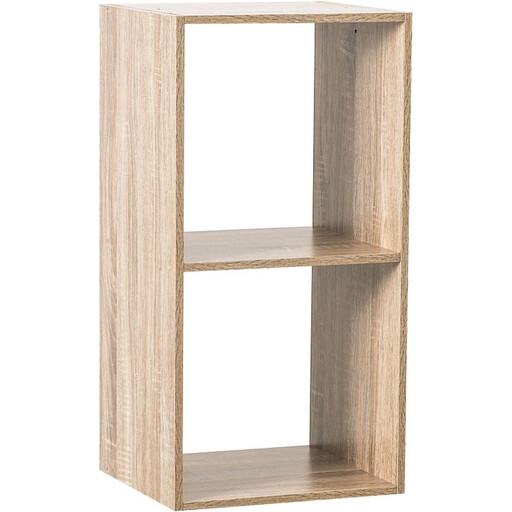
Why it suits this profile: Its compact size makes it suitable for a hallway, student room or small bedroom. Two drawers and an open compartment help organise small items and display accessories.
The dimensions of 34.5 x 32 x 67.6 cm make the required space clear in advance. The open design means you do not have to rely solely on concealed storage.
Open compartment cabinet, two drawers, FSC certification stated in the product specifications and a maximum load capacity of 25 kg.

Why it suits this profile: This chest of drawers offers greater capacity for clothes, bed linen and accessories without taking up the space of a full-size wardrobe.
The 80 kg load capacity is clearly stated. The cabinet has three drawers and steel drawer runners; soft-close is not included and should not be assumed.
Three drawers, dimensions of 73 x 48 x 78 cm, self-assembly with an estimated assembly time of approximately 30 minutes and a two-year statutory guarantee according to the product information.
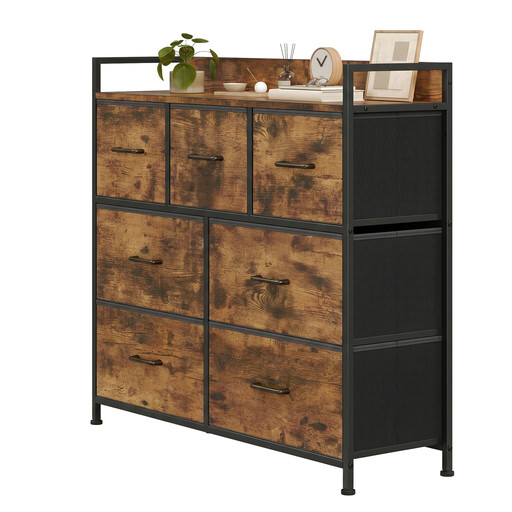
Why it suits this profile: Seven drawers make it easy to sort items in a bedroom, dressing room or living room. The shallow depth of 28.5 cm is useful when floor space is limited.
The product specifications state both the total load capacity of 71 kg and the 3 kg capacity of each fabric drawer. An anti-tip kit and adjustable feet are included; wall anchoring remains important.
Seven drawers, metal frame, adjustable feet and a top with a maximum static load capacity of 50 kg. The fabric drawers are not washable.
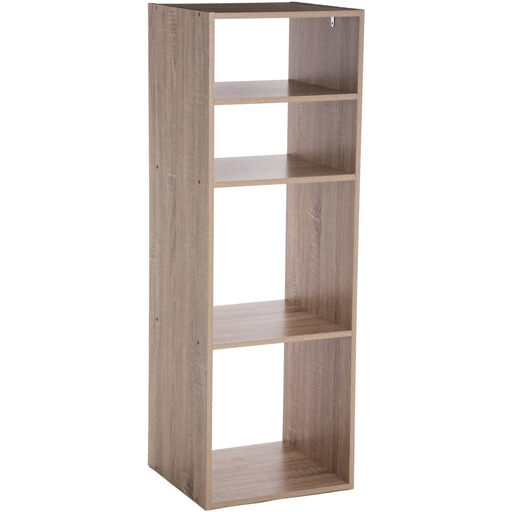
Why it suits this profile: The height of 100.5 cm makes good use of vertical space. This wooden storage cabinet is suitable for supplies, accessories or baskets in a hallway, bathroom or home office.
The four shelves and maximum load capacity of 40 kg are specified in advance. With a depth of 32 cm, it has a compact footprint, but measure the available height carefully.
Four shelves, wood-effect finish, 40 kg maximum load capacity and self-assembly for one person with an estimated assembly time of approximately 30 minutes.
We have put together a complete, up-to-date list of products that fully meet these strict selection criteria and the applicable European safety regulations.
Before ordering, check whether the cabinet is supplied for self-assembly and how many people are needed. Place the components on a soft surface during assembly to minimise the risk of damage. Tighten screws by hand first, then check that all connections are secure.
Place a tall cabinet on a level surface. Use the supplied anti-tip fitting if one is included, and secure the cabinet to the wall according to the instructions. Put heavy items at the bottom and distribute the weight evenly. Observe the stated maximum load; it is not a guideline to exceed.
A slightly damp cloth is usually sufficient for maintenance. With fabric drawers, it is important to follow the product care instructions. For example, the product specifications for the JOYFURNOS cabinet state that the fabric drawers are not washable.
That depends on what you need to store and how much clearance is available. Measure the free space, then check the cabinet’s external dimensions. A chest of drawers is practical for clothes, while a wardrobe with a hanging section is more suitable for longer garments. Leave enough room in front of drawers to open them fully.
Particle board can be suitable for normal indoor use, provided the cabinet is assembled correctly and the maximum load is not exceeded. Check the thickness, construction, drawer runners and load capacity of each shelf or drawer. Do not place heavy objects on a component for which no load capacity has been specified.
The models mentioned above have an estimated assembly time of approximately 30 minutes for one person. The actual time may vary depending on your experience, tools and the condition of the components. Read the instructions before starting and check that all fixings are included.
