
Vandaag of morgen in huis

Kwaliteit gegarandeerd

Welkomstaanbiedingen ontgrendelen: GRATIS bezorging | Tot 80% korting | Gratis 30 dagen JoyPlus-proefperiode
Download de app
A storage cabinet may seem simple to choose at first glance. However, many shoppers are swayed by an attractive front, a low price or an inviting lifestyle photo without checking whether the cabinet really fits their space. As a result, a piece of furniture may be too deep, have insufficient load capacity or prove awkward to use every day.
Pay particular attention to these three common pitfalls:
A wooden storage cabinet can come in many different forms. A sideboard works well in the dining room or hallway, while a TV unit is usually lower and provides space for equipment. A bookcase or cube storage unit is suitable for books, baskets and decorations. If you want to divide a room, consider a room divider cabinet.
For a small living room or narrow hallway, depth, doorways and clearance are particularly important. A cabinet for small spaces with sliding doors may be more practical than a model with hinged doors. Light wood tones, simple lines and metal details often complement the rest of a Scandinavian-style interior.
Measure not only the place where the storage cabinet will stand, but also the route to get it there. Check doorways, stairs and any corners or turns. Also take the following into account:
For example, a cabinet measuring 100 × 35 × 80,5 cm takes up less floor space than a wide room divider measuring 155 × 24 × 160 cm, but it also offers a different layout and level of visibility.
Look at the material specifications rather than relying solely on the product photo. MDF and chipboard are commonly used board materials for indoor furniture. Steel is often used for legs or frames. An FSC label may provide additional information about the source of the wood or wood-based material, but it does not automatically indicate the maximum load capacity.
Therefore, always check:
With a tall bookcase or room divider, anchoring it to the wall is important to help prevent it from tipping over. Mounting materials are included with the vidaXL model, but screws and wall plugs are not. You will need to choose fixings suitable for your type of wall.
Closed compartments keep belongings out of sight. Open compartments make books and accessories immediately accessible, but they require more frequent dusting. A TV unit also needs cable openings so that equipment can be connected neatly.
When choosing a sideboard or low cabinet, pay attention to the shelf layout. For crockery, documents or electronics, an adjustable shelf may be more practical than one large open compartment. With sliding doors, it is useful to check how much of the cabinet can be accessed at the same time.
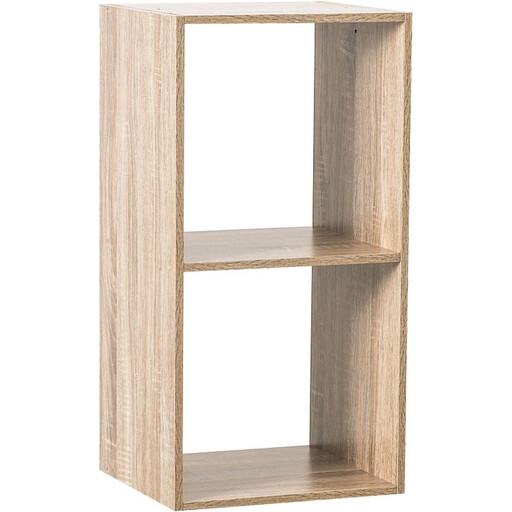
Why it suits this profile: This compact model, measuring 34,5 × 32 × 67,6 cm, fits in a hallway, bedroom or small living room. The open layout makes it easy to store books, baskets or accessories.
The dimensions and maximum load capacity of 25 kg are clearly stated. This allows you to assess in advance whether the furniture is suitable for your belongings.
Compact size, FSC certification, open compartments and an assembly time of approximately 30 minutes.
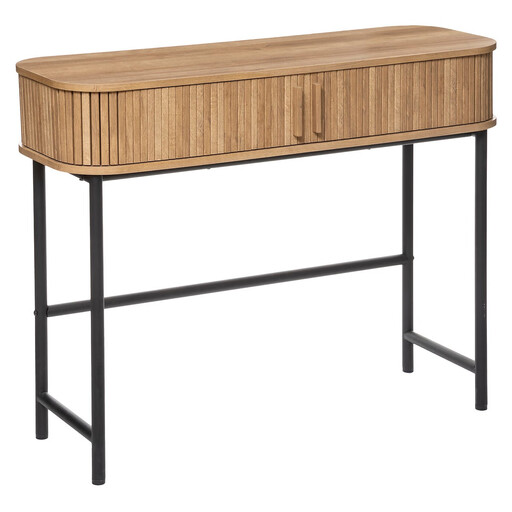
Why it suits this profile: This wooden storage cabinet has two sliding doors, one shelf and metal legs. The combination of a wood-effect finish and steel complements a Scandinavian or minimalist interior.
The product information lists MDF and steel as the materials. You are therefore not buying based on an unverified claim about solid wood, but on specifications you can check.
Two sliding doors, a back panel, shelf space, a load capacity of 10 kg per shelf and a statutory minimum two-year guarantee.

Why it suits this profile: This TV unit is 120 cm wide and 45.5 cm high. It is designed for a living-room setup with a television, equipment and cables.
The cabinet has cable openings at the back and a closed compartment with double doors. This allows you to connect equipment and keep accessories out of sight.
Stated maximum load capacity of 60 kg, cable management, soft-close hinges and an assembly time of approximately 60 minutes.
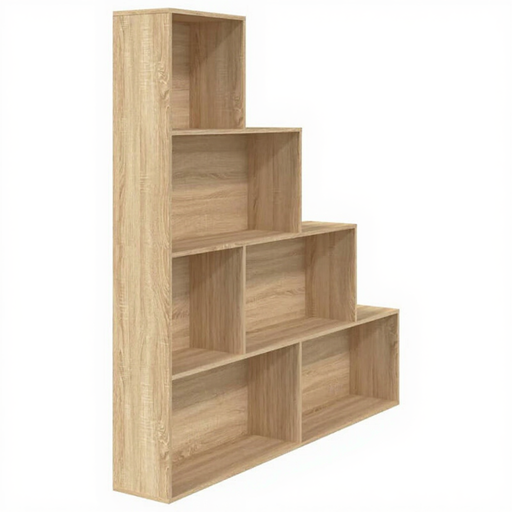
Why it suits this profile: With six open compartments and a depth of 24 cm, this cabinet can be used both as a bookcase and as a room divider between, for example, a seating area and a workspace.
The shallow depth saves floor space. As the furniture is open, you can clearly see in advance how much storage space and privacy it actually provides.
Six open compartments, dimensions of 155 × 24 × 160 cm, and suitable for use as a bookcase or room divider. You will need to choose the wall fixings yourself, depending on the wall.
We have put together a complete, up-to-date list of products that fully meet these strict selection criteria and the applicable European safety regulations.
That depends on what you want to store. A shallow cabinet may be sufficient for books and decorations. Crockery, ring binders or larger equipment require more depth. Remember to account for skirting boards, cables and clearance too.
No. Board materials such as MDF and chipboard can generally be cleaned with a soft, slightly damp cloth. Avoid prolonged exposure to moisture and always check the manufacturer’s care instructions. Do not place a cabinet directly against a damp external wall unless the product information specifically states that it is suitable.
Its lifespan depends on the material, assembly, load and how it is used. Do not place items that are heavier than the stated load capacity inside it, and check after assembly that all connections are secure. The products mentioned come with a statutory minimum two-year guarantee under European consumer rules; additional rights may apply under the relevant national legislation.
