
Vandaag of morgen in huis

Kwaliteit gegarandeerd

Welkomstaanbiedingen ontgrendelen: GRATIS bezorging | Tot 80% korting | Gratis 30 dagen JoyPlus-proefperiode
Download de app
A storage cabinet may seem simple to choose, but the wrong size, unclear load capacity or difficult assembly can quickly make it impractical. Particularly when shopping online, photos can be misleading, while details such as depth, wall fixing and materials are just as important.
So look out for these common pitfalls:
By checking a few key specifications, you can make a more informed choice between a bookcase, sideboard, narrow storage cabinet, shelving unit or wall cabinet.
Do not just measure the space where the cabinet with shelves will stand. Also check:
A deep cabinet often provides more storage space, but it can get in the way in a narrow sitting room or hallway. A model approximately 30 to 35 cm deep is generally easier to position in smaller spaces. Always check the exact product dimensions; “narrow” is not a fixed technical measurement.
Chipboard and MDF are widely used for affordable indoor furniture. They are suitable for various purposes, but the permitted weight differs by model and by component. Ideally, place heavy books, crockery or ring binders at the bottom and distribute the weight across several shelves.
Pay attention to the difference between:
A metal shelving unit can be lightweight and practical, but may have a limited load capacity per box. A closed sideboard protects belongings from dust more effectively, while an open shelving unit is suitable for books, baskets and decorations.
Self-assembly is common for storage furniture for the sitting room, bedroom or utility room. Check in advance:
A tall cabinet or open shelving unit must stand securely. Some products explicitly state that wall anchoring is essential. Do not use the cabinet as a step and place heavy items at the bottom. This reduces the risk of tipping, but does not replace correct assembly in accordance with the instructions.
A sideboard with doors and drawers is suitable for crockery, table linen and items you want to keep out of sight. A bookcase or open shelving unit works better if you want to access books and accessories quickly. In a bathroom, a damp environment requires extra attention: check that the furniture is intended for indoor use and avoid direct contact with water.
If you have limited floor space, consider a tall, narrow storage cabinet. A shallow bathroom shelf unit, for example, makes use of the space beside a washbasin. For a hallway, a console or wall cabinet is useful for keys, post and small accessories. In a playroom, separate baskets in a shelving unit can help you organise belongings by category.
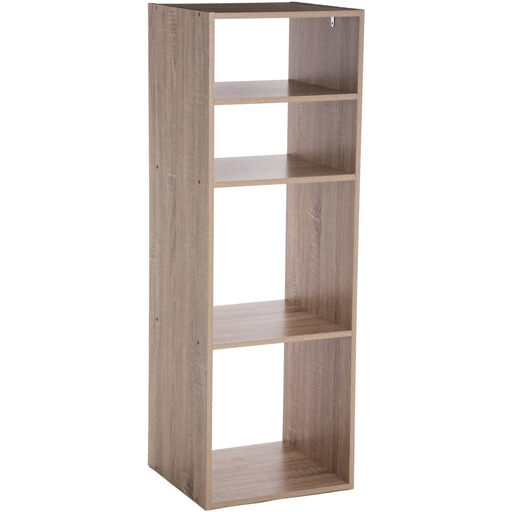
Why it suits this profile: This compact cabinet has four shelves, is suitable for indoor use and, according to the product information, can be assembled by one person in around 30 minutes. This makes it a practical first storage solution for a hallway, bedroom or home office.
The exact dimensions and maximum load of 40 kg are stated. This allows you to check in advance whether the depth of 32 cm and the total load are suitable for your space and belongings.
34.5 cm wide, 32 cm deep, four shelves and a stated maximum load of 40 kg.
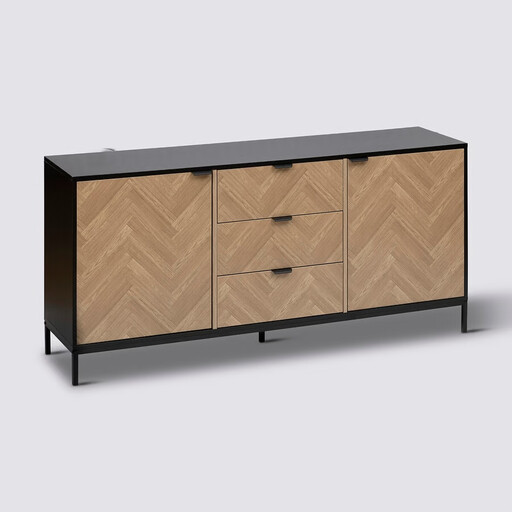
Why it suits this profile: This wide sideboard combines two doors and three drawers with a length of 160 cm. It is ideal for households that want to store sitting room or dining room items out of sight and have sufficient floor width available.
The cabinet has a stated maximum load of 55 kg. As assembly by two people and placement on a level surface are specified, these requirements are clear in advance.
Two doors, three drawers, steel legs, FSC certification and a maximum load of 55 kg.
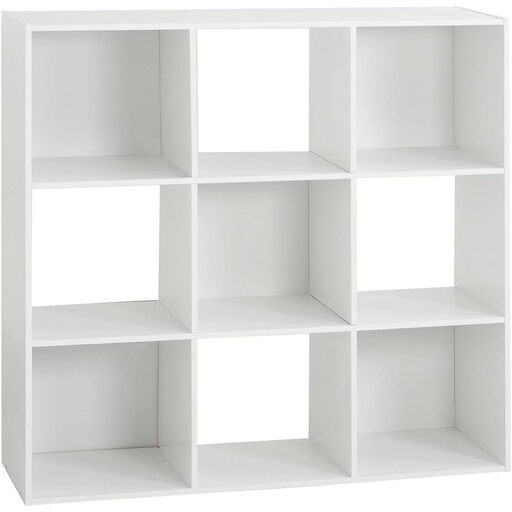
Why it suits this profile: The nine open compartments provide a fixed layout for books, baskets, toys or office supplies. According to the product description, the cabinet can be mounted to the wall or placed on the floor.
The depth of 32 cm, maximum load of 65 kg and assembly requirements are clearly stated. Heavy items should go at the bottom, and assembly must be carried out by adults.
Nine compartments, a height and width of 100.5 cm, a depth of 32 cm and FSC certification.
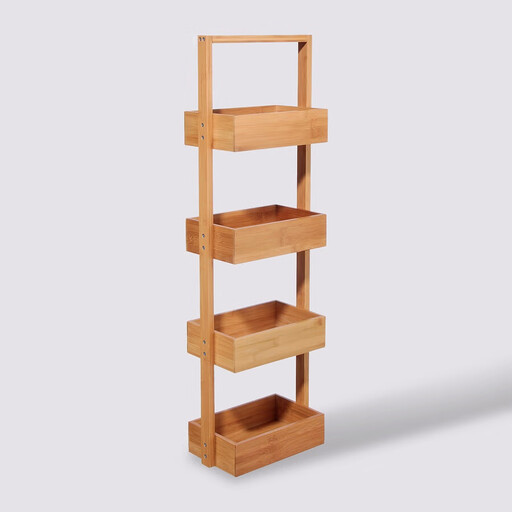
Why it suits this profile: With a width of 25 cm and a depth of 16 cm, this bathroom shelf unit takes up very little space. The four tiers are designed for items such as towels, soap and other small bathroom essentials.
The compact dimensions and maximum load of 4 kg are clearly specified. Use the shelf unit for lightweight items and avoid direct or prolonged contact with water.
Bamboo frame, four shelves, a height of 88 cm and a very small footprint of 25 x 16 cm.
We have put together a complete, up-to-date list of products that fully meet these strict selection criteria and the applicable European safety regulations.
First place the cabinet on a level surface and follow the assembly instructions. A tall or open model may need to be anchored to the wall. Use suitable fixings for the type of wall and place heavy items at the bottom. After assembly, regularly check that the screws and joints are still secure.
Its lifespan depends on the material, assembly, moisture and load. A chipboard or MDF cabinet will stay in good condition for longer if you respect the maximum load capacity, clean up spilled liquid immediately and do not use the furniture in a damp environment unless this is specified. According to the product information, the products mentioned are covered by a statutory minimum guarantee of two years.
An ordinary cabinet or shelving unit does not use energy. The costs mainly consist of the purchase price, any baskets or storage boxes, fixing materials and maintenance. When comparing products, therefore, do not just look at the price. Also consider the number of usable compartments, the dimensions, the load capacity and the assembly requirements.
