
Vandaag of morgen in huis

Kwaliteit gegarandeerd

Welkomstaanbiedingen ontgrendelen: GRATIS bezorging | Tot 80% korting | Gratis 30 dagen JoyPlus-proefperiode
Download de app
A storage cabinet with doors keeps your belongings out of sight and can also add character to your living room, dining room, hallway or home office. But not every cabinet suits every home. A model that looks spacious in a photo might be too deep for a flat. And a cabinet with lots of compartments won’t be very practical if the shelves don’t suit the things you want to store.
So don’t focus on colour and shape alone. Check the dimensions, material, load capacity and assembly requirements too. That way, you can avoid buying a cabinet that turns out to be impractical after a few months.
A cabinet that’s 32 cm deep might seem compact, but the doors and back panels take up some of the internal space. Measure the available area too, allowing for skirting boards, door clearance and room to walk past. In a narrow hallway, a difference of just a few centimetres can determine whether a cabinet is comfortable to use.
A cabinet with compartments is handy for books, baskets and accessories. But fixed compartment heights are less suitable for tall lever-arch files, vases or cleaning products. If you want to store items of different sizes, it’s better to choose a cabinet with an adjustable shelf.
Self-assembly is practical, but a large cabinet often takes two people to put together. Check whether the parts are labelled, how long assembly is expected to take and whether the cabinet needs to be fixed to the wall. Put heavy items on the lower shelves and use the anti-tip kit provided, if available. A cabinet isn’t a climbing frame; children shouldn’t hang from it or climb on it.
Measure the space first, then decide which type of cabinet will fit:
Consider the combination of width, height and depth. A cabinet that’s around 100 cm wide will have a different layout from one that’s about 67 cm wide, even if they’re roughly the same height.
Chipboard and MDF are often used for doors, shelves and back panels. These materials are suitable for normal indoor use, but need to be protected from prolonged exposure to moisture. A wooden cabinet with doors can add warmth to a living room; just check whether “wood” refers to solid wood, veneer or a wood-based board.
A metal storage cabinet is usually easy to wipe clean and may be a good choice for an office, storage room or garage. For metal models, check whether the cabinet is intended for indoor use only and how the load capacity is distributed across each shelf or the top.
The product information for the two 5Five models in this selection states FSC: yes. This is useful information if you’re looking for an FSC-certified cabinet, but always check the current product specifications and any certification details when you buy.
Don’t just look at the maximum total load capacity. Heavy items should go at the bottom of the cabinet and be distributed evenly. The top may have a separate limit. For example, the green metal model below has a stated maximum static load capacity of 50 kg for the top. This doesn’t mean the entire cabinet has unlimited load capacity.

Why it suits this profile: Five doors and a depth of 32 cm provide concealed storage for accessories, paperwork or household items in a living room or home office.
The product details give the exact external dimensions, a maximum load capacity of 65 kg and an estimated assembly time of 45 minutes for two people.
Five doors, 100.5 cm wide, FSC stated in the product information and a statutory guarantee of at least two years.
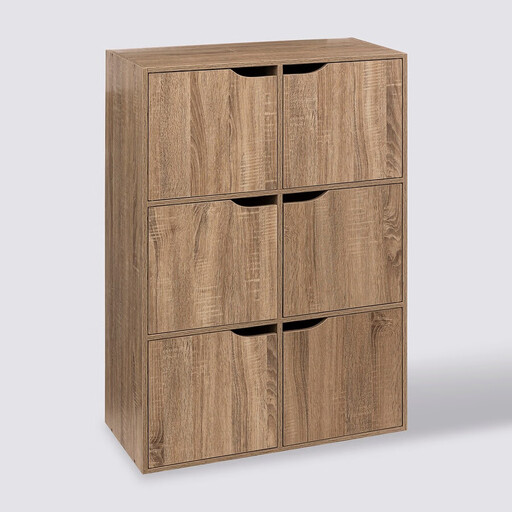
Why it suits this profile: This narrower model is a good fit for a flat or compact dining room where you want six separate compartments without having to make room for a cabinet a metre wide.
The product specifications list six doors, a load capacity of 90 kg and assembly by two people. This makes the capacity and assembly requirements clear in advance.
67.5 cm wide, 32 cm deep, six compartments, FSC stated in the product information and a two-year guarantee period.
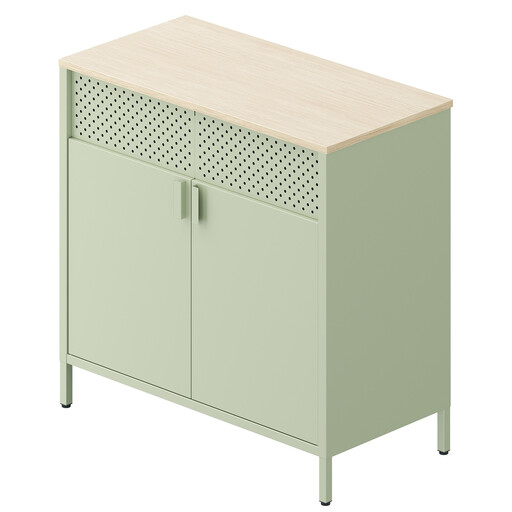
Why it suits this profile: This metal cabinet is suitable for a living room, dining room, office or storage room where an adjustable shelf and easy care are important.
The shelf is adjustable, so you can store taller and shorter items more flexibly. The anti-tip kit provided should be fixed to the wall in accordance with the instructions.
Dimensions of 40 x 80 x 76 cm, steel cabinet body, adjustable shelf, pegboard back and a stated maximum static load capacity of 50 kg for the top.
We’ve put together a complete, up-to-date list of products that meet these strict selection criteria and the applicable European safety regulations.
Place the cabinet on a level surface and follow the assembly instructions. Check that all the fixings are secure. Use an anti-tip kit if one is provided or if the manufacturer specifies that the cabinet must be fixed to the wall. Keep heavy items at the bottom and don’t let children hang from the doors or shelves.
Its lifespan depends on the material, load, assembly and care. Use the cabinet indoors as directed, avoid prolonged exposure to moisture and distribute the weight evenly. Check from time to time that the fixings are still secure. The models mentioned come with a statutory guarantee of at least two years; this isn’t a fixed prediction of their total lifespan.
A cabinet doesn’t normally need electricity. The main costs are the purchase price, assembly and any wall-fixing materials you may need. An adjustable shelf can make a cabinet more practical, as you can tailor the available space to your belongings instead of buying extra storage furniture.
