
Vandaag of morgen in huis

Kwaliteit gegarandeerd

Welkomstaanbiedingen ontgrendelen: GRATIS bezorging | Tot 80% korting | Gratis 30 dagen JoyPlus-proefperiode
Download de app
An storage cabinet may seem simple to buy, but choosing the wrong design can quickly become frustrating. A cabinet that is just too deep, wobbles on an uneven floor or does not have enough load capacity is not suitable for everyday use. This is especially true in a small flat, student room, home office or bathroom.
When comparing options, pay particular attention to these three common pitfalls:
Measure the space at three points: width, depth and height. If the cabinet has doors, take their opening radius into account. For a narrow hallway or small bedroom, a slim storage cabinet may be more practical than a wide model with deep compartments.
Also check the usable height of each shelf. A storage cabinet with shelves is suitable for books, baskets, snacks and office supplies, but not every compartment will accommodate tall bottles or boxes. An adjustable shelf makes the layout more flexible.
A plastic storage cabinet made from PP is lightweight, easy to wipe clean and suitable for rooms that are cleaned regularly. However, check whether the product is intended for indoor use only, and avoid placing it next to a radiator or another heat source.
Steel and board materials offer a different experience. A metal cabinet is generally easy to clean, while MDF and chipboard require more care around moisture. For a bathroom cabinet or kitchen cabinet, therefore, check the material description, ventilation and distance from a washbasin or cooking area.
Place heavy items at the bottom and always follow the stated maximum load per shelf or for the furniture as a whole. A tall bookcase or modular cabinet should stand on a stable surface. Some models include an anti-tip kit. Use it according to the assembly instructions if the cabinet needs to be secured to the wall.
Also check whether tools are required for assembly. A folding storage cabinet can save time, while a board-material cabinet often needs to be assembled by two people. Clear instructions and labelled parts make a difference, but they do not replace checking the screws, connections and wall fixings.
The selection below is based on verifiable information from the product descriptions, including material, dimensions, number of compartments, assembly and intended use.
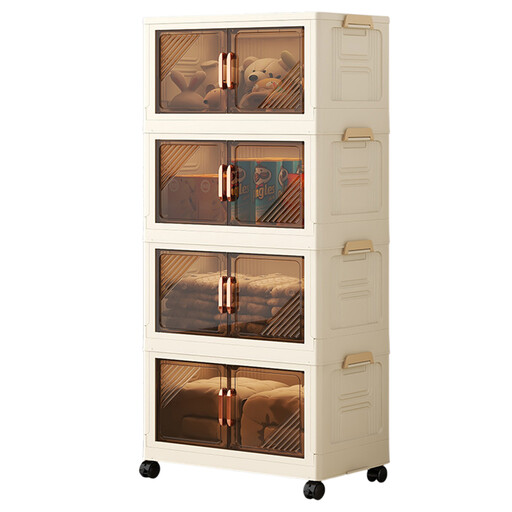
Why it suits this profile: The four tiers and 55 cm width offer a well-organised starting point for a bedroom, student room or home office where loose items can quickly end up scattered around.
The specified width of 55 cm and four tiers make it easier to assess in advance whether the layout will fit the available space. However, check the full product dimensions and load capacity before buying.
Four storage levels; compact width for smaller living spaces.
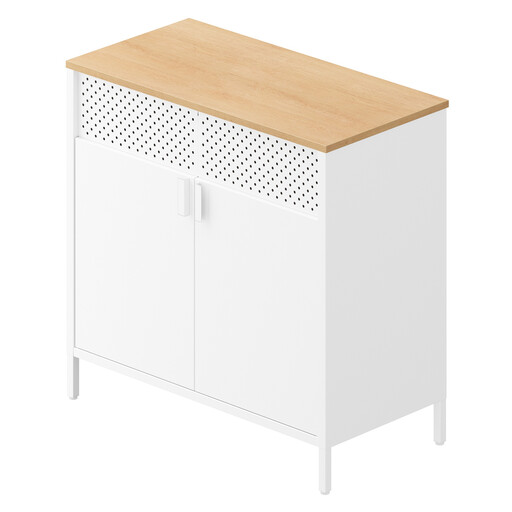
Why it suits this profile: Anyone looking for a sturdy-looking storage unit with doors for the living room, dining room or office gets a steel cabinet measuring 80 x 40 x 76 cm with an adjustable shelf.
The product information mentions an adjustable shelf, magnetic door closure and anti-tip kit. This allows you to assess the layout and stability more precisely than you could from a style description alone.
Steel housing; adjustable shelf; stated maximum load of 50 kg for the top.
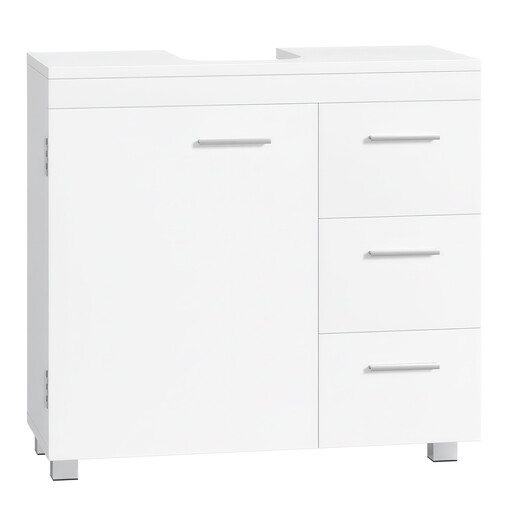
Why it suits this profile: This bathroom cabinet is designed to fit under a washbasin and combines three drawers with two compartments behind a door. It suits households that want to keep towels and toiletries stored separately.
The dimensions of 30 x 70 x 64 cm and the stated washbasin application allow you to measure up and check the fit in advance. The maximum static load is 36.2 kg; place heavy items low down.
Three drawers; two compartments; adjustable shelf; anti-tip kit included.
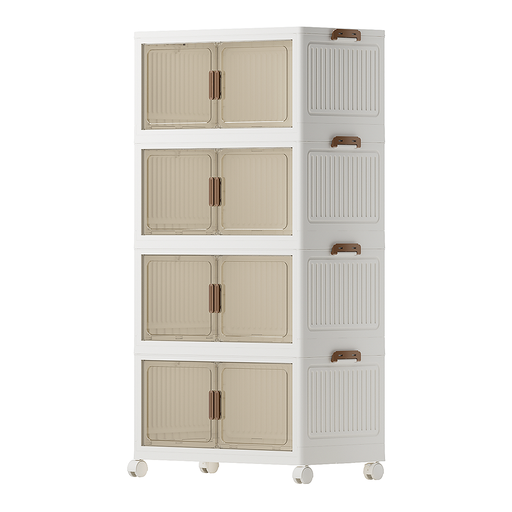
Why it suits this profile: This mobile storage cabinet has four compartments, nylon wheels and a foldable design. As a result, it can be used in a bedroom, living room, kitchen or home office.
The magnetic closure and instructions to unfold it fully make the set-up easy to check. Before loading it, make sure all closures are secured and place the cabinet on a level surface.
No tools required; four compartments; wheels; foldable design.
We have put together a complete, up-to-date list of products that fully meet these strict selection criteria and the applicable European safety regulations.
First, measure the available width and depth. A slim storage cabinet, folding model or cabinet on wheels generally takes up less permanent space. Also check that the drawers and doors can still open fully. For books, a bookcase with fixed compartments is practical; for clothes and loose items, enclosed compartments may be more convenient.
That depends on the product instructions. A plastic cabinet with a smooth surface is easy to wipe clean, but check whether the model is suitable for indoor use and humid environments. Do not place the cabinet directly in standing water, and keep heat sources in mind. For a cabinet under the washbasin, you should also measure the trap, pipes and available height.
Its lifespan depends on the material, assembly, load and maintenance. Do not place items that are heavier than specified inside it, distribute the weight across the shelves and check the connections after assembly. A modular cabinet or folding storage cabinet is particularly practical when flexibility is more important than storing very heavy objects. For information about guarantees and your statutory rights, always consult the product page and the applicable Dutch consumer regulations.
