
Vandaag of morgen in huis

Kwaliteit gegarandeerd

Welkomstaanbiedingen ontgrendelen: GRATIS bezorging | Tot 80% korting | Gratis 30 dagen JoyPlus-proefperiode
Download de app
A storage cabinet seems like a simple buy until you’re choosing between a chest of drawers, a compartment unit, a bathroom cabinet or a metal storage cabinet. A cabinet that looks spacious in a photo might be too deep for a narrow hallway in real life. Wheels can be handy, but they don’t always provide enough stability. And a low price tells you little about load capacity, assembly or suitability for a damp room.
With these practical checkpoints you’ll avoid a bad purchase and choose more precisely the storage cabinet you need for your living room, bedroom, bathroom, kitchen, office, workshop or studio.
The stated width, height and depth don’t tell you how much usable space you actually get. In a chest of drawers, side panels, runners and dividers take up some of the space. In a compartment unit, the height of each cube determines whether folders, baskets or larger boxes will fit.
So measure not just the available spot, but also:
A compact storage cabinet is handy for a studio or student room, but it may not have enough capacity for supplies, tools or archive folders.
Cabinets made from chipboard, MDF, steel or plastic have different characteristics. Chipboard and MDF are suitable for many household uses, but prolonged moisture and unevenly distributed weight can cause issues. A plastic storage cabinet is light and easy to clean, but according to the product information for the models mentioned, it isn’t intended for heavy industrial loads.
Pay attention to the difference between:
A metal storage cabinet can feel sturdy, but always check the stated specifications. For the Ochama cabinet, for example, a maximum static load of 50 kg is stated for the top panel. That does not automatically mean each shelf can carry the same weight.
A storage cabinet with wheels or mobile filing cabinet is practical when you often change your layout. Even so, wheels can roll away on a smooth floor or make the cabinet less stable when drawers are opened. Check for brakes, wheel size and whether the cabinet needs to be anchored to prevent tipping.
With furniture that has drawers, doors or wheels, an anti-tip device is important. Place heavy items low down, and follow the assembly and safety instructions. This is especially relevant in a household with children.
A storage cabinet with shelves works well for boxes, books and supplies you want to grab quickly. A chest of drawers is more suitable for small items, documents, cables or stationery. A closed cabinet keeps things out of sight and limits dust, while an open compartment unit keeps everything visible at a glance.
Also look for adjustable shelves. They let you tailor the layout to tall bottles, lever-arch files or equipment. For a bathroom, the cut-out for pipework matters most. Before buying, check the position of the trap and the space available under your washbasin.
For a dry living room or study, MDF and chipboard are often practical choices. In a bathroom, a smooth surface, easy cleaning and protection against splashes deserve extra attention. A cabinet is not automatically waterproof just because the product description mentions a moisture-resistant finish. According to one brand’s product information, regular maintenance and proper use remain necessary.
A plastic storage cabinet wipes clean easily and is often light to move. Do check the permitted load and keep the furniture away from direct heat sources. A metal storage cabinet can be a good fit for an office, utility room or workshop, while a white storage cabinet keeps things visually calm in a light space.
Check whether self-assembly is required, how many people are recommended, and whether parts are labelled. According to the product information, the 5Five compartment shelving unit has an assembly time of about 30 minutes and requires two people. The cabinet can be wall-mounted or placed on the floor.
For every model, check:
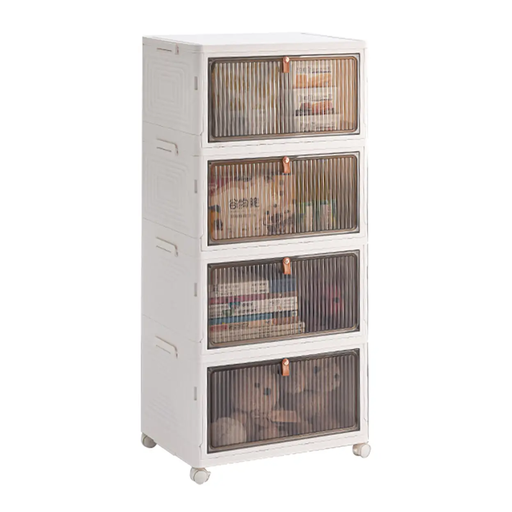
Why this suits the profile: The compact plastic cabinet has four tiers and is designed for smaller spaces such as a bathroom, kitchen, student room or home office.
The product information states a smooth, easy-to-clean PP surface and tool-free assembly. Do check the maximum load per tier.
Plastic construction, four storage tiers, compact footprint and click-fit, tool-free assembly.
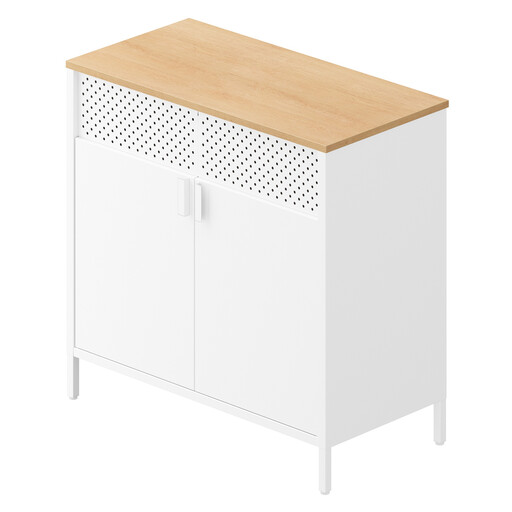
Why this suits the profile: This model combines a steel cabinet body with an adjustable shelf, making it suitable for a living room, dining space or office.
The adjustable shelf prevents a fixed layout that doesn’t suit your items. The product information also mentions an anti-tip kit; use it as instructed.
Steel body, adjustable shelf, dimensions of 80 × 40 × 76 cm and a stated 50 kg load capacity for the top panel.
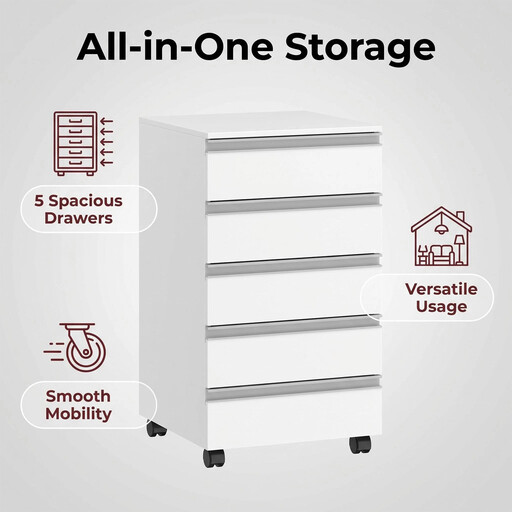
Why this suits the profile: For an office, studio or workshop with lots of documents, drawings, tools or accessories, five deep drawers deliver clear organisation.
The dimensions of approximately 40 × 40 × 66 cm are clearly stated. Four swivel castors and two lockable front castors make moving and stopping more predictable.
Five drawers, steel components, a top panel and, according to the product information, a total load capacity of 50 kg.
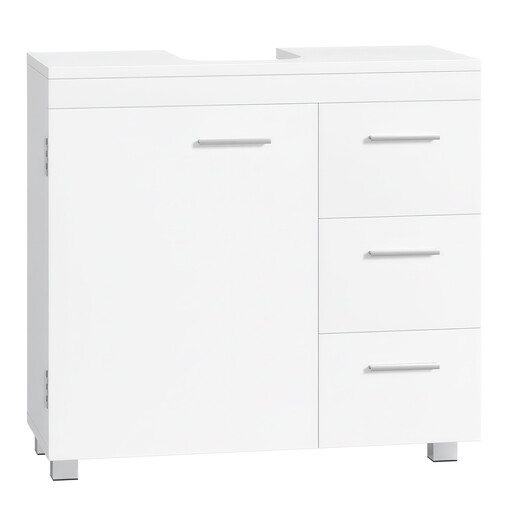
Why this suits the profile: The combination of three drawers, two compartments behind a door and an adjustable shelf is designed for towels, toiletries and cleaning supplies.
The product information lists dimensions of 30 × 70 × 64 cm, a maximum static load of 36.2 kg and an included anti-tip kit. Measure your basin and pipework in advance.
Matte white finish, three drawers, two enclosed compartments and adjustable storage.
We’ve compiled a complete, up-to-date list of products that fully meet these strict selection criteria and comply with current European safety regulations.
Start by deciding the maximum width and depth. A compact storage cabinet with multiple tiers makes use of height without taking up much floor space. For a narrow bathroom or student room, plastic can be practical. Always check that doors, drawers or castors have enough clearance.
That depends on the construction, the floor and how the weight is distributed. Choose a model with braked castors and place heavy items at the bottom. A cabinet with an anti-tip kit must be secured to the wall according to the enclosed instructions. Move a full cabinet carefully and do not exceed the stated load capacity.
Lifespan depends on material, assembly, load, moisture and frequency of use. Clean surfaces with a soft, slightly damp cloth and avoid harsh cleaners where the product information advises. After assembly, regularly check screws, runners, castors and wall fixings. This helps you spot wear early and keep the cabinet suitable for the everyday use you bought it for.
