
Vandaag of morgen in huis

Kwaliteit gegarandeerd

Welkomstaanbiedingen ontgrendelen: GRATIS bezorging | Tot 80% korting | Gratis 30 dagen JoyPlus-proefperiode
Download de app
An extra storage cabinet might seem simple to choose, until you take dimensions, moisture, load capacity and assembly into account. A cabinet that looks spacious in the product photo may be too deep for a narrow hallway. A model that seems suitable for the bathroom may have different requirements when it comes to materials and ventilation.
So watch out for these common pitfalls:
Measure not only the space available, but also the room to move around the cabinet. Check for skirting boards, radiator pipes, doors and plug sockets too. A narrow cabinet around 30 to 35 cm deep could be suitable for a hallway, bathroom or small bedroom. For towels, cleaning products or groceries, interior height is particularly important.
Pay attention to these measurements:
A cabinet with an adjustable shelf is useful if you want to store both short bottles and tall boxes. Check how many shelf positions are available and whether the maximum load per shelf is specified.
For a living room, office or bedroom, a cabinet made from chipboard, MDF or engineered wood will often do the job, as long as its construction and finish suit the way you plan to use it. In a kitchen cabinet, easy-to-clean surfaces are useful, especially in areas where crumbs or grease can build up.
For a bathroom cabinet, the surroundings matter more. Some models, according to their product descriptions, use materials designed to cope better with moisture and splashes. That doesn’t make them waterproof. So don’t place a cabinet directly in a puddle, and wipe up spills promptly.
Also check:
A sideboard or freestanding cabinet in the living room usually has different priorities from a bathroom cabinet: appearance, cable space and load capacity for ornaments or equipment are more important.
An open shelving unit gives you a quick overview and is suitable for books, baskets, plants and decorative accessories. The downside is that everything remains on show and gathers dust more quickly. A cabinet with doors creates a tidier look and is more convenient for groceries, towels, documents or household items.
A combination of open and closed storage is often a flexible choice. You can keep everyday items on an open shelf and tuck away less attractive or fragile things behind doors. For cabinets with doors, check whether the hinges are adjustable and whether the doors close securely with magnets or another mechanism.
Don’t just check the total load capacity. A shelf may have a lower maximum load than the top panel. It’s best to store heavy items at the bottom. Wall fixings are important for tall, narrow or freestanding models. Follow the instructions provided and use wall plugs and screws suited to your type of wall.
Some products include fixings; with other models, you’ll need to buy suitable wall plugs and screws yourself. Check before assembly.
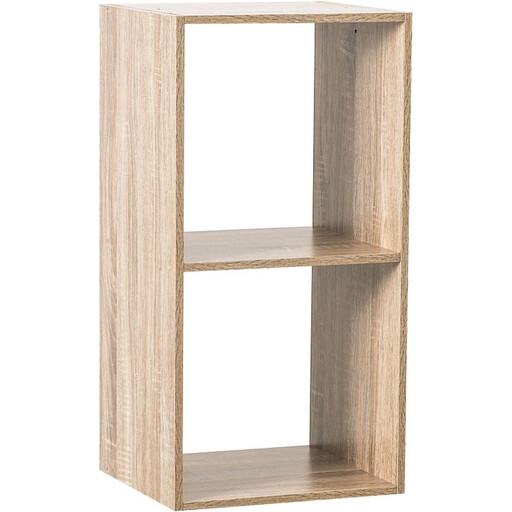
Why it suits this need: This compact open storage unit will fit in a hallway, bedroom, office or small living room. According to the product information, it’s designed to be assembled by one person and takes around 30 minutes.
Its dimensions of 34.5 x 32 x 67.6 cm make it easy to measure up before you buy. The open design means you don’t have to rely on unclear internal measurements behind doors.
Open compartments, a weight of 6.3 kg and a stated maximum load of 25 kg.
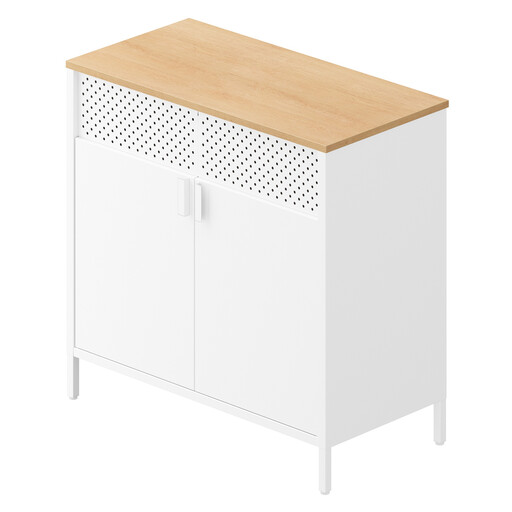
Why it suits this need: The combination of steel and chipboard makes this a good choice for a living room, dining room or office where you want a closed cabinet with a distinctive look.
The product description mentions an adjustable shelf and an anti-tip kit. This lets you customise the layout and secure the cabinet to the wall.
Measures 40 x 80 x 76 cm, with a steel frame, adjustable shelf and a stated top-panel load capacity of 50 kg.
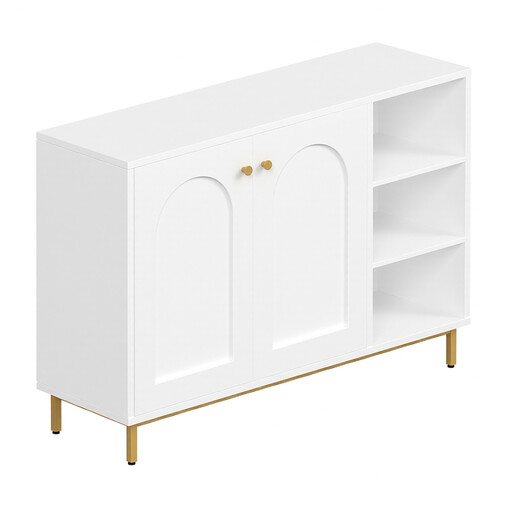
Why it suits this need: This model is designed for bathroom storage, with a combination of closed doors and open shelves. Depending on your space, it can also be used as a kitchen cabinet or compact sideboard.
According to the product description, the model has three adjustable shelf heights and a raised base measuring 12.5 cm. The description also mentions moisture-resistant materials, but this doesn’t make the cabinet waterproof.
Approximately 35.5 x 100.5 x 75.5 cm, with two doors, open shelves and adjustable storage space.
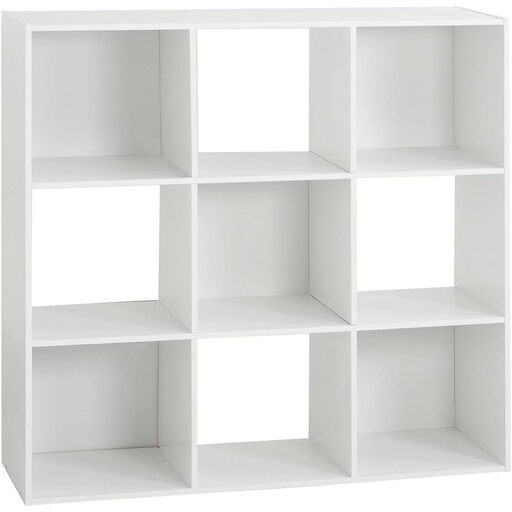
Why it suits this need: The nine compartments keep toys, books, baskets or office supplies organised. According to the product information, the unit can be mounted on the wall or placed on the floor.
The compartments make the available storage space clear at a glance. The safety information recommends keeping heavy items at the bottom and securing the unit to the wall where necessary.
Measures 100.5 x 32 x 100.5 cm, with nine compartments, an FSC statement and a stated maximum load of 65 kg.
We’ve put together a comprehensive, up-to-date list of products that meet these strict selection criteria and comply with current European safety regulations.
Place the unit on a level surface and check that all the parts are there before you begin assembly. Tighten screws by hand first, then fully tighten them once everything is in place. This helps keep the panels aligned. When mounting the unit on a wall, take the wall material into account, whether it’s concrete, brick, plasterboard or something else.
In a bathroom, use a lightly damp cloth and dry the surface afterwards. Don’t leave water on untreated edges for long, and check metal fixings from time to time. A storage unit with a smooth finish is generally easier to keep clean than one with a heavily textured finish or exposed chipboard edges.
Measure the available width, depth and height. Leave room for doors, drawers and ventilation. For a narrow hallway or bathroom, a depth of around 30 to 35 cm is often more practical than a deep model, but always check how much internal space you need.
That depends on where you place it and the product specifications. “Moisture-resistant” doesn’t automatically mean waterproof. Keep the cabinet away from puddles and showers, and make sure the room is well ventilated.
This is often advisable for tall, narrow or heavy models, and may be specifically required in the safety information. Use a suitable anti-tip kit and fixings that are appropriate for your wall.
