
Vandaag of morgen in huis

Kwaliteit gegarandeerd

Welkomstaanbiedingen ontgrendelen: GRATIS bezorging | Tot 80% korting | Gratis 30 dagen JoyPlus-proefperiode
Download de app
A loose pile of papers, toys scattered across the floor or belongings with nowhere to go: a storage cabinet can quickly bring more order. However, not every cabinet is suitable for every room. A narrow bookcase for the living room needs different features from a filing cabinet for a home office or a mobile storage cabinet for a studio flat.
When comparing options, do not focus only on colour and price. The dimensions, load capacity, stability and storage layout are particularly important in determining whether a cabinet remains practical to use.
A cabinet that is 30 cm deep may seem compact, but you should also check the usable shelf space. Folders, ring binders and larger boxes do not always fit in a shallow cabinet. Measure the following beforehand:
A tall cabinet makes efficient use of vertical space, but requires sufficient ceiling height and secure wall fixing.
A cabinet may have plenty of compartments, but that does not automatically mean that every compartment can support heavy books or archive boxes. Check whether the stated load applies per shelf, per drawer or to the entire cabinet. For example, a shelf with a maximum static load of 5 kg is suitable for light books and decorations, but less suitable for heavy ring binders.
A cabinet on wheels is practical when you regularly change your workspace layout. Without brakes, however, a cabinet may move during use. When choosing a cabinet on wheels, therefore, look at the castors, lockable wheels and the flooring. An anti-tip kit is important for tall or narrow cabinets. Use it according to the assembly instructions, especially in a household with children.
For books and decorations, an open bookcase with multiple levels provides a clear overview. A tall cabinet measuring 178.5 cm makes efficient use of limited floor space, making it suitable for a smaller living room, bedroom or studio flat. Adjustable shelves are useful if you want to store both small accessories and tall folders.
A wall cabinet or cube storage unit approximately 100 cm wide may be suitable for a living room or children's bedroom. When wall-mounting, check that the wall and fixing materials are suitable for the weight. For a home office, drawers or doors are often more practical than completely open compartments, as they keep documents less visible.
Many storage units are made from chipboard, MDF, steel or plastic. Chipboard is relatively light and is often used for a white storage cabinet or bookcase. Steel is generally suitable when a sturdy construction and easy maintenance are important. PP plastic is lightweight, wipe-clean and useful in a bathroom, student room or temporary layout.
Pay attention to the combination of materials. A steel frame with chipboard shelves can combine sturdiness with lower weight, but the maximum load remains the deciding factor. Place heavy items at the bottom and always follow the product specifications.
Open compartments give you a quick view of books and accessories. However, their contents become dusty more quickly and remain on display. A cabinet with doors keeps belongings more out of sight. A lockable cabinet with a lock can help shield documents and office supplies, but check exactly what the lock provides. A product description is not proof of a certified security level.
For files, wide drawers or a proper filing cabinet are often more practical than deep shelves. Also check whether suspension files, A4 documents and ring binders actually fit.
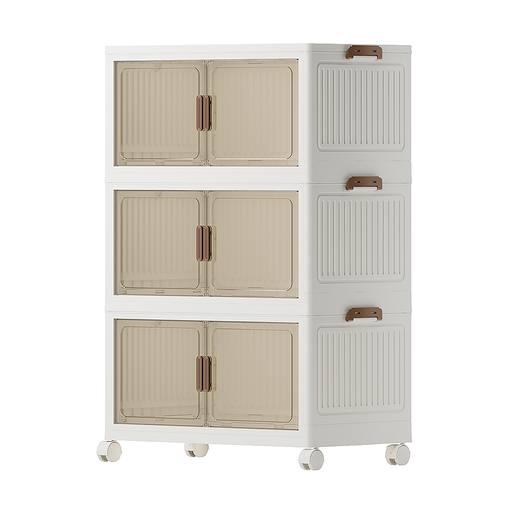
Why it suits this profile: This compact plastic cabinet is designed for light items such as books, toiletries, snacks and office supplies. The tool-free click assembly may be useful in a student room, flat or small workspace.
The product information explicitly states that the cabinet is not intended for heavy industrial loads. This makes it clearer what you should and should not use this model for.
PP plastic, smooth surface, three tiers and easy maintenance with a soft damp cloth.
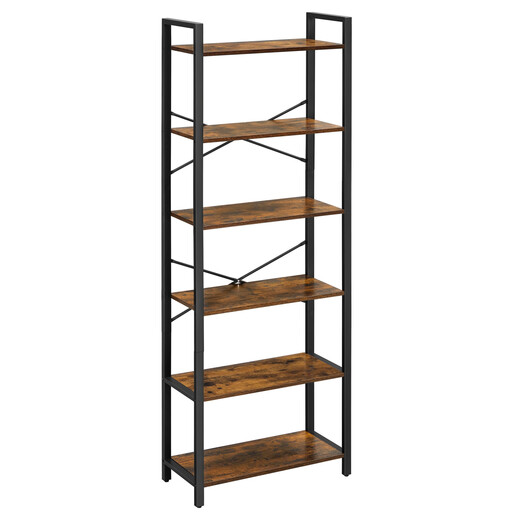
Why it suits this profile: If you are looking for a freestanding bookcase for the living room, bedroom or study, this model offers six tiers with a combination of steel and chipboard. Its vertical design helps make the most of limited floor space.
The stated X-bracing, adjustable feet and anti-tip kit address stability. Wall fixing is still required according to the product information.
Dimensions 30 x 66 x 186 cm, steel frame and a stated total static load of 60 kg.
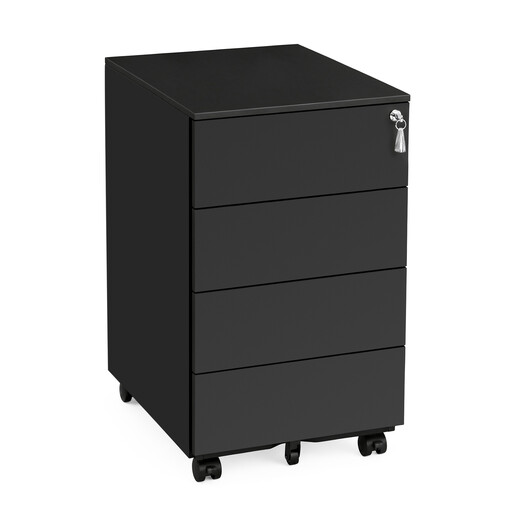
Why it suits this profile: For an office, home workspace or small business with a lot of paperwork, a lockable cabinet with four drawers is a practical choice. The supplied wheels make it possible to move the cabinet when the layout changes.
According to the product details, the cabinet is pre-assembled and has a lock. This reduces assembly work and keeps documents out of direct view; check for yourself which documents you need to secure according to your own policies.
Steel construction, four drawers, lock, optional wheels and a stated load capacity of 15 kg per drawer.
We have put together a complete, up-to-date list of products that fully meet these strict selection criteria and the applicable European safety regulations.
First, measure the ring binders you use. A cabinet for standard folders needs more usable depth than a cabinet for books or decorations. Also allow for the back panel and any doors. The external dimensions alone do not always show the exact internal space.
That depends on the construction, load and wheel brakes. A mobile storage cabinet with 360-degree swivel castors is practical if you move it regularly. Apply the wheel brakes when using the cabinet and distribute the weight evenly. A tall shelving unit is generally more suitable for a fixed position and wall mounting.
Its lifespan depends on the material, assembly, load and maintenance. Steel can be useful for intensive office use, while chipboard and plastic may be suitable for lighter storage. A cabinet will generally last longer if you respect the maximum load, check the screws occasionally and limit exposure to moisture or heat.
