
Vandaag of morgen in huis

Kwaliteit gegarandeerd

Welkomstaanbiedingen ontgrendelen: GRATIS bezorging | Tot 80% korting | Gratis 30 dagen JoyPlus-proefperiode
Download de app
A storage cabinet should do more than simply keep your belongings out of sight. In a Dutch living room, student bedroom, home office or garage, every centimetre counts. Yet a cabinet that looks suitable on paper is not always practical for everyday use. A cabinet that is too deep can block a passageway, an open unit collects dust and a lightweight shelf may bow under the weight of heavy books.
The following three pitfalls are common:
Looking only at the number of compartments
Six or ten compartments may sound spacious, but the dimensions of each compartment determine what will actually fit inside. So check the internal height, width and depth. A ring binder, printer or storage box needs more room than a few books.
Confusing load capacity with the overall strength of the cabinet
For example, one product may support 5 kg per shelf, while another cabinet states a total weight capacity of 50 kg. These figures are not directly comparable. Also check whether the figure refers to a static load: this means the weight is resting still on the shelf. It does not mean that the cabinet is suitable for climbing on or moving while loaded with heavy items.
Overlooking stability and wall fixing
A tall bookcase or open cabinet can tip over if the load is unevenly distributed. A supplied anti-tip kit is not a substitute for proper installation: secure the cabinet to a suitable wall according to the instructions. Place heavy items at the bottom and use a level surface.
Measure not only the area where the cabinet will stand, but also the doors, skirting boards and space needed for assembly. A space-saving storage cabinet is often tall and narrow. This makes good use of vertical space, but requires extra attention to anchoring.
A cabinet measuring 24 cm deep may fit into a narrow alcove, while a 40 cm model is deeper and can therefore hold more items. Open compartments are useful for books and ornaments in a living room. For documents or tools, a closed filing cabinet or metal storage cabinet may be more practical.
Particle board is a commonly used material for a bookcase or open cabinet. It is suitable for books and home accessories as long as the stated weight per shelf is not exceeded. Steel is a more logical choice for tools, office supplies or intensive use. With metal models, check whether the shelves are adjustable and what weight each shelf can support.
The values stated by the manufacturer are the ones to follow. According to the product information provided by the relevant brands, these load capacities apply under normal, static use. Distribute the weight evenly and do not place items above the stated limit.
A storage cabinet with wheels is useful if you regularly change your layout. Look for castors, brakes and the type of flooring on which the cabinet will stand. A mobile cabinet is not automatically suitable for heavy loads or thresholds.
For confidential documents, a lockable cabinet or filing cabinet with a lock is a better choice than an open shelving unit. For books and accessories, an open storage rack gives you a quick overview of the contents. So choose based on how you intend to use it first, and only then consider colour or style.
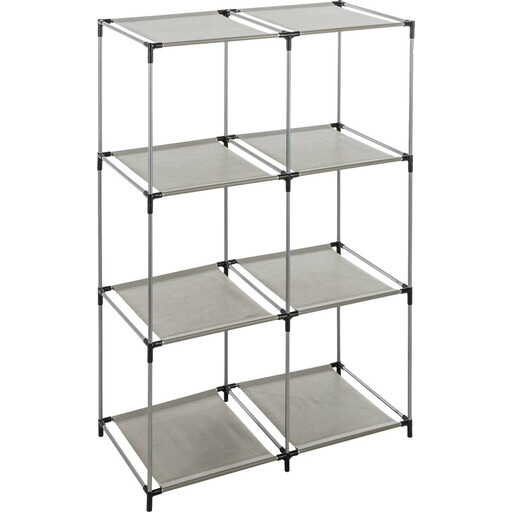
Why it suits this profile: This compact storage rack is suitable for a bedroom, student room, playroom or home office. Measuring 68 x 34 x 98 cm, it takes up relatively little floor space.
The product information states a maximum of 3 kg per box and a maximum of 15 kg for the entire unit. This makes it clear from the outset that the model is intended for lightweight items, not heavy archive files.
Three tiers, suitable for baskets up to 31 x 31 cm, with a metal and PP plastic construction. Wall anchoring is required.
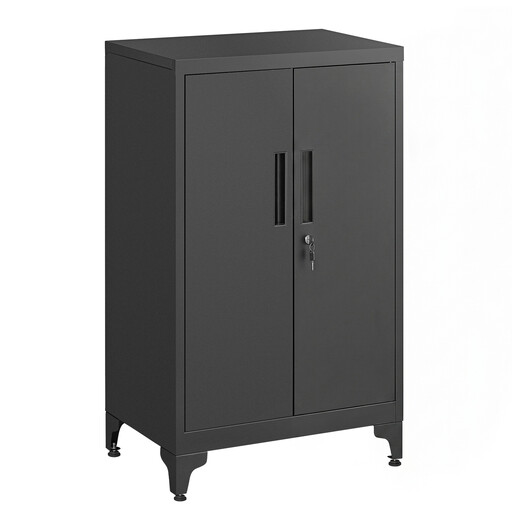
Why it suits this profile: A practical choice for a garage, office or home workspace where belongings need to be stored out of sight and behind a lock.
The cabinet has lockable doors, adjustable shelves and a stated load capacity of 25 kg per adjustable shelf. However, check the wall fixing and ensure it is placed on a level surface.
Steel construction, measuring 40 x 60 x 90 cm, lockable with a key and suitable for tools, files or office supplies.
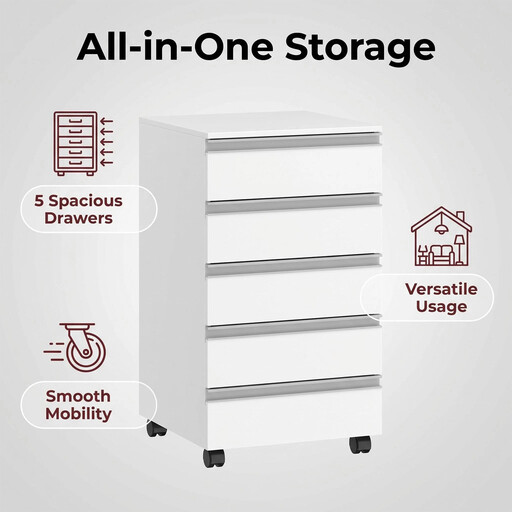
Why it suits this profile: This mobile cabinet is ideal for workshops, studios and offices where documents, drawings, tools or materials regularly need to be moved from one place to another.
The specifications list five drawers, castors with front locking mechanisms and a total load capacity of 50 kg. This means storage and mobility can be assessed separately.
Measuring 40.5 x 40.5 x 65.5 cm, with five deep drawers and a flat top suitable for a small printer or equipment.
For books, plants and home accessories, a bookcase with open compartments keeps everything easy to see. The JOYFURNOS Cloud White 6-Tier Open Bookcase is 60 cm wide, 178.5 cm high and 24 cm deep. According to the product information, each shelf can support a maximum of 5 kg, and four internal shelves are height-adjustable. This makes the model suitable for lightweight to medium-weight items, provided it is correctly secured to the wall.
A wide cabinet with cube compartments is useful when you want to keep boxes, clothing or toys out of sight. For confidential documents, a filing cabinet with a lock makes more sense. In an office, a mobile filing cabinet can make use of the space beside a desk, while a metal storage cabinet is better suited to tools or heavier office supplies.
Always check the following before buying:
We have put together a complete, up-to-date list of products that fully meet these strict selection criteria and the applicable European safety regulations.
First, level the cabinet and distribute heavy items across the lower compartments. Then use the supplied anti-tip kit according to the instructions. Check that the fixing hardware is suitable for your type of wall. If in doubt, professional installation may be advisable.
Measure the available width and consider choosing a tall, narrow cabinet. An open cabinet with a shallow depth takes up little floor space, while a mobile cabinet with wheels can be positioned flexibly. However, remember to allow for the swing radius of doors and drawers.
Its lifespan depends on the material, load, assembly and frequency of use. Follow the stated load capacity, keep particle board away from moisture and do not use a metal cabinet as a workbench unless this is specified. Regularly checking the screws, wheels and wall fixings will help keep the cabinet stable.
