
Vandaag of morgen in huis

Kwaliteit gegarandeerd

Welkomstaanbiedingen ontgrendelen: GRATIS bezorging | Tot 80% korting | Gratis 30 dagen JoyPlus-proefperiode
Download de app
Buying a storage cabinet seems straightforward, until you discover that it won’t fit through the hallway, the shelves don’t offer enough space or the doors hit a radiator. Marketing copy can be confusing too. A cabinet may be described as multifunctional, durable or moisture-resistant, while the details that really matter are often in the dimensions, materials and assembly instructions.
Use these buying tips to compare storage cabinets by their practical features. That way, you can find the right piece of furniture for your bathroom, hallway, bedroom, living room, kitchen or home office.
A cabinet that’s 35 cm deep may look compact, but the usable interior space could be smaller because of doors, hinges and back panels. So measure not only the available space, but also check:
A narrow storage cabinet or shoe cabinet can be useful in a narrow hallway, but make sure tall furniture won’t wobble. For taller models, it’s important to check for an anti-tip mechanism and wall fixings.
Moisture resistance matters for a bathroom cabinet, but it doesn’t automatically mean the furniture can withstand prolonged contact with water. Check the material, finish and distance from the floor. A raised base makes cleaning easier and can help keep splashed water away from the furniture.
Some models are described as having MDF, steel or particleboard treated for use in damp environments. This is a product claim made by the brand. Don’t use the cabinet as a shower screen, and wipe up any spills as soon as possible.
A storage cabinet with doors keeps belongings out of sight, but fixed shelves aren’t always suitable for tall bottles, shoes or storage boxes. A storage cabinet with drawers works well for smaller items, but drawers take up space within the frame and are less suitable for large boxes.
Adjustable shelves offer more flexibility. Check how many shelf positions are available and whether the shelves can be removed. That way, you won’t end up with a cabinet that only suits one type of item.
Before you start looking, make a note of what you want to store in the cabinet. For shoes, count how many pairs you have and allow for boots or high-top trainers. For a bathroom cabinet, measure the height of your toiletries and towels, and consider the space around the basin.
A chest of drawers is practical for accessories, cables and small household items. A bookcase needs enough shelf depth and a sturdy back. A sideboard or living room cabinet often has a wide top, but always check the maximum load if you plan to place a television or heavy decorations on it.
Many storage units combine particleboard or MDF with metal. Look out for:
Also check whether the cabinet has a smooth surface. In a hallway or kitchen, dust and marks are inevitable, so a wipe-clean finish can save you time.
Self-assembly is common. Before buying, check whether numbered parts, clear instructions and assembly hardware are included. The stated assembly time is an estimate from the manufacturer and may vary depending on the situation.
A tall shoe cabinet or living room cabinet should ideally be secured to the wall. Follow the instructions for the anti-tip mechanism and use fixings suitable for your type of wall. Also check the maximum load for the shelves, drawers and top. Where possible, place heavier items at the bottom.
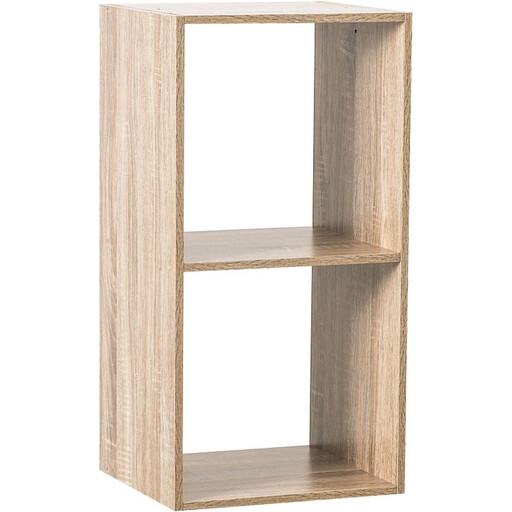
Why it suits this buyer: This compact open cabinet fits into a small home office, bedroom or hallway, combining two drawers with open compartments.
The dimensions and weight of 6.3 kg are clearly stated, helping you judge in advance whether the unit will fit in your chosen spot.
34.5 × 32 × 67.6 cm, two drawers, open compartments and a stated maximum load of 25 kg.

Why it suits this buyer: Households with plenty of shoes get five tiers, closed doors and an open compartment at the bottom for everyday pairs.
The product description states that it holds around 22 to 25 pairs and that the doors help protect shoes from dust. Check that it will fit larger sizes.
Five storage tiers, enclosed storage, metal legs and a top for decorative items.
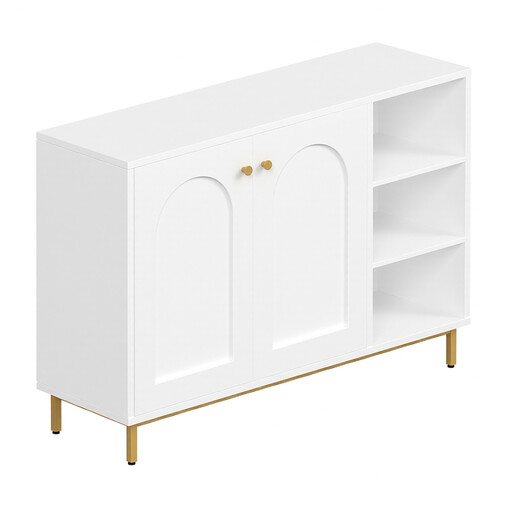
Why it suits this buyer: This slim shoe cabinet is designed for hallways where floor space is limited. According to the product description, it holds up to 12 pairs of shoes.
At 60 × 24 × 104.5 cm, you can check the floor and wall space needed before buying. According to the product information, the shelves are adjustable and removable.
Slim depth, two doors, a drawer and adjustable shelves for shoes or small items.
Why it suits this buyer: This unit combines closed compartments with open shelves and is designed for towels, toiletries and decorative items in the bathroom.
The product description lists three adjustable shelf heights and a clearance of 12.5 cm. This helps accommodate bottles of different heights and makes it easier to clean the floor.
Approx. 35.5 × 100.5 × 75.5 cm, three adjustable shelves, open compartments and an anti-tip mechanism.
We’ve put together a complete, up-to-date list of products that meet these strict selection criteria and the applicable European safety regulations.
First, measure the maximum depth, width and height available. A shoe rack takes up little space, but leaves your belongings on show. A slim shoe cabinet with doors creates a tidier look. If you choose a tall model, secure it to the wall and check that the doors can open fully.
Don’t place the cabinet somewhere it will be constantly splashed with water. Ventilate the bathroom, dry damp surfaces and consider using a removable mat at the bottom. A model with raised legs or a raised base is easier to clean around. How “moisture-resistant” it is will still depend on the materials, finish and conditions of use.
It depends on what you’re storing. Adjustable shelves offer clear flexibility for bottles, boxes, shoes and towels. If you’re only storing books or items of a similar height, a fixed layout may be enough. Always check how many shelf positions are available and the maximum load for each shelf.
