
Vandaag of morgen in huis

Kwaliteit gegarandeerd

Welkomstaanbiedingen ontgrendelen: GRATIS bezorging | Tot 80% korting | Gratis 30 dagen JoyPlus-proefperiode
Download de app
A storage cabinet may seem straightforward to choose, until you need to decide how much space you need, where the cabinet will go and what it needs to hold. A filing cabinet has different requirements from a bedside cabinet, shoe cabinet or metal storage cabinet for a workshop. So don’t focus only on colour and price. Pay particular attention to dimensions, load capacity, material and ease of use.
An 80 cm-wide cabinet may fit the room perfectly, but the usable interior space can be disappointing because of thick side panels, runners or a fixed layout. As well as the overall dimensions, check:
Also measure skirting boards, door frames and the walking space around the cabinet. For an office or home-office storage cabinet, the space under or beside a desk is often limited.
A cabinet may look spacious but still be unsuitable for heavy folders, paper or equipment. Check the stated load capacity of the entire cabinet, as well as the maximum weight for each drawer or shelf. A metal storage cabinet is not automatically suitable for heavy loads: the construction, joints and shelf supports also affect its stability.
Only place a printer, tools or other heavy equipment on a top panel if the stated load capacity allows it. Some models have a separate maximum load for the top panel.
A mobile filing cabinet is useful when you regularly change your layout, but the wheels must turn and lock properly. Without brakes, a cabinet may move when you open a drawer. With a tall storage cabinet with doors or drawers, an anti-tip feature is also important. Follow the assembly instructions and attach any supplied anti-tip kit to the wall when instructed to do so.
A lockable filing cabinet can help protect your privacy, but check exactly what is locked: only the drawers, the doors or the entire cabinet. A lock is not a substitute for careful document management.
Decide in advance what you want to store. Deep drawers or adjustable shelves are practical for files. For small office supplies, an office drawer unit often makes it easier to stay organised. A hallway wardrobe needs enough height for coats, while a shoe cabinet mainly requires wide, well-ventilated compartments.
Pay attention to the balance between width, depth and height. A deep cabinet provides more storage space, but it can restrict access in a narrow study. A low model may fit beneath a window or desk, while a tall model makes better use of the wall.
Melamine-faced chipboard can be suitable for everyday use and is usually easy to wipe clean. However, check that the edges are properly finished, particularly in areas where spills may occur. Steel is generally easy to clean and can be a practical choice for a workshop, office or utility room. The material alone does not determine how stable the cabinet will be.
For damp rooms, check whether the product description states that the cabinet is moisture-resistant. Do not leave wooden board materials in a wet environment for extended periods if no such specification is provided.
Full-extension runners provide access to the back of a drawer, but require sufficient space in front of the cabinet. Doors with magnetic catches open quickly, while adjustable shelves make a storage cabinet more flexible for items of different heights.
Also check whether assembly is required. A pre-assembled filing cabinet saves time, while a flat-pack model may be easier to carry through a narrow doorway. For products that require assembly, look for labelled parts, clear instructions and any requirement for wall anchoring.
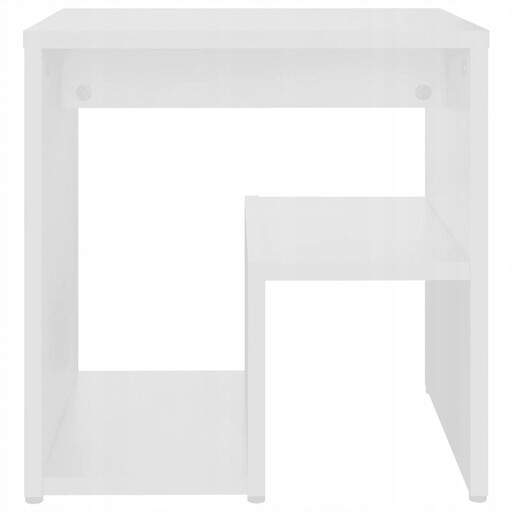
Why it suits this profile: This compact model is suitable for a bedroom, small study or corner where you want to store a few books, remote controls and small items.
The overall dimensions are clearly stated: 40 × 30 × 40 cm. This means you can check in advance whether the cabinet will fit in your chosen location. It is not designed for heavy files or large quantities of items.
Includes a shelf and back panel; according to the product description, the surface can be cleaned with a damp cloth. Assembly is required.
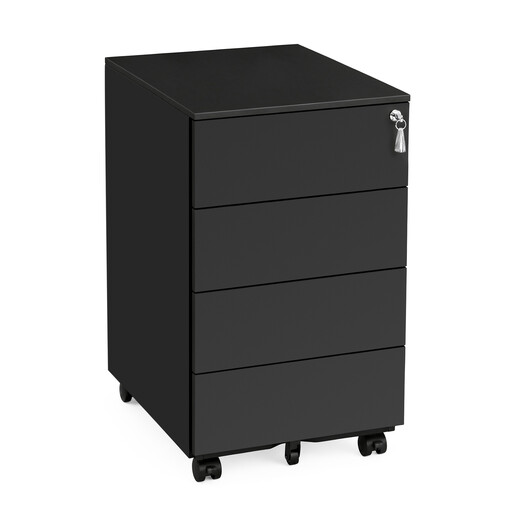
Why it suits this profile: A practical choice for an office or home office where documents and stationery need to be kept organised and secure.
According to the product information, the cabinet is delivered pre-assembled. This reduces the risk of incorrect assembly. The four drawers are lockable and feature full-extension runners.
Steel construction, four drawers, an additional storage tray and a stated load capacity of 15 kg per drawer. Wheels are included for easy mobility.
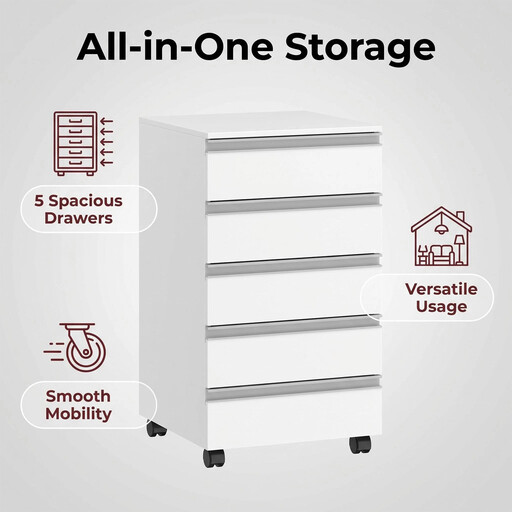
Why it suits this profile: The five drawers and wheels are ideal for studios, workshops and offices where materials, drawings, accessories or tools are frequently moved around.
The stated dimensions are approximately 40.5 × 40.5 × 65.5 cm and, according to the product description, the total load capacity is 50 kg. The front wheels have locks to help prevent the cabinet from moving.
Five deep drawers, 360° castors and a top panel which, according to the product specifications, can support small printers or equipment. Materials: chipboard and steel.
We have put together a complete, up-to-date list of products that fully meet these strict selection criteria and the applicable European safety regulations.
Measure the width, height and depth of the available space. Leave extra room at the front for opening doors and extended drawers. Also check whether the packaging will fit through hallways, staircases and doorways.
That depends on the construction and the stated load capacity. Check the maximum load for each shelf, drawer and top panel. Store heavy items low down in the cabinet to keep the centre of gravity low, and secure a tall cabinet to the wall if an anti-tip kit is supplied.
Create designated zones: for example, documents by subject, tools by type and office supplies by frequency of use. Label drawers and shelves, and keep everyday items within easy reach. After assembly, check that the doors, runners and wheels operate smoothly.
