
Vandaag of morgen in huis

Kwaliteit gegarandeerd

Welkomstaanbiedingen ontgrendelen: GRATIS bezorging | Tot 80% korting | Gratis 30 dagen JoyPlus-proefperiode
Download de app
An storage cabinet may seem straightforward to choose, but an attractive model is not automatically suitable for your belongings or your space. A cabinet that is too deep can block a walkway, an open cabinet collects dust more quickly and unclear load capacity can cause problems when you stack books, ring binders or equipment.
For living rooms, bedrooms, student rooms, home offices and professional workplaces, three pitfalls are particularly important:
Measure the available space at three points: width, height and depth. Take skirting boards, radiators, sockets and the space needed to open doors or drawers into account.
A tall bookcase makes good use of vertical space, but usually needs to be secured to the wall. An open cabinet that is 24 cm deep is suitable for books and decorations, while ring binders and some storage boxes require more depth. For an office or home office cabinet, it is also practical to check whether A4 folders fit upright.
The product information often specifies a maximum static load. This is the weight that the cabinet or shelf can support during stationary use according to the specification. Ideally, distribute heavy items across several shelves and place compact, heavy objects at the bottom.
A drawer cabinet on wheels or mobile filing cabinet is useful when you regularly change the layout. For a wheeled model, check whether the wheels can be locked and whether the floor is suitable for moving it.
A cabinet with open compartments provides quick access to books, baskets and accessories. A model with doors protects the contents better from dust and creates a calmer look. Drawers are practical for documents and small office supplies, particularly when they are fully extendable.
Also consider:
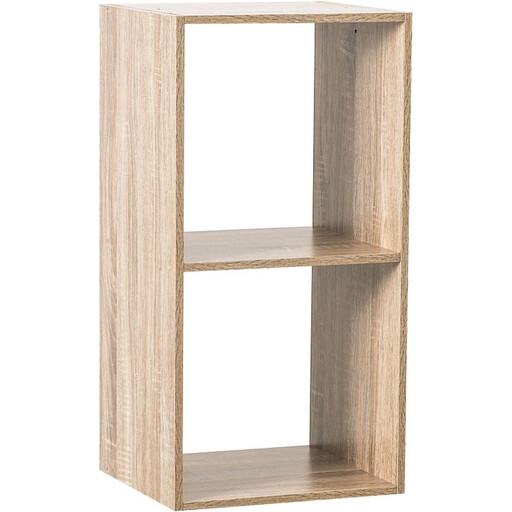
Why it suits this profile: This compact bookcase combines open compartments with two drawers, making it suitable for a student room, bedroom or small living-room storage area.
The dimensions of 34.5 x 32 x 67.6 cm make its size easy to assess. The stated maximum load is 25 kg, so distribute heavy items across the cabinet.
Open compartments, two drawers, FSC certification information and self-assembly for one person according to the product information.
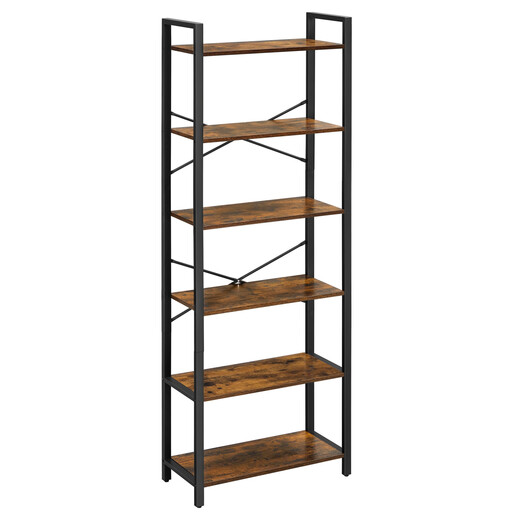
Why it suits this profile: A tall bookcase for anyone who wants to store lots of books and decorations vertically in the living room, study or home office.
The product specifications mention X-shaped reinforcement, adjustable feet and an anti-tip kit. Wall anchoring is still required for safe use.
Six tiers, a total stated static load of 60 kg and a combination of steel and chipboard.
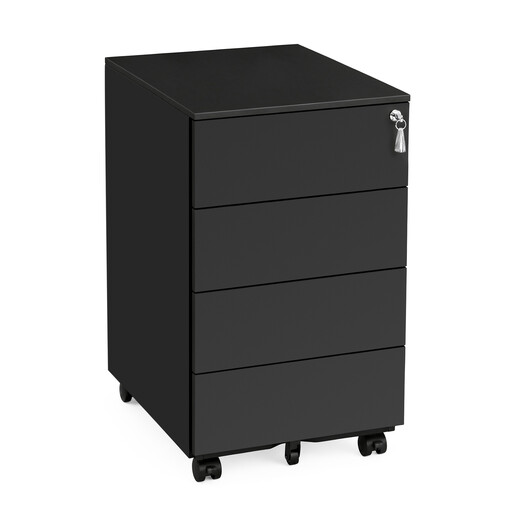
Why it suits this profile: This filing cabinet is designed for professionals, home workers and studios that want to keep documents, stationery and office supplies mobile and securely stored.
A lock prevents documents from being freely accessible. The cabinet arrives pre-assembled, reducing a common assembly obstacle.
Four drawers, a steel construction, wheels and a stated load capacity of 15 kg per drawer.
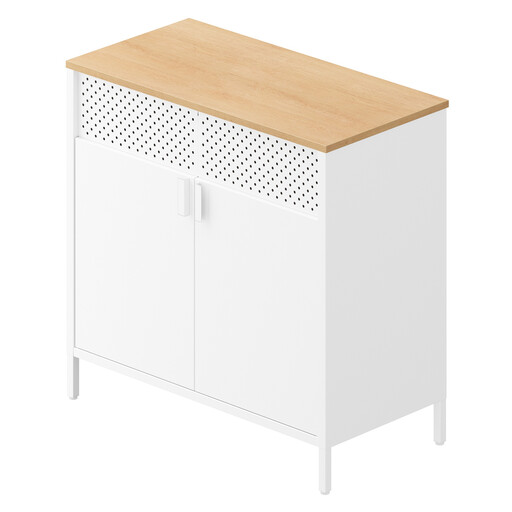
Why it suits this profile: This double-door cabinet can be used as a sideboard, TV unit or office cabinet, providing enclosed storage for home accessories and everyday items.
The adjustable shelf means you are not restricted to a single compartment height. According to the product information, the steel cabinet body is moisture-resistant and easy to clean.
Two doors with magnetic catches, an adjustable shelf and a stated load capacity of 50 kg for the top surface.
We have compiled a complete, up-to-date list of products that fully meet these strict selection criteria and the applicable European safety regulations.
Choose a model that makes use of the available height without being too deep. A narrow bookcase or open cabinet keeps the floor clear. Measure the available wall space beforehand and check whether the cabinet can be secured to the wall. For small bathrooms, kitchens or student rooms, a lightweight plastic cabinet can be practical, provided you respect the stated shelf load capacity.
An open cabinet gives you an immediate view of books and accessories, but requires more frequent dusting and a tidy arrangement. A cabinet with doors conceals loose items and protects the contents better from dust. For documents, drawers or a lockable filing cabinet are often more practical than open compartments.
Place the cabinet on a level surface, put heavy items at the bottom and follow the assembly instructions. Use the supplied anti-tip kit if one is included with the product. Do not let children climb on shelves, drawers or a trolley. For a mobile filing cabinet, also check that the wheels can be locked before placing heavy equipment on top.
