
Vandaag of morgen in huis

Kwaliteit gegarandeerd

Welkomstaanbiedingen ontgrendelen: GRATIS bezorging | Tot 80% korting | Gratis 30 dagen JoyPlus-proefperiode
Download de app
A storage cabinet can quickly make a hallway, living room, bedroom, bathroom or home office feel much more organised. Yet many people buy a cabinet that turns out to be disappointing in practice. The dimensions prove awkward, shelves aren’t suitable for heavy items, or assembly takes longer than expected.
With these practical checkpoints, you can compare a storage cabinet based on useful specifications rather than just looks or marketing claims.
A cabinet that is 100 cm wide might fit nicely against the wall, but a depth of 32 cm feels very different in use compared to a cabinet that is 40 cm deep. So don’t just measure the available wall space – also consider:
For a narrow hallway, a narrow cabinet or shoe cabinet with limited depth can be more practical. For ring binders, tools or larger storage boxes, you’ll need more internal space.
A stated maximum load isn’t a recommendation to fill every shelf completely. Check whether the weight applies to the whole cabinet, the top panel or each individual shelf. Place heavy items low down and distribute the weight evenly.
A cabinet with particle board compartments, for example, is suitable for books, baskets and household items within the stated limit. For tools or heavy archive files, a metal storage cabinet with adjustable shelves may be a better choice.
With many models, you’ll need to assemble it yourself. So check beforehand:
A freestanding cabinet should stand stable. Always follow the assembly instructions and place heavy items at the bottom. Don’t let children hang from shelves, drawers or the cabinet itself.
A storage cabinet with shelves works well when you want to organise items by category. Open compartments give you a quick view of the contents, while a cabinet with doors keeps dust and loose items more out of sight. A cabinet with adjustable shelves offers extra flexibility for tall bottles, shoes, folders or storage boxes.
Also pay attention to the ratio between the external dimensions and the usable internal space. A model with thick side panels or fixed dividers may offer less storage space than the external measurements suggest.
Particle board and MDF are widely used for indoor cabinets. Check the product information for:
For a bathroom cabinet, it’s wise not to assume that every model is suitable for damp conditions. Look for an explicit product description about moisture resistance, and keep splashes and prolonged contact with water to a minimum.
An office storage cabinet should primarily suit documents, equipment and office supplies. For lots of drawers, a filing cabinet on castors can be handy, as you can move it under or beside a desk.
Check whether a cabinet includes an anti-tip kit or other fixing. The JOYFURNOS metal cabinet is supplied with an anti-tip kit according to the product description. The narrow HaluPeit shoe cabinet mentions an anti-tip device in the product information.
A CE mark or FSC label says something about the stated conformity or material origin, but doesn’t replace correct assembly. Always check the current product information and follow the manufacturer’s safety warnings.
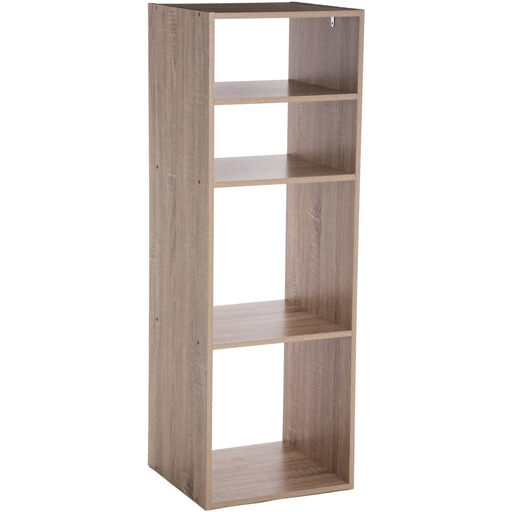
Why this suits the profile: With a width of 34.5 cm and a height of 100.5 cm, this cabinet fits into a narrower alcove, bedroom or home office. The four shelves offer a simple layout for everyday items.
The product information states a maximum load of 40 kg and clearly shows the external dimensions. This means you can assess beforehand whether the cabinet is suitable for your belongings.
Four shelves, indoor use, approximately 30 minutes assembly and, according to the product information, assembly by one person.
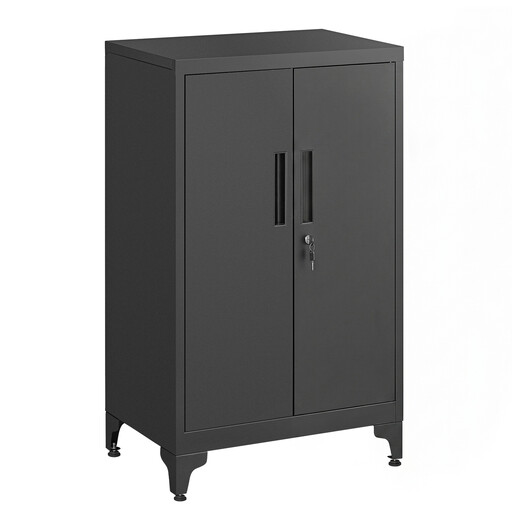
Why this suits the profile: This steel cabinet is designed for the garage, office, kitchen or home office. The lockable doors and adjustable shelves are practical for documents, tools and loose supplies.
The stated load is broken down: a maximum of 30 kg for the top panel and 25 kg per adjustable shelf. This prevents confusion about the load capacity.
Steel construction, dimensions of 40 x 60 x 90 cm, adjustable shelves and included anti-tip kit.
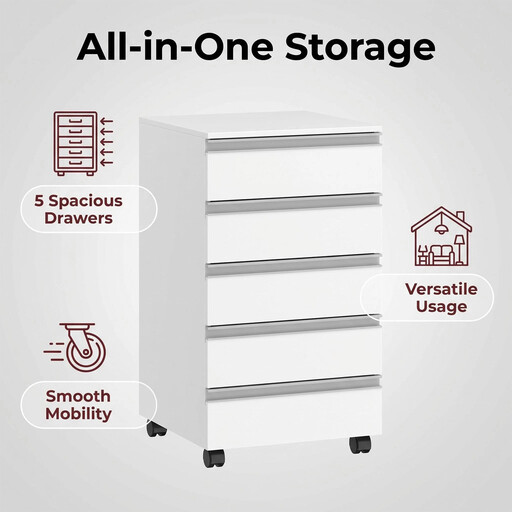
Why this suits the profile: A workshop, office or hobby room benefits from five drawers and castors. You can keep documents, tools or accessories organised by type and move the cabinet when your workspace changes.
The size is compact: approximately 40.5 x 40.5 x 65.5 cm. The description also mentions lockable front castors, so moving and standing still are clearly distinguished.
Five drawers, steel components, a stated total load of 50 kg and a top panel for small equipment.
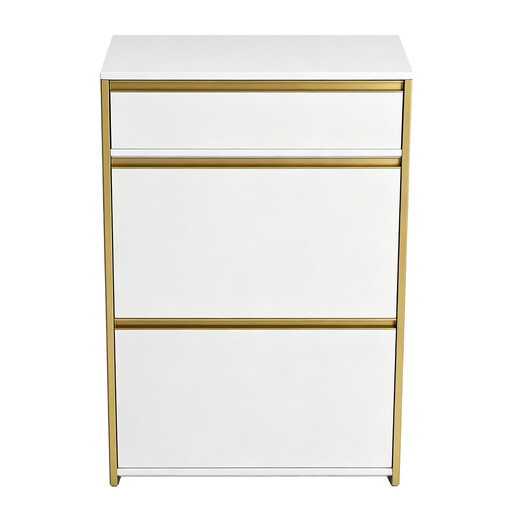
Why this suits the profile: With a depth of 24 cm, this model is aimed at hallways where every centimetre counts. The combination of doors, a drawer and four adjustable shelves makes the cabinet useful for shoes and small items.
The adjustable and removable shelves make it possible to adapt the layout to different shoe sizes. The product information also mentions wall fixing to prevent tipping.
Dimensions of 60 x 24 x 104.5 cm, two doors, a drawer and space for up to 12 pairs of shoes according to the product description.
We’ve put together a full, up-to-date list of products that fully meet these strict selection criteria and current European safety regulations.
First measure the maximum depth and leave room for the walking route. A shoe cabinet around 24 cm deep can be suitable for a narrow hallway. Also check the width of doors and drawers when they are open.
The lifespan depends on the material, assembly, load and use. A cabinet generally stays looking good for longer if you respect the maximum load capacity, place heavy items at the bottom and only use it in damp rooms when the product information confirms it is suitable.
Besides the purchase price, assembly, wall fixing and any accessories are particularly relevant. A cabinet with fixed shelves may be cheaper, but a model with adjustable shelves or castors may better suit changing needs. With a cabinet without lighting or electrical components, the ongoing energy costs are typically zero.
