
Vandaag of morgen in huis

Kwaliteit gegarandeerd

Welkomstaanbiedingen ontgrendelen: GRATIS bezorging | Tot 80% korting | Gratis 30 dagen JoyPlus-proefperiode
Download de app
A storage cabinet can quickly bring a sense of order to your hallway, living room, bedroom, bathroom or kitchen. But sometimes a purchase doesn’t live up to expectations. A cabinet that looks spacious in a photo may have very little usable depth in reality. Load capacity, wall fixing and interior layout can also be overlooked.
These common pitfalls are worth watching out for:
Measure not only the width, but also the depth, height and clearance for opening the door. In a narrow hallway, a slim storage cabinet around 30 cm deep may be more practical than a wider model. Remember to allow for skirting boards, sockets and radiators, too.
A tall storage cabinet makes good use of vertical space, but check that the ceiling height and assembly location are suitable. In a living room, a wall cabinet can free up floor space. For a bathroom or kitchen cabinet, the available depth is especially important, so that doors and drawers can open fully.
A storage cabinet with doors is ideal for items you’d rather keep out of sight, such as cleaning products, food supplies, electronics or shoes. Check how many compartments it actually has and whether the shelves are adjustable.
A storage cabinet with drawers works well for smaller items such as towels, cosmetics, stationery or kitchen utensils. Just remember that drawers need extra space in front of the cabinet. A unit with open compartments is handy if you want boxes, books or baskets to be visible and easy to reach.
For a shoe cabinet, the number of pairs it holds isn’t the only thing to consider. Check the height of each compartment and how the doors open, too. Tall shoes and boots won’t fit in every compartment.
Many models are made from engineered wood, MDF, chipboard or bamboo. The product information should clearly state which material has been used. Engineered wood often has a smooth surface that can be wiped with a lightly damp cloth, but avoid prolonged contact with water.
Check that the maximum load capacity is suitable for what you plan to store. Spread heavy items across several shelves and place them as low down as possible. A tall or narrow cabinet may need extra stabilisation. Follow the assembly instructions and use screws and wall plugs that are suitable for your wall. If you’re unsure how much weight your wall can support, ask a qualified professional for advice.
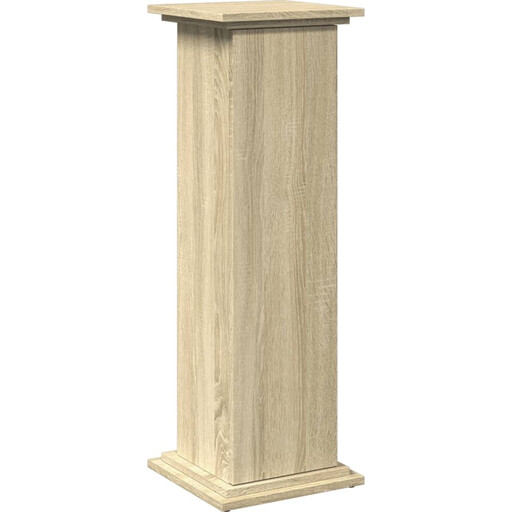
Why it suits this need: Its compact size makes it a good fit for a hallway, bedroom or small living room. According to the product information, the door can be fitted to open from either the left or right.
The specifications list 3 concealed compartments and a total load capacity of 60 kg. The cabinet must be fixed to the wall to prevent it from tipping over; screws and wall plugs are not included.
31 × 30 × 90 cm, 3 compartments, a smooth surface and a total load capacity of 60 kg, according to the product details.
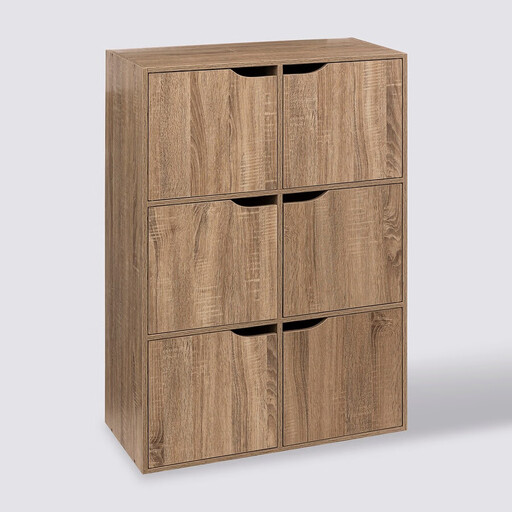
Why it suits this need: This model offers plenty of separate storage space for a living room, bedroom or pantry where a wider cabinet would be welcome.
The layout is clearly specified: 6 doors and compartments. That means you don’t have to rely on the dimensions or product photo alone.
67.5 × 32 × 100.5 cm, a maximum load capacity of 90 kg and FSC information in the product details. Assembly takes around 60 minutes with 2 people.
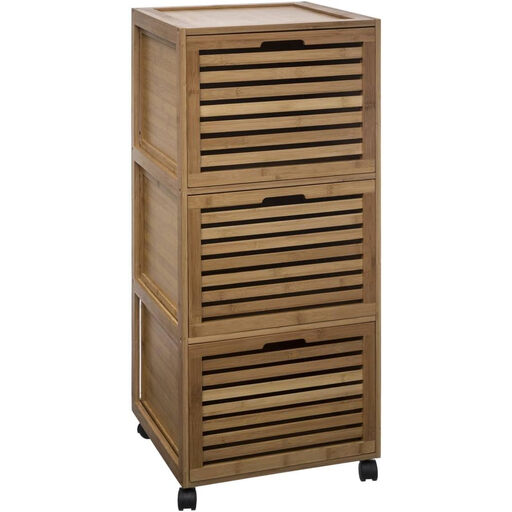
Why it suits this need: The castors make this storage unit a practical choice for a bathroom, kitchen or pantry if you want to move it from time to time.
The product details list 3 drawers, the dimensions and a maximum load capacity of 35 kg. This makes it easier to see whether the cabinet is suitable for towels, cosmetics or food supplies.
41.8 × 41 × 93 cm, 3 drawers, castors and bamboo elements, according to the product description. You’ll need to assemble it yourself.

Why it suits this need: Its enclosed design is made for storing shoes in a hallway, bedroom or wardrobe. The top can be used to display decorations.
The description lists 5 tiers, doors and an open bottom shelf. Before buying, check that you have enough space and that your shoes will fit in the compartments.
5 storage tiers, enclosed doors and an open bottom shelf, according to the product information. Assembly instructions and the tools required are listed.
We’ve put together a complete, up-to-date list of products that meet these strict selection criteria and current European safety regulations.
Place the cabinet on a level surface and allow for skirting boards and doors. Wall fixing is important for tall, narrow or heavy cabinets. Use wall plugs and screws suitable for concrete, brick, plasterboard or your particular wall surface. Check regularly that the fixings are still secure.
Its lifespan depends on the material, assembly, load and care. Don’t store items that exceed the stated load capacity, and spread the weight across the shelves. Keep wooden surfaces dry and clean them with a soft, lightly damp cloth if the product information says this is suitable.
That depends on how you plan to use it. Doors are useful for larger or less decorative items, keeping the contents out of sight. Drawers give you quick access to smaller items, but need space in front of the cabinet. For books and baskets, a unit with open compartments may be more practical. Start by thinking about what you want to store, then measure the space available.
