
Vandaag of morgen in huis

Kwaliteit gegarandeerd

Welkomstaanbiedingen ontgrendelen: GRATIS bezorging | Tot 80% korting | Gratis 30 dagen JoyPlus-proefperiode
Download de app
A storage cabinet might seem straightforward to buy, but a poor choice often only becomes apparent after assembly. A cabinet can be too deep for the hallway, lack sufficient weight capacity for books, or offer inadequate ventilation for a garage. Adjustable shelves and “space-saving design” are also frequently mentioned without making it clear what practical benefit they actually provide.
So, pay particular attention to the following pitfalls:
A narrow, tall cabinet makes good use of vertical space in a small living room or bedroom. The JOYFURNOS Cloud White bookcase, for example, is 24 cm deep, 60 cm wide and 178.5 cm high. That size can fit next to a desk or in a limited alcove, but do check the ceiling height and wall-fixing options beforehand.
For a kitchen, dining room or hallway, a wider cabinet can be more practical. A sideboard or low wall cabinet offers a worktop and is easier to access. With a kitchen cabinet, also pay attention to the position of plug sockets, skirting boards and any pipework.
A cabinet made from particle board is often suitable for books, linen and light home accessories, as long as the stated weight capacity is respected. According to the product specifications for the Cloud White bookcase, each shelf can hold a maximum static load of 5 kg. That makes it suitable for books and décor, but less sensible for heavy ring binders or tools.
For a garage and storage room, a metal storage cabinet or shelving unit is usually more practical. The JOYFURNOS 5-Tier Shelving Unit has a stated weight capacity of 130 kg per shelf and a maximum total of 650 kg, according to the product specifications. Place heavy items on the lower shelves and distribute the load evenly.
A cabinet with adjustable shelves offers more flexibility than a fixed layout. Check how many shelves are actually adjustable and whether there is a fixed middle shelf that cannot be moved. Drawers are handy for small items, but often have a lower weight capacity than fixed shelves.
A tall or wide cabinet must be stable. Use the supplied anti-tip fitting and secure the furniture to a suitable wall following the assembly instructions. This is especially important in a household with children or pets. A cabinet is not a climbing frame; always follow the manufacturer’s safety instructions.
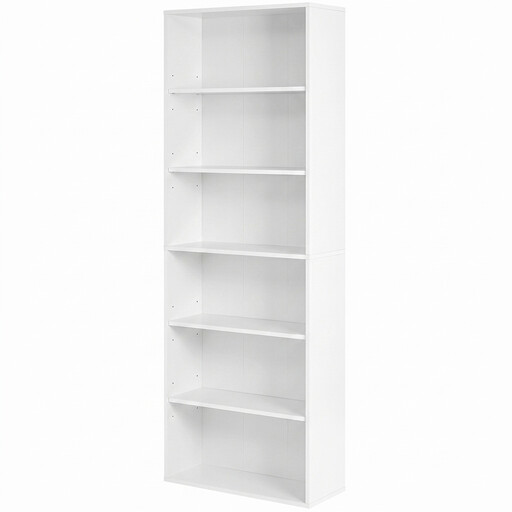
Why this fits the profile: This narrow bookcase uses height rather than taking up lots of floor space. That’s practical for a living room, home office or dining room with limited room.
The product dimensions and shelf weight capacity are clearly stated. Four inner shelves are adjustable in height; just check whether 5 kg per shelf is enough for your belongings.
Six open compartments, a white Scandinavian design, adjustable shelves and supplied anti-tip fitting.
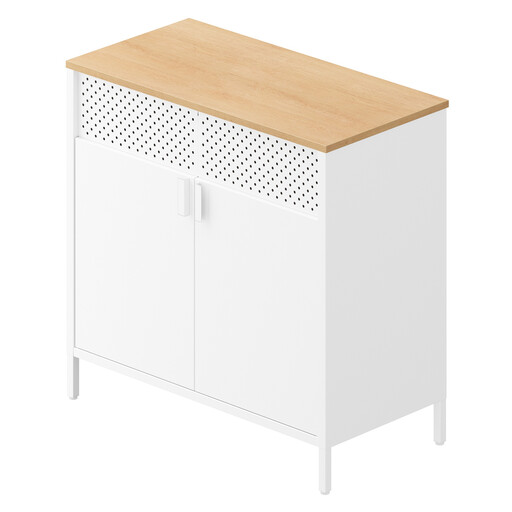
Why this fits the profile: The combination of steel and a closed double door suits those who want to keep items out of sight in the living room, dining room or home office.
The adjustable shelf prevents a fixed layout. According to the product information, the steel surface is moisture-resistant and easy to clean; don’t place the unit in a very damp room without consideration.
Dimensions of 40 × 80 × 76 cm, magnetic door catch, adjustable shelf and a pegboard at the back.
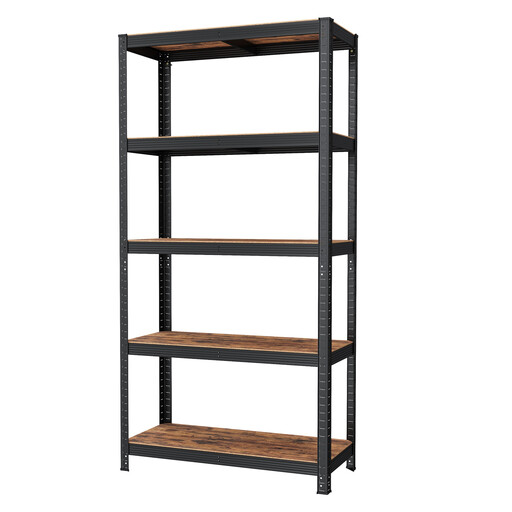
Why this fits the profile: For tools, storage boxes and equipment in a garage, cellar or storage room, a shelving unit with a clearly stated load capacity is more practical than a decorative cabinet.
The stated load capacity is 130 kg per level under static load. Wear work gloves during assembly and secure the unit to the wall using the supplied fittings.
Five levels, adjustable shelves, a steel frame and a design that can be split into two units.
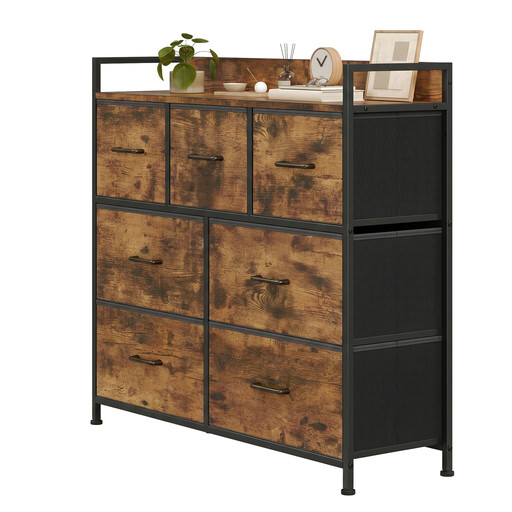
Why this fits the profile: Seven drawers help sort clothing, accessories and linen. This makes the cabinet useful as a storage cabinet for the bedroom, dressing room or living room.
The product specifications state a maximum of 3 kg per fabric drawer. This prevents you from mistaking the drawers for heavy wooden ones; heavy items belong elsewhere.
Seven drawers, adjustable feet, a metal frame and a top panel with a stated weight capacity of 50 kg.
We’ve put together a full, up-to-date list of products that fully meet these strict selection criteria and comply with current European safety regulations.
First, level the cabinet and follow the assembly instructions. Then attach the supplied anti-tip fitting to a suitable wall. Check beforehand that your wall type and fixing materials are compatible. Place heavy items on the lower shelves and distribute the weight across the shelves.
The lifespan depends on the material, load, assembly and use. A particle board cabinet will generally stay looking good for longer if it remains dry and is not loaded beyond its stated weight capacity. A metal storage cabinet or shelving unit is better suited to heavy use, as long as rust, overloading and instability are prevented.
An ordinary bookcase, chest of drawers or sideboard uses no electricity. With a kitchen cabinet that has lighting or plug sockets, the consumption depends on the LED lighting used and any connected appliances. Check the product specifications for this and switch off lighting when it’s not needed.
