
Vandaag of morgen in huis

Kwaliteit gegarandeerd

Welkomstaanbiedingen ontgrendelen: GRATIS bezorging | Tot 80% korting | Gratis 30 dagen JoyPlus-proefperiode
Download de app
Choosing a storage cabinet might seem simple: pick a colour, check if the dimensions fit, and place your order. In reality, problems often don't surface until after assembly. You might find the cabinet is too deep for the walkway, shelves start to sag, or drawers offer less space than you expected. That's why for households, families, and people working from home, it's much wiser to first consider how you'll use it and look closely at the product specifications.
A cabinet with lots of compartments doesn't automatically mean more usable space. You should also check the depth, width and height of each compartment. A cube storage unit with shallow compartments is fine for books, decorative items or storage boxes, but less suitable for large folders, toy boxes or household appliances.
Also, pay attention to the overall dimensions. Don't just measure the available wall space; remember to account for skirting boards, doors, radiators and the clearance you'll need to assemble the cabinet.
A manufacturer might state a maximum load capacity, but that doesn't always mean every compartment is suitable for heavy items. Check whether the load rating applies to a single shelf, one compartment, or the entire cabinet. It's best to distribute books, tools and other heavy items across multiple levels, placing the heaviest at the bottom.
A metal shelving unit often has a higher load capacity than a chipboard cabinet, but assembly, a level floor and wall anchoring still play a crucial role.
A tall or wide cabinet can tip over if heavy items are placed on top or if children pull on it. Always check if an anti-tip kit or wall anchor is included and follow the assembly instructions. An open-front cabinet isn't inherently unsafe, but it must be stable and secured according to the guidelines.
For self-assembly, practical points to consider are the number of people required, the estimated assembly time and the type of fixings provided. Before you buy, check that your wall is suitable for the included fixings.
Follow these steps in order:
A cabinet for the living room can combine decorative items and books. In a bedroom, drawers are handy for clothes and accessories. For a home office, narrow compartments are ideal for folders, cables and documents. A toy cabinet works best when children can reach the bottom compartments themselves.
Chipboard and MDF are widely used for affordable storage furniture. With these materials, pay close attention to the thickness, the back panel and the permitted weight. A back panel can contribute to the cabinet's rigidity, but it's no substitute for proper anchoring.
A metal shelving unit is better suited to a garage, cellar, storage room or workshop. For these, check the load capacity per level and look for adjustable shelves. For damp spaces like a bathroom, maintenance and choice of material are important. A bathroom rack should not be loaded with more weight than specified.
Always compare the same unit of measurement. A total weight capacity of 65 kg is very different from 10 kg per compartment. Also, check if the stated weight refers to a static load: this assumes stationary items and does not account for climbing, pulling or moving the unit.
For daily maintenance, a smooth surface is usually easy to wipe clean. For fabric drawers, cardboard baskets or untreated bamboo, the care instructions may be different. Follow the product information and do not use harsh cleaning agents unless recommended.
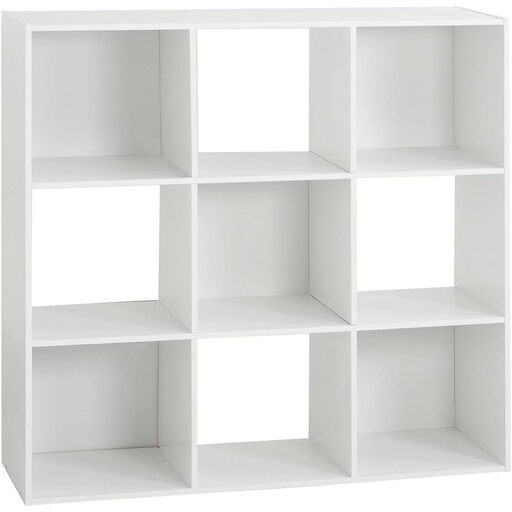
Why it's a good match: This storage cabinet offers nine open compartments and measures 100.5 × 32 × 100.5 cm. This makes it ideal for families who want to neatly organise toys, books or baskets.
The layout makes the usable compartment space clear from the start. The maximum load capacity is 65 kg for the cabinet; according to the safety information, heavy items should be placed at the bottom.
Open design, back panel, FSC certification, and self-assembly with an estimated time of 30 minutes for two people.
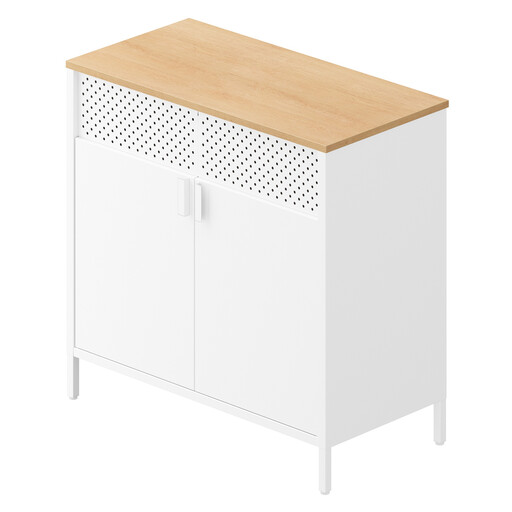
Why it's a good match: This double-door cabinet fits well in a living room, dining area or home office where you want to keep items out of sight. The adjustable shelf provides space for items of different heights.
The adjustable shelf ensures the cabinet isn't limited to storing items of a single size. The included anti-tip kit must be secured to the wall.
Steel cabinet, dimensions of 80 × 40 × 76 cm, magnetic closure, and a maximum static load of 50 kg on the top surface.
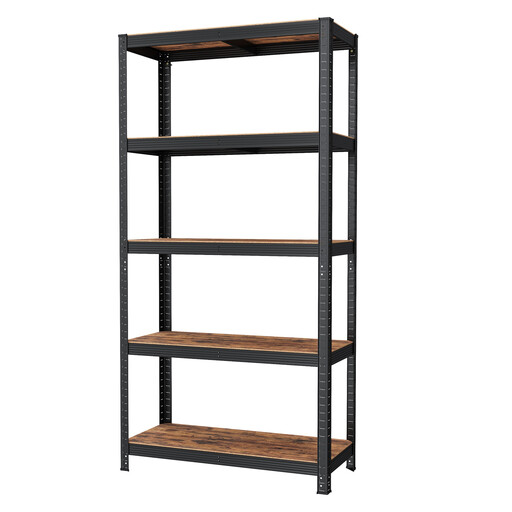
Why it's a good match: With five tiers and a total stated static load capacity of 650 kg, this shelving unit is designed for a garage, cellar, warehouse or utility room. It is less suitable as a lightweight cabinet for decorative items.
The load capacity is specified per tier: a maximum of 130 kg per shelf, according to the product information. The shelf height is adjustable, and wall mounting is required.
Steel frame, five adjustable tiers, boltless assembly, and the option to use the unit as two separate parts.
We have compiled a complete, up-to-date list of products that fully meet these strict selection criteria and comply with current European safety regulations.
Place heavy items at the bottom, position the cabinet on a level surface, and use the provided wall anchor. Check that the wall plugs and screws are suitable for your type of wall. Assembly should be carried out by an adult, and a second person should help if the cabinet is large or heavy.
This depends on the material, load, assembly and use. A cabinet that is used within its stated load capacity and kept dry will generally be less prone to sagging shelves or loose joints. According to the product information, the legal guarantee for the products mentioned is at least two years; this is not a fixed lifespan.
Most models do not require electricity and therefore have no running costs. Regular dusting and checking the screws and wall fixings is usually sufficient. For bamboo, plastic, MDF or fabric drawers, always follow the manufacturer's specific care instructions.
