
Vandaag of morgen in huis

Kwaliteit gegarandeerd

Welkomstaanbiedingen ontgrendelen: GRATIS bezorging | Tot 80% korting | Gratis 30 dagen JoyPlus-proefperiode
Download de app
A storage cabinet might seem easy to choose at first. But many purchases end in disappointment. A cabinet may be too deep for the hallway, an open shelving unit can quickly gather dust, or a wall shelf may hold less weight than you expected. A few simple checks beforehand can help you avoid a costly mistake.
This buying guide covers the key measurements, materials, weight capacities and fixing requirements to consider. You’ll also find options for different needs around the home, from a compact wall shelf with drawer to a spacious shelving unit.
An industrial-style cabinet with a wood-effect finish and metal frame may suit your interior, but be sure to check the dimensions too. A cabinet that’s 32 cm deep may work well in a living room, but jut out awkwardly in a narrow hallway. So, measure more than just the available width. Check:
A stated total weight capacity doesn’t always apply to each shelf or compartment. You may need to distribute books, crockery or plants differently in an open cabinet. Check whether the product information gives a maximum load per shelf, per compartment or just for the entire cabinet.
It’s best to put heavier items at the bottom. A tall bookcase or modular cabinet should also stand securely and, where indicated, be anchored to the wall.
Materials such as acacia wood may be described as water-resistant in the product information, but that doesn’t mean every shelving unit can withstand splashes or high humidity over time. Only use a bathroom shelf in line with the assembly and care instructions. Avoid exposing MDF, chipboard and laminated surfaces to excessive moisture.
First, decide what you want to store. A shallow wall shelf with a drawer is often enough for keys, wallets and jewellery. For books, baskets and ornaments, a bookcase, open cabinet or shelving unit is more practical.
Consider the proportions of the width, depth and height:
MDF and chipboard are common sheet materials used in affordable indoor furniture. They’re relatively easy to clean, but need protection from prolonged exposure to moisture. A wooden storage cabinet can add a warmer feel to a room; just check whether it’s made from solid wood, veneer or a wood-effect finish.
Steel in a frame or fixings can provide extra support. A combination of steel and a wood-effect finish often suits an industrial-style cabinet. Clean with a soft, dry or slightly damp cloth, and follow the manufacturer’s instructions.
Before buying, check whether the cabinet needs to be assembled, how many people are needed and whether fixings are included. A tall cabinet with a narrow base could topple if it isn’t positioned securely or is loaded with heavy items.
Some designs must be anchored to the wall. Use fixings that are suitable for your type of wall. A CE mark or FSC statement doesn’t automatically mean that a piece of furniture is suitable for every room or situation, so always check the specific product information.
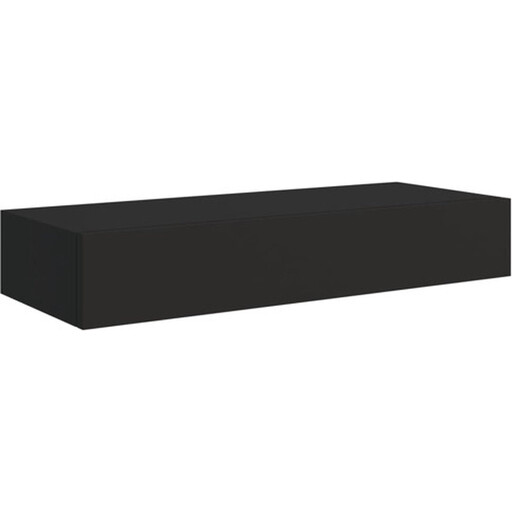
Why it suits this type of buyer: This compact shelf gives you a neat place for small items in the hallway, bedroom or living room. The drawer measures 49.5 x 18 x 5.5 cm, and the shelf is 60 cm wide.
The stated maximum load of 10 kg makes it clear that this design is intended for lighter items, not heavy books or crockery.
MDF and metal construction, a drawer for small accessories, fixings included and a shallow depth of 10 cm.
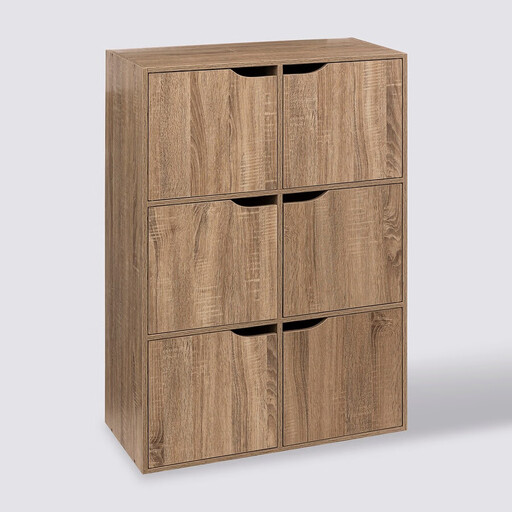
Why it suits this type of buyer: If you want to keep belongings out of sight, the six doors provide closed storage for the living room, bedroom or hallway.
Its dimensions of 67.5 x 32 x 100.5 cm and stated maximum load of 90 kg give you clear figures to consider when choosing where to place it and what to store inside.
Six doors, an MDF back panel, an FSC statement and a design intended for indoor use.
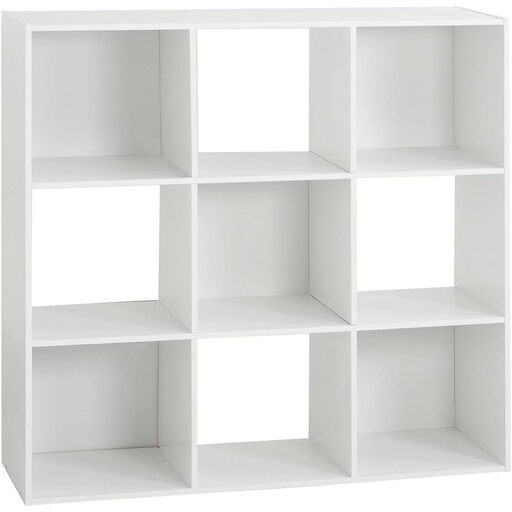
Why it suits this type of buyer: The nine compartments are ideal for a mix of books, baskets, toys and ornaments in a living room or children’s bedroom.
According to the product description, the cabinet can be placed against a wall or on the floor. Heavy items should go at the bottom, and the cabinet is not a toy.
Nine compartments, dimensions of 100.5 x 32 x 100.5 cm, a back panel and a stated maximum load of 65 kg.
For a living room cabinet, doors are handy if you want a calmer, less cluttered look. An open cabinet is better for books and ornaments, but needs dusting more often. In the bedroom, a wall shelf with a drawer or a narrow bookcase is handy for accessories.
For the kitchen or bathroom, check that the material is suitable for damp conditions. According to the product information, a small acacia wall shelf with steel can be attached using an adhesive strip or suction cups. Before fitting it, make sure the surface is clean, flat and suitable. As no maximum load is stated for this design, it’s best to use it for lightweight items only.
A modular cabinet is useful if you want to expand or change the layout later. Be sure to check the difference between the total weight capacity and the load limit for each compartment. This helps prevent any one shelf from becoming overloaded.
We’ve put together a complete, up-to-date list of products that meet these strict selection criteria and the applicable European safety regulations.
Place the cabinet on a level surface, keep heavier items at the bottom and use the supplied anti-tip device if the product information says to. Choose wall plugs and screws that are suitable for your type of wall.
Its lifespan depends on the material, assembly, load and care. Keep MDF and chipboard away from prolonged exposure to moisture, don’t exceed the weight capacity, and regularly check that the fixings are still secure after assembly.
The price depends mainly on the dimensions, material, number of compartments, doors and assembly. A compact wall shelf is generally in a different price bracket from a large cabinet with nine compartments. So, compare more than just prices: check the weight capacity, finish and whether fixings are included too.
