
Vandaag of morgen in huis

Kwaliteit gegarandeerd

Welkomstaanbiedingen ontgrendelen: GRATIS bezorging | Tot 80% korting | Gratis 30 dagen JoyPlus-proefperiode
Download de app
A storage cabinet seems like a straightforward purchase until you discover it won’t fit through the doorway, wobbles on an uneven floor or holds less than you expected. In small Dutch homes, student rooms and home offices, every centimetre counts.
So don’t just focus on colour and price. The most important differences lie in dimensions, material, load capacity, mobility and assembly. Below you’ll find the most common pitfalls and a practical selection of models for different uses.
A cabinet can look spacious in a product photo yet still offer little usable space. Always check the external dimensions and the size of the compartments or drawers. A cabinet 32 cm deep might be fine for books and supplies but too shallow for lever-arch files or larger equipment.
Also measure:
The total load capacity doesn’t always tell you how much weight a single shelf or drawer can carry. Heavy folders, tools and books place greater demands on a structure than clothing or light accessories.
So look for:
In furniture with multiple compartments, a stated total weight is only useful if you know how it’s distributed across the individual sections.
A storage cabinet with wheels is handy if you frequently reconfigure your space. That doesn’t automatically mean the cabinet is suitable for moving when heavily loaded. Check whether the wheels can be locked and whether the cabinet will be used on a level floor.
With a mobile plastic storage cabinet, the low weight and easy cleaning are practical advantages. However, plastic isn’t intended for heavy industrial loads. Use such a model for light to medium-weight items unless the product information specifies a particular capacity.
A compact storage cabinet works well in a bedroom, hallway, bathroom or small home office. A tall cabinet makes the most of vertical space, while a low cabinet can double as a sideboard or printer stand.
A storage cabinet with compartments is ideal when you want to sort items in view, such as toys, books, baskets or office supplies. Drawers and doors bring more calm to the room and keep things out of sight.
A plastic storage cabinet made of PP is generally light, easy to clean and suitable for indoor use. Watch out for warnings about heat, fire and maximum load; plastic can deform at extreme temperatures.
A metal storage cabinet offers a different construction and is practical for documents, supplies, tools or a garage. For metal models, check shelf load, adjustability and any guidance on wall anchoring.
Board materials, such as chipboard or MDF, are often used for cube cabinets and bookcases. The finish, back panel and fixing points also influence stability. FSC information refers to the origin of wood materials but doesn’t, by itself, indicate how much weight a cabinet can carry.
A lockable storage cabinet is relevant for documents, office supplies or items you don’t want freely accessible. A lock isn’t a substitute for careful use: only store valuables or sensitive items in a cabinet whose lock and construction suit your purpose.
For a storage cabinet for office use, drawers, a lock and smooth-running runners are often more important than an open layout. For a living room or bedroom, the finish, noise level and the ability to keep items out of sight play a bigger role.
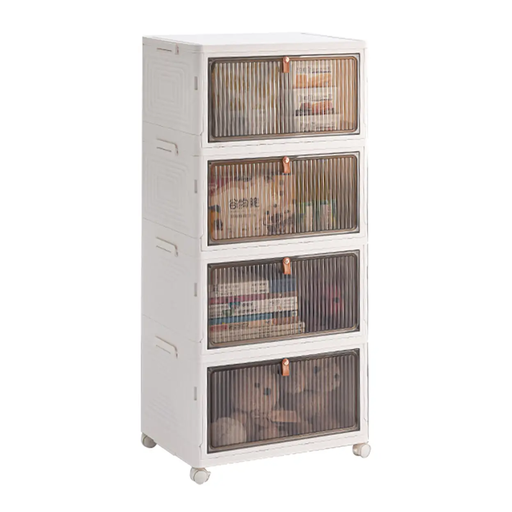
Why this suits the profile: This lightweight PP plastic cabinet has four tiers and a mobile design. Its dimensions and make-up suit smaller spaces such as a student room, bathroom or home office.
The product information states four layers, tool-free click-together assembly and a smooth surface. Do check the maximum load per shelf before use.
PP plastic, four tiers, wheels and a surface that, according to the product information, can be cleaned with a damp cloth.
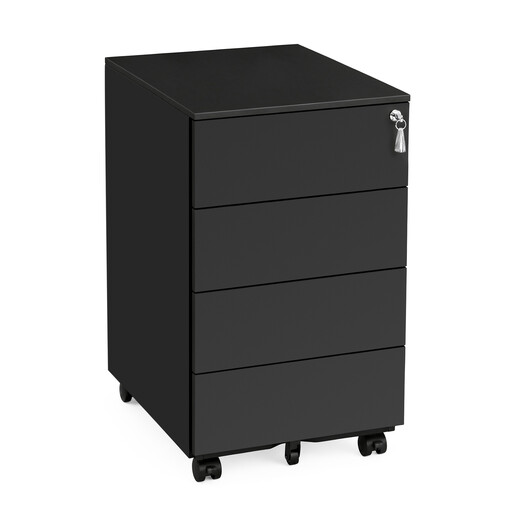
Why this suits the profile: For an office or home workspace where documents need to be organised and locked away. According to the product information, the cabinet is delivered pre-assembled.
The details mention a lock, four drawers and fully extendable runners. That makes the layout more concrete than a general claim about “lots of storage”.
Steel construction, four drawers, lock and supplied wheels. The stated dimensions are 45.1 x 39 x 69.3 cm.
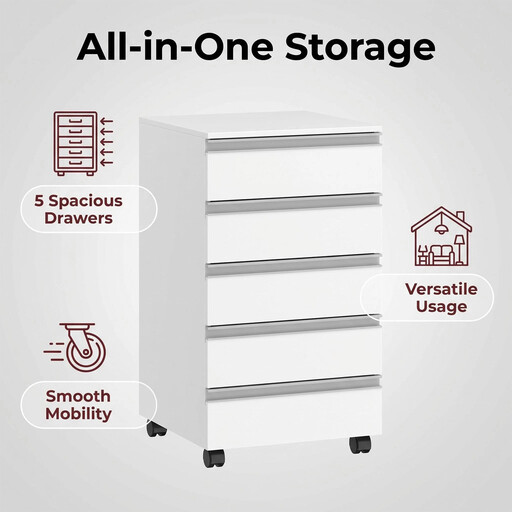
Why this suits the profile: This mobile cabinet is aimed at offices, studios and hobby rooms where drawers are opened frequently and materials are moved around regularly.
The product information specifies five drawers, castors and a total load capacity of up to 50 kg. Distribute heavy items evenly.
Dimensions of approximately 40.5 x 40.5 x 65.5 cm, five deep drawers and, according to the product description, front locking castors.
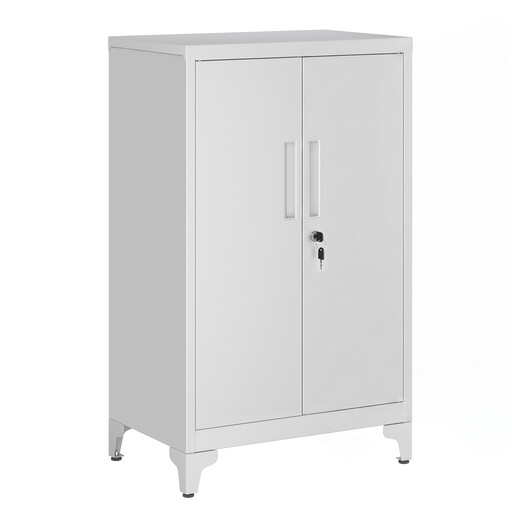
Why this suits the profile: A fixed cabinet with double doors and adjustable shelves for an office, kitchen, garage or storage room. The lockable design keeps contents out of sight.
The product data state individual loads: up to 30 kg on the top and 25 kg per adjustable shelf. Wall fixing with the anti-tip kit is prescribed.
Steel cabinet, two doors, two adjustable shelves, lock and dimensions of approximately 60 x 40 x 90 cm according to the product information.
We have compiled a complete, up-to-date list of products that fully meet these strict selection criteria and comply with current European safety regulations.
Always follow the supplied instructions during assembly. After putting it together, check that joints, magnetic catches and shelves are secure. For tall, wide or heavy cabinets, wall anchoring is important to help prevent tipping, especially in a household with children.
Also follow these practical guidelines:
Choose a model with limited depth, vertical compartments or wheels. A plastic cabinet with three or four tiers can be handy for clothing accessories, books and everyday items. Measure the free space next to the bed in advance and make sure drawers, doors or wheels can be used.
Yes, depending on the layout. A cabinet with drawers is practical for documents and office supplies; a model with adjustable shelves offers more flexibility for boxes and equipment. Always check the load per drawer or shelf and fix a tall cabinet to the wall as per the instructions.
Lifespan depends on material, load, assembly and use. A cabinet that stands stable, isn’t overloaded and is kept dry will generally wear more slowly. Check hinges, drawer runners, wheels and joints regularly and replace a part when the manufacturer indicates this is possible.
