
Vandaag of morgen in huis

Kwaliteit gegarandeerd

Welkomstaanbiedingen ontgrendelen: GRATIS bezorging | Tot 80% korting | Gratis 30 dagen JoyPlus-proefperiode
Download de app
A storage cabinet may seem simple to choose, but the wrong dimensions, limited load capacity or unsuitable materials can quickly become a source of frustration. A cabinet that looks spacious online may turn out to be too small for your microwave, too large to fit under your basin or unstable when you fill the drawers.
For consumers, home workers, office planners and hobbyists, there are three common pitfalls to watch out for:
Measure the available space in several places. Walls and floors aren’t always perfectly straight. Also check that the cabinet will fit through doorways, staircases and hallways.
For a kitchen cabinet or microwave cabinet, measure your microwave, including the space needed for ventilation. Remember to allow room for plugs and cables, too. A cabinet that’s 60 cm wide and 39,6 cm deep may be practical, but only if there’s enough room for your appliance and its connection.
For a bathroom cabinet under the basin, check the position of the waste pipe and trap. Pay attention to the pipe cut-out, the height of the basin and the distance from the bathroom door.
The material you choose will help determine where the storage unit is best suited:
A product description that says moisture-resistant or water-repellent doesn’t mean a cabinet can be kept outdoors or in a wet shower area. Follow the manufacturer’s product information on the intended environment and care instructions.
Check whether the load capacity is listed per shelf, per drawer or for the whole cabinet. Spread heavy items across several levels and place the weight as low down as possible.
A cabinet on wheels is useful if you regularly change your layout. Look out for:
For tall furniture, a chest of drawers or a wardrobe with drawers, an anti-tip device is important. Secure the cabinet to the wall as instructed in the manual. Use plugs and screws that are suitable for your wall type.
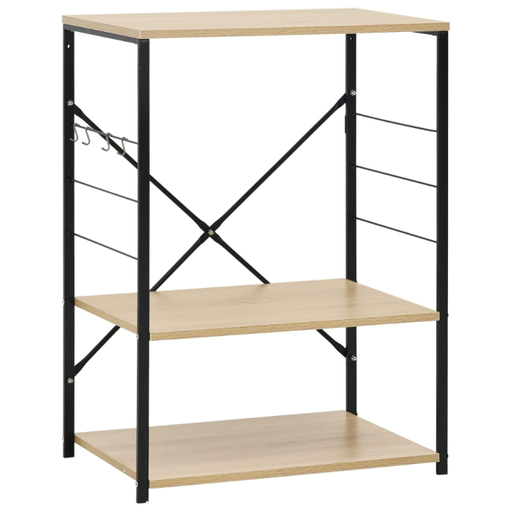
Why it suits this profile: This freestanding cabinet combines space for a microwave with three levels for kitchen essentials. It can also be used in a living room, hobby room or home office.
The dimensions, number of shelves and load capacity are clearly stated. The listed capacity is 15 kg per shelf and 45 kg in total; check that this is suitable for your appliances.
60 × 39,6 × 79,5 cm, steel frame, three shelves and side hooks. Assembly required.
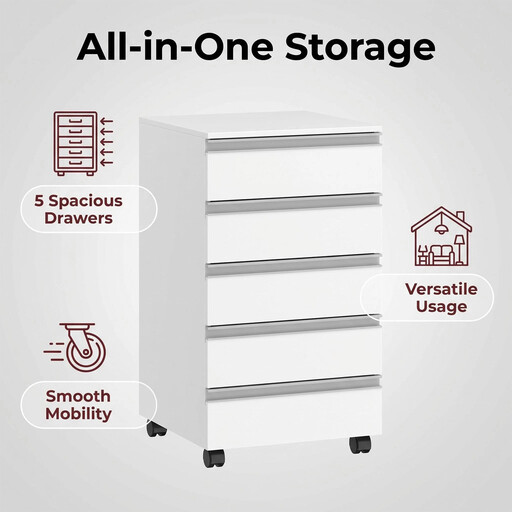
Why it suits this profile: Ideal for a home office, studio, workshop or office where documents, tools and materials need to be moved around regularly.
The product description lists five drawers, front castors with brakes and a maximum total load of 50 kg. Distribute heavy contents evenly and check the floor surface.
Dimensions: 40,5 × 40,5 × 65,5 cm, with five drawers and a wheeled design. The features listed are taken from the product information.
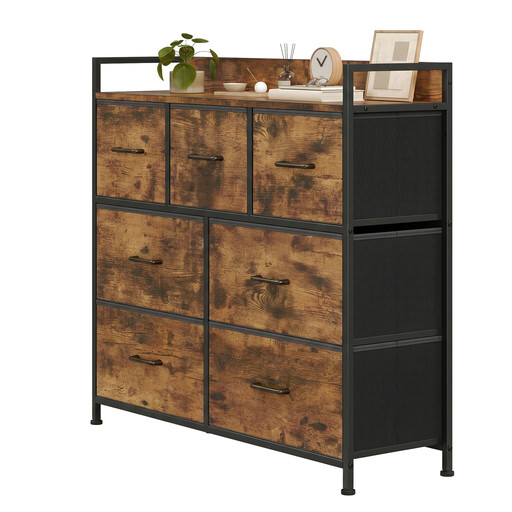
Why it suits this profile: This chest of drawers offers seven drawers for clothing, accessories and linen. It can also be used as a low cabinet in the living room.
The product information lists a maximum load of 3 kg per drawer and recommends using the anti-tip mechanism. The fabric drawers aren’t washable and are designed for lightweight contents.
98 × 28,5 × 85 cm, metal frame, adjustable feet and seven drawers. Clean the drawers according to the instructions provided.
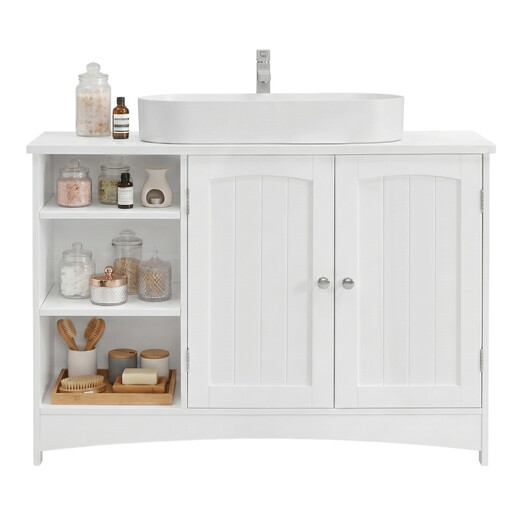
Why it suits this profile: A practical bathroom cabinet for storing towels, toiletries and paper products under the basin, with both open and closed storage.
Check the basin and pipes before buying. The stated cut-out for the U-shaped pipe measures 20 × 15 cm. Wall mounting is recommended for safe use.
88,5 cm wide, with two doors, adjustable shelves and an open compartment. The product description states that the surface is smooth and wipe-clean.
We’ve put together a complete, up-to-date list of products that meet these strict selection criteria and the applicable European safety requirements.
First, level the cabinet and check that all the parts have been assembled correctly. For a tall cabinet or chest of drawers, attach the supplied anti-tip device to the wall. Choose fixings that are suitable for concrete, brick, plasterboard or your particular wall surface.
Its lifespan depends on the material, load, assembly and maintenance. Don’t place a cabinet that’s sensitive to moisture in a wet area, don’t exceed its maximum load capacity, and regularly check the screws, shelves and castors. A cabinet used intensively every day needs more maintenance than a storage unit for lightweight household accessories.
A standard cabinet doesn’t use electricity. The main costs are the purchase price, assembly and, if needed, wall fixings. For a mobile storage cabinet, replacement castors or maintenance after heavy use may also be relevant. So compare more than just the purchase price: consider the material, load capacity, warranty and suitability for your space, too.
