
Vandaag of morgen in huis

Kwaliteit gegarandeerd

Welkomstaanbiedingen ontgrendelen: GRATIS bezorging | Tot 80% korting | Gratis 30 dagen JoyPlus-proefperiode
Download de app
An storage cabinet may seem simple to choose, until you realise how much models can differ in size, load capacity, assembly and ease of use. A cabinet that offers plenty of space on paper may be too deep for your desk in practice, become unstable when loaded with heavy items or lack suitable space for A4 documents.
For Dutch homes, home offices, student rooms and small businesses, three pitfalls are particularly relevant:
By carrying out the right checks beforehand, you can avoid a disappointing purchase and choose storage furniture that suits both your space and the items you want to store.
Measure not only the available space, but also the route to get there. Also check that doors, drawers or baskets can open fully.
A narrow bookshelf is ideal for an unused corner, while a wider cabinet offers more storage space but can dominate a room more quickly. A wall organiser makes use of vertical space without taking up floor area. For a desk, a compact desk organiser is often more practical than a full-size cabinet.
Pay attention to the internal dimensions. An A4 folder is approximately 21 by 29.7 cm, but needs extra room for the spine and easy removal. An A4 document holder with an internal width of 315 mm is therefore suitable for loose documents, post, magazines and folders in landscape or portrait orientation, depending on the model.
Check whether the stated weight applies to the entire piece of furniture, each compartment, each drawer or each shelf. A cabinet with a total capacity of 50 kg should not automatically be loaded with 50 kg on a single shelf.
Heavy items such as tools, ring binders and paper should be stored low down. Decorations, lightweight books and baskets can be placed higher up. With plastic storage boxes, it is also important to check the maximum load per box and the recommended stacking height.
A product description may mention features such as water resistance, wear resistance or a long service life. Do not automatically regard such performance claims as guaranteed results. A brand may state certain performance levels based on its own research, but you should focus in particular on the specific specifications, warnings and warranty terms.
A cabinet for daily paperwork requires a different layout from furniture intended for toys, clothing or supplies. So first decide what you want to store:
The recommendations below are linked to recognisable user profiles and verifiable product information.

Why it suits this profile: This set of three transparent 14-litre boxes is suitable for smaller items, hobby materials, office supplies and kitchen items. You can see the contents without opening the box.
The transparent PP housing means you do not have to open several boxes to find something. The manufacturer states a maximum load of 5 kg per box, so bear this in mind when filling them.
Set of three; stackable with the lid on and nestable without the lid; clean with a damp cloth.

Why it suits this profile: This cabinet has ten open compartments and measures 129.5 by 29 by 129.5 cm. It combines book storage with space for baskets, plants and accessories in a living room or home office.
The maximum static load is specified as 10 kg per compartment. Secure the furniture to the wall using the included anti-tip kit, especially in a household with children.
Ten separate compartments; suitable as a bookshelf, room divider or storage unit; anti-tip kit included.
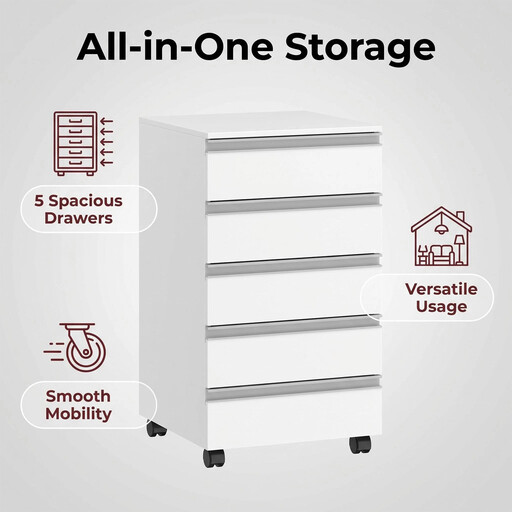
Why it suits this profile: This mobile storage cabinet, measuring 40.5 by 40.5 by 65.5 cm, is designed for offices, studios or workshops. The five drawers provide space for documents, drawings, tools and accessories.
The stated total load capacity is 50 kg. The 360° swivel castors and lockable front castors make it easy to move while supporting stable use; distribute the weight evenly.
Five deep drawers; steel and chipboard construction; top suitable for small printers or office equipment according to the product description.
We have put together a complete, up-to-date list of products that fully meet these strict selection criteria and the applicable European safety regulations.
Before buying, check whether the furniture needs to be assembled and whether all the necessary fixings are included. Wall anchoring is important for tall bookcases and open storage furniture. For plasterboard, brick or concrete, use a fixing suitable for the surface.
Also consider the following points:
For documents you need regularly, labels and fixed categories work well: administration, tax, school, invoices and current matters. A wall organiser next to your desk can separate incoming post from documents that still need to be processed.
Choose a narrow model, wall storage or stackable storage boxes. Measure the remaining walking space beforehand and check that drawers or doors can still open fully. A tall cabinet must be secured to the wall when the product information requires it.
Its service life depends on the material, load, assembly and care. Steel is practical for intensive office or archive use. PP plastic is lightweight and easy to clean. Chipboard and MDF stay in good condition for longer when you prevent moisture and overloading.
In addition to the purchase price, assembly, fixings and any extra baskets or boxes are relevant. A cabinet without a power connection normally has no ongoing running costs. With a mobile storage cabinet, floor protection and proper castor maintenance may also be important.
