
Vandaag of morgen in huis

Kwaliteit gegarandeerd

Welkomstaanbiedingen ontgrendelen: GRATIS bezorging | Tot 80% korting | Gratis 30 dagen JoyPlus-proefperiode
Download de app
Buying a storage cabinet seems straightforward – until you realise that not every cupboard is suitable for books, tools, documents or daily use. A cabinet might look spacious but struggle to bear much weight. A metal model may appear sturdy yet prove awkward in a small room. And a low price often says little about the layout, fixings or assembly.
So watch out for these three common pitfalls:
Below you’ll find out which specifications matter and which storage cabinet suits different situations.
Don’t just measure the available wall width – also consider the depth and height. Allow for skirting boards, doors and enough room to open a cabinet with doors. For a narrow living room or home office, a tall cabinet can be more efficient than a wide model.
A bookcase with open shelves is handy if you want to keep books and décor on display. A cabinet with doors keeps items out of sight and reduces dust. Also check how much space there actually is between the shelves. Adjustable shelves make a cabinet usable for different sizes.
Look at the maximum static weight per shelf, not just the total. Books, ring binders, tools and supplies can quickly become heavy. With a metal storage cabinet or shelving unit, it’s important to check whether the load capacity per level applies with even weight distribution.
The conditions during use also matter. A shelf that can carry 130 kg according to the product description isn’t automatically suitable for point loads, impacts or climbing on the cabinet. Place heavy items low down and spread the weight across the surface.
A cabinet made of particle board is often suitable for books, office supplies and décor in dry rooms. Steel is practical for a storage cabinet for the garage, workshop or shed, where moisture and heavier use can come into play. Check the exact material composition for every product; a steel frame doesn’t always mean all parts are steel.
A tall or deep cabinet must stand stably. Use the supplied anti-tip fitting according to the instructions and secure the cabinet to a suitable wall. This is especially important in households with children. Children must not be allowed to climb on or play with the cabinet.
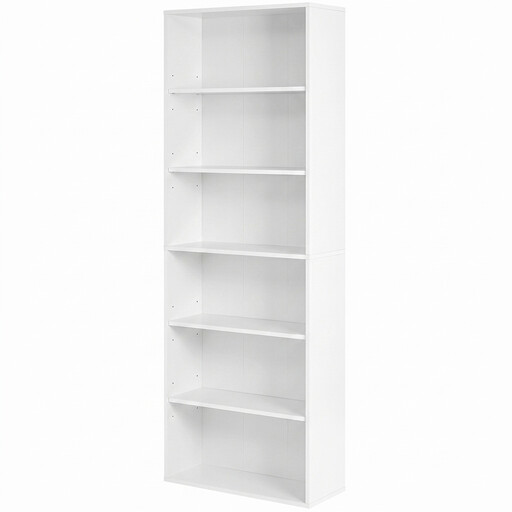
Why this fits the profile: This slim bookcase makes use of height with six open compartments, making it suitable for a living room, dining room or home office with limited floor space.
The dimensions are clearly stated: 24 x 60 x 178.5 cm. Four inner shelves are adjustable in height. Each shelf has a stated maximum static load of 5 kg, so you can better tailor its use to books and lightweight décor.
Six open storage compartments, adjustable shelves, particle board and supplied anti-tip fitting.
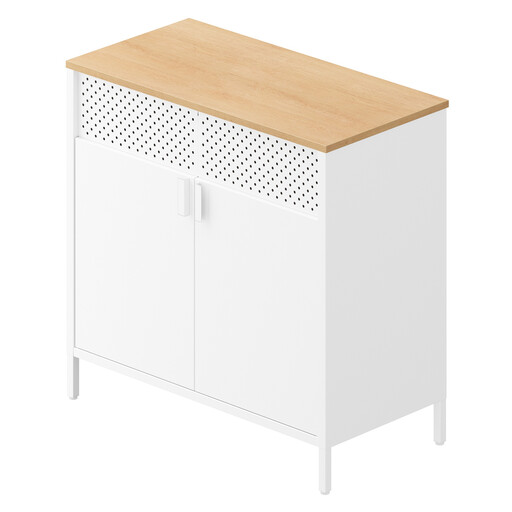
Why this fits the profile: This model combines a steel cabinet body with a closed layout. It suits anyone who wants to keep items out of sight in an office, living room or dining area.
The cabinet has an adjustable shelf and double doors with magnetic closure. This means you’re less dependent on fixed compartment sizes, and the contents stay less visible and less exposed to dust.
Dimensions of 40 x 80 x 76 cm, steel components, adjustable shelf and a stated load capacity of 50 kg for the top panel.
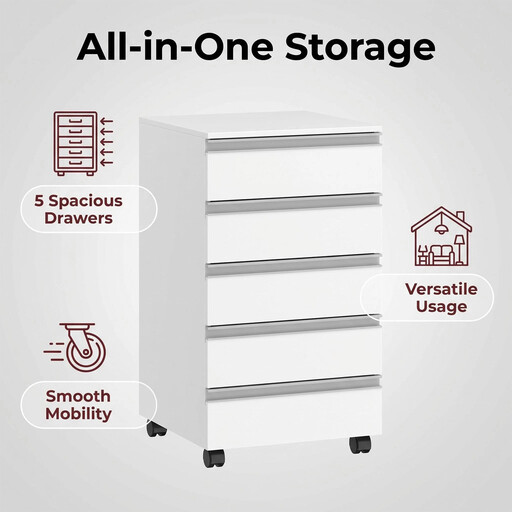
Why this fits the profile: This chest of drawers on wheels is aimed at offices, studios and workshops where documents, materials or tools need to be moved around regularly.
The five drawers offer a fixed layout for small materials and documents. Four castor wheels allow it to be moved; the front wheels have a lock to keep the cabinet stationary.
Size of approximately 40.5 x 40.5 x 65.5 cm, five deep drawers, lockable front wheels and a stated total load capacity of 50 kg.
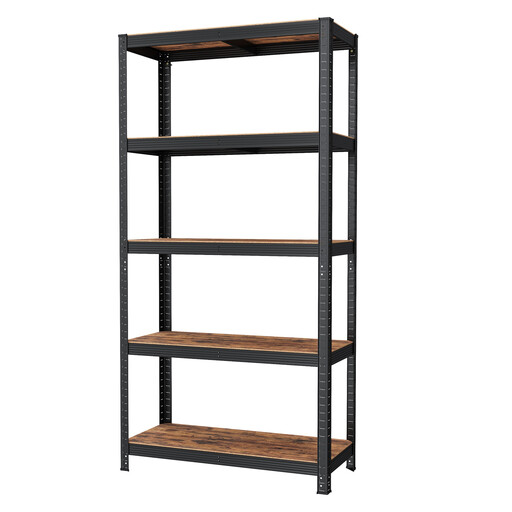
Why this fits the profile: This shelving unit is designed for tools and equipment in a garage, cellar, warehouse or utility room where generous storage space and a high stated load capacity are important.
The shelves are adjustable and the model can be divided into two units according to the product description. The stated load is 130 kg per level with static, evenly distributed weight.
Steel frame, five levels, dimensions of 30 x 75 x 150 cm and a stated total static load capacity of 650 kg.
We’ve put together a full, up-to-date list of products that fully meet these strict selection criteria and comply with current European safety regulations.
Place the cabinet on a level surface and follow the assembly instructions. Use the supplied anti-tip fitting to secure the cabinet to a suitable wall. Check beforehand that the wall and fixing materials are appropriate for the situation. Ideally, place heavy items at the bottom.
The lifespan depends on the material, load, moisture, assembly and frequency of use. A cabinet in a dry living room is generally subjected to different stresses than a storage cabinet for a garage or workshop. Do not exceed the stated load capacity, avoid prolonged contact with moisture, and check fixings and screws regularly.
A standard storage cabinet uses no electricity. The running costs mainly consist of assembly, possibly wall-fixing materials and maintenance. With a mobile storage cabinet, floor protection and well-fitting castors can also be important. So don’t just compare the purchase price – also consider the material, load capacity, layout and expected intensity of use.
