
Vandaag of morgen in huis

Kwaliteit gegarandeerd

Welkomstaanbiedingen ontgrendelen: GRATIS bezorging | Tot 80% korting | Gratis 30 dagen JoyPlus-proefperiode
Download de app
An extra storage cabinet may seem like a straightforward purchase, until you discover that the doors do not open properly, the shelves sag or the cabinet is too deep for the available space. In a flat, student studio or busy family home, every centimetre counts. That is why it is important to look beyond colour and price.
The following pitfalls are common:
Do not just measure where the cabinet will stand. Also measure the space needed for doors, drawers and walkways. A slim storage cabinet around 32 to 35 cm deep may be suitable for a hallway, bathroom or small bedroom. Also check skirting boards, pipes, sockets and ceiling height.
A tall larder cabinet or kitchen cabinet offers plenty of vertical storage, but is less practical if you frequently need to reach the top shelf. A low cabinet may be more convenient and could fit beneath a window or worktop.
A cabinet with shelves is only practical if the shelves suit what you want to store. Books, crockery and storage jars weigh considerably more than towels or decorative items. Pay attention to:
A compartment cabinet works well for baskets, toys and books. A storage cabinet with doors keeps items out of sight and reduces dust, but requires enough room to open the doors.
Chipboard and MDF are widely used for affordable cabinets. They are suitable for normal indoor use, but edges and undersides should be protected from prolonged exposure to moisture. For a bathroom cabinet, it is worth checking whether the product description mentions moisture-resistant materials and whether the cabinet stands off the floor.
According to HaluPeit’s product description, the bathroom cabinet is made from moisture-resistant high-density MDF with metal components. The description also states that it has a 12.5 cm raised base and adjustable shelves. These are verifiable product specifications; they do not guarantee that the cabinet will withstand every form of water or mould. Do not place the cabinet directly in standing water, and wipe up any spills immediately.
The right choice depends on the space and how you intend to use it. Below, we have matched several models to different user profiles. The stated benefits are based on the available product information.
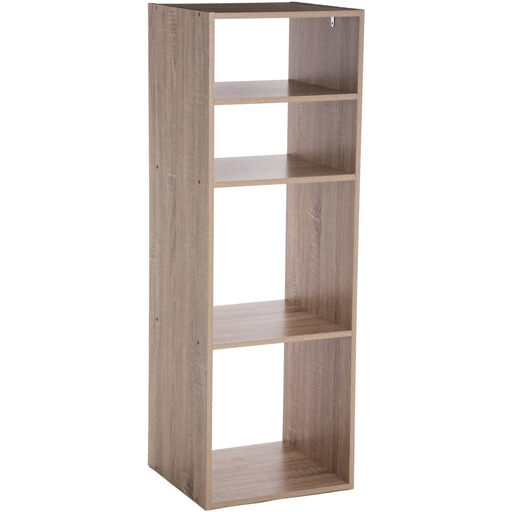
Why it suits this profile: Its compact dimensions make this model suitable for a hallway, bedroom or small living room. The cabinet has four shelves and, according to the product information, requires assembly by one person.
The width, depth, height and maximum load of 40 kg are clearly stated. This means you do not have to rely on a vague capacity claim.
Dimensions of 34.5 x 32 x 100.5 cm; four shelves; maximum load of 40 kg; suitable for indoor use.
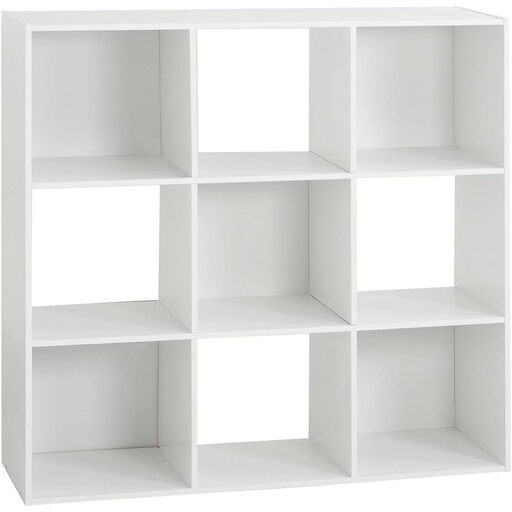
Why it suits this profile: This model provides nine open compartments for a living room, play area or workspace. According to the product information, it can be mounted on the wall or placed on the floor.
The back panel and advice to place heavier items at the bottom help create an organised and stable layout. Wall mounting must be carried out correctly.
Nine compartments; 100.5 x 32 x 100.5 cm; stated maximum load of 65 kg; FSC mentioned in the product details.
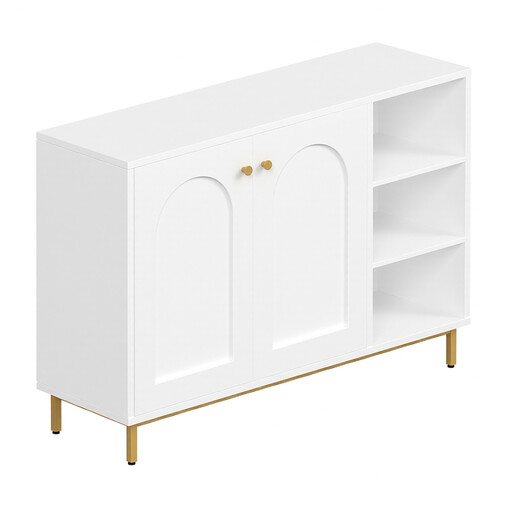
Why it suits this profile: The combination of closed doors, open compartments and adjustable shelves is designed with the bathroom in mind. The raised base makes it easier to clean around the bottom.
The product description mentions moisture-resistant MDF, metal components, three adjustable shelf heights and an anti-tip feature. Always check the assembly and positioning before use.
Dimensions of approximately 35.5 x 100.5 x 75.5 cm; two doors; three open compartments; three adjustable shelf heights; 12.5 cm raised base according to the product details.
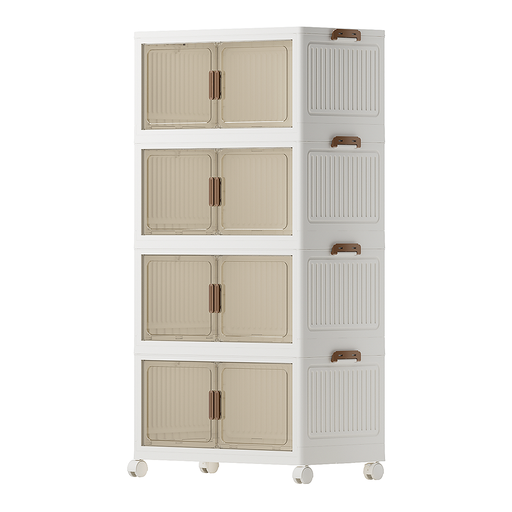
Why it suits this profile: This model is designed for students, small flats and users who sometimes want to move their cabinet. The four compartments provide space for books, clothes, toys and everyday items.
The stated width of 55 cm, four compartments, wheels and foldable design make its intended use clear. The manufacturer warns against exceeding the maximum load.
PP plastic; four compartments; wheels; magnetic closure; no tools required according to the product information; suitable for indoor use.
We have put together a complete, up-to-date list of products that fully meet these strict selection criteria and the applicable European safety regulations.
Place heavy items at the bottom, use the cabinet on a level surface and fit any included anti-tip device according to the instructions. For wall mounting, check which fixings are suitable for your type of wall.
Its lifespan depends on the material, load, assembly and maintenance. Keep the cabinet within the stated maximum load, protect MDF and chipboard from prolonged moisture and regularly check the screws, hinges and wheels.
That depends on the stated load capacity and the quality of the wheels. A cabinet with wheels is mainly practical for light to medium-weight items. Distribute the weight evenly and do not move the cabinet over thresholds or an uneven floor unless it is designed for this.
