
Vandaag of morgen in huis

Kwaliteit gegarandeerd

Welkomstaanbiedingen ontgrendelen: GRATIS bezorging | Tot 80% korting | Gratis 30 dagen JoyPlus-proefperiode
Download de app
Buying a storage cabinet might seem straightforward, but the wrong size, an awkward layout or flimsy materials can quickly lead to frustration. A cabinet that looks great on paper might not fit under your worktop, have shelves that can't bear enough weight, or offer less usable space than you expected.
So don't just focus on colour and price. To make the right choice, you need to pay close attention to dimensions, layout, materials and fixing. Below, we explain what to look out for in the bathroom, kitchen, living room, workshop or home office.
A cabinet that is 40 cm deep doesn't always give you 40 cm of usable storage. Doors, back panels, hinges and drawers all take up room. So don't just measure the available alcove – also check:
For an under-sink cabinet, the cut-out for the waste pipe is also crucial. A model might be the right width, but still be unsuitable because of the position of the trap.
In a bathroom or kitchen, a cabinet will be exposed to condensation, splashes and cleaning products. So check the material and construction. Look for a raised base, easy-clean surfaces and metal parts that, according to the product information, are suitable for a damp environment.
Don't place a bathroom cabinet directly in standing water, and wipe up any spills as quickly as possible. Even a storage cabinet designed for bathroom use benefits from ventilation and being kept a good distance from the shower area.
A cabinet with drawers, adjustable shelves, LED lighting and plug sockets offers more possibilities, but also requires extra care. Check beforehand:
For furniture with lighting and sockets, you must also follow the supplied instructions and use the electrical connection safely. Do not exceed the stated load on the sockets.
Choose the layout based on what you actually want to store. A storage cabinet with doors keeps things out of sight and protects them from dust. A storage cabinet with adjustable shelves is more practical when you need to store both low boxes and tall bottles, crockery or ring binders.
For documents and office supplies, a filing cabinet on wheels can be very handy. Check the number of drawers, the size for hanging files, and whether the castors can be locked. A storage cabinet with drawers is ideal for small accessories, tools, craft materials and stationery.
A sideboard or kitchen cabinet should offer enough work or counter space as well as storage. Measure appliances like a printer, microwave or coffee machine before using the top as a work surface.
Many models are made from chipboard or MDF with a decorative finish. This can be practical for everyday use, as long as the edges are well protected against moisture and knocks. A metal storage cabinet is a good choice for a workshop, garage or office where the cabinet will see heavy use.
Pay attention to the difference between:
A product description might mention a maximum total load or a maximum load for the top panel. Use these figures as a guide and distribute heavy items across several compartments. Place heavy objects low down to improve stability.
A tall cabinet or one with deep drawers can tip over when several drawers are opened at once. A supplied anti-tip fitting helps, but only if you attach it correctly to a suitable wall. Check that the wall plugs and screws are suitable for your wall type.
For a cabinet on castors, lockable front wheels are useful if you plan to use it as a mobile workstation. Place a wheeled cabinet on a level surface and do not exceed the stated load capacity.
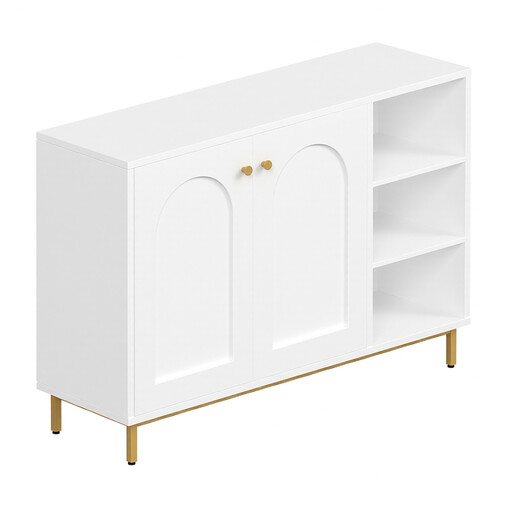
Why this fits the profile: This model combines closed storage with three open shelves. At roughly 100 cm wide, it works well in a bathroom, hallway or kitchen where you need to store different types of items together.
The three adjustable shelf heights make the layout less rigid. The raised base of around 12.5 cm helps keep it away from the floor.
Dimensions approx. 35.5 × 100.5 × 75.5 cm; combination of doors, open compartments and adjustable shelves.
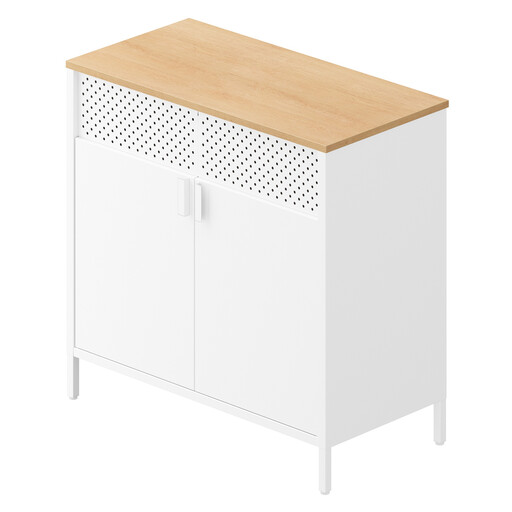
Why this fits the profile: This steel cabinet is ideal for anyone looking for a low-maintenance piece of furniture for an office, living room, dining room or workspace.
The adjustable shelf prevents a fixed layout from becoming unusable. The supplied anti-tip kit does require correct wall fixing.
Steel housing; dimensions 40 × 80 × 76 cm; stated maximum load on top panel: 50 kg.
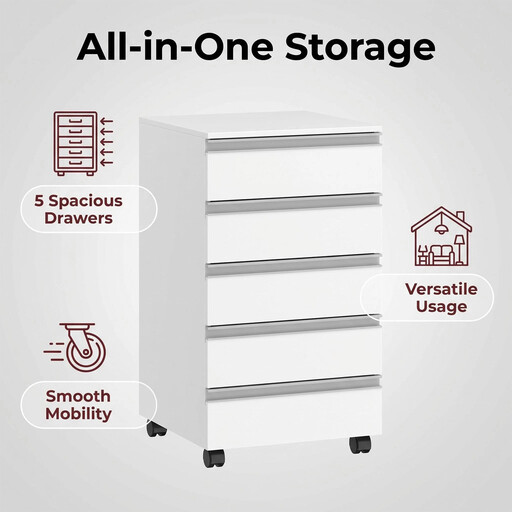
Why this fits the profile: The five drawers and swivel castors are practical for a home office, studio, workshop or craft room where documents, materials and tools are frequently moved around.
The layout with five deep drawers stops small items from getting lost in one large compartment. The front castors are lockable according to the product information.
Dimensions approx. 40.5 × 40.5 × 65.5 cm; five drawers; swivel castors; stated total load capacity of 50 kg.
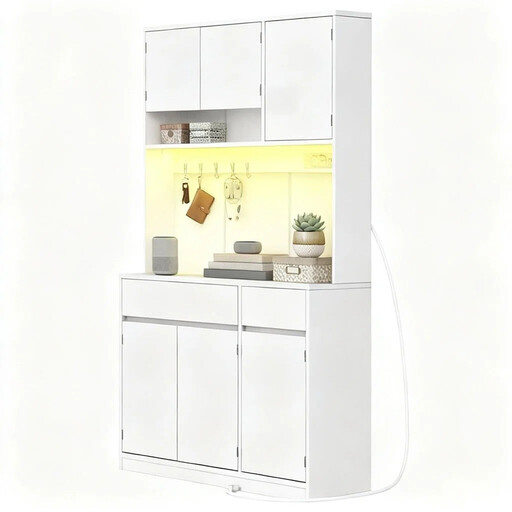
Why this fits the profile: This tall kitchen cabinet combines storage, worktop, lighting and power connections for households that want one piece of furniture for the kitchen, dining room or hallway.
The combination of adjustable shelves, two drawers and closed and glass-fronted compartments makes storage much more organised than one large space.
Dimensions 40 × 100 × 180 cm; two plug sockets and two USB ports according to the product description; LED lighting with adjustable modes.
We've put together a full, up-to-date list of products that fully meet these strict selection criteria and comply with current European safety regulations.
First, choose a model that is narrow and deep enough for the available space. A raised base, closed doors and adjustable shelves are all practical. For an under-sink cabinet, you need to check the pipework and the size of the trap. Leave enough room around the cabinet for cleaning and for the doors to open.
The lifespan depends on the material, load, assembly and maintenance. Protect MDF and chipboard from prolonged moisture, distribute heavy items evenly, and don't overtighten screws after assembly. For a metal storage cabinet, it's wise to regularly check the hinges, catches and any signs of rust.
The cabinet itself only uses power when the lights are on or when connected appliances are drawing electricity. The actual consumption depends on the wattage, how long it's used and what's plugged in. Check the technical specifications and use the sockets within their permitted load.
