
Vandaag of morgen in huis

Kwaliteit gegarandeerd

Welkomstaanbiedingen ontgrendelen: GRATIS bezorging | Tot 80% korting | Gratis 30 dagen JoyPlus-proefperiode
Download de app
A storage cabinet seems like a straightforward purchase, until you find that the doors hit a wall, the shelves don’t fit or the unit is too large for a narrow alcove. Marketing claims can be confusing, too. A “space-saving” model, for example, may have very little usable depth, while a cabinet with lots of compartments isn’t necessarily suitable for heavy items.
So focus on the layout, dimensions and material. Read on to find out which features matter for your kitchen, living room, bathroom, utility room, garage and home office.
Lots of compartments may sound practical, but it’s the space available in each one that determines what you can actually store. An open shelving unit with low compartments is suitable for books, baskets or accessories, but less useful for tall bottles or kitchen appliances.
So check:
A storage unit for a small space needs to be more than just narrow. You’ll also need to leave enough room to move around, and if the model has doors, allow for their swing. Measure the alcove in three places, as walls and floors aren’t always perfectly straight.
Also check for skirting boards, sockets and radiators. A cabinet that’s 40 cm deep may not sit flush against the wall if a skirting board protrudes.
A metal storage cabinet is generally easy to wipe clean and may be suitable for areas where moisture or dirt are common. A cabinet made from chipboard or MDF may be a better fit for a living room or bedroom, but you’ll need to consider moisture and the maximum load.
The maximum weight capacity should be clearly stated. Spread heavy items across several shelves and place heavier objects at the bottom. Use an anti-tip kit if one is supplied, and secure the cabinet to the wall according to the instructions.
Before you start looking, note down the maximum width, height and depth available. For a storage cabinet with doors, allow room for the handles and for the doors to open. In a narrow kitchen or utility room, a kitchen trolley or rotating storage rack may be more efficient than a wide cabinet.
A trolley on wheels can be moved around, but it should be placed on a level surface. Check whether the wheels lock and whether the cabinet stays stable if one shelf is more heavily loaded.
A storage cabinet with an adjustable shelf gives you more flexibility for items of different heights. This is handy for towels, food containers, ring binders and cleaning products. Check how the shelf is supported, too, and whether the fixing points are evenly spaced along the sides.
An open cabinet makes it easy to see what’s inside, but items are exposed to dust. A model with doors looks tidier and protects the contents better from light and dirt. For everyday essentials, an open shelving unit may be more convenient.
Check that the material is suitable for the room. Product information often describes steel with a rust-resistant coating as easy to maintain; according to the manufacturer’s specifications, you should clean the surface with a damp cloth and dry it afterwards. Don’t use abrasive cleaners if they could damage the coating.
When assembling the cabinet, make sure all the connections are tightened securely. A cabinet isn’t a step stool. Keep small assembly parts out of children’s reach and follow any warnings about wall fixing and maximum load.
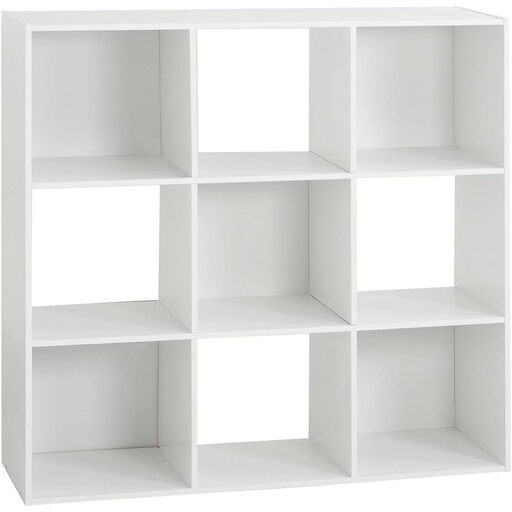
Why it suits this need: This open shelving unit has nine compartments and can stand on the floor or be mounted on the wall. It’s a good choice for living spaces where keeping things organised matters.
The dimensions and maximum load of 65 kg are listed, so you can check how the cabinet will fit your space and your belongings.
Nine compartments, 100.5 x 32 x 100.5 cm, FSC certification and a minimum two-year legal guarantee.
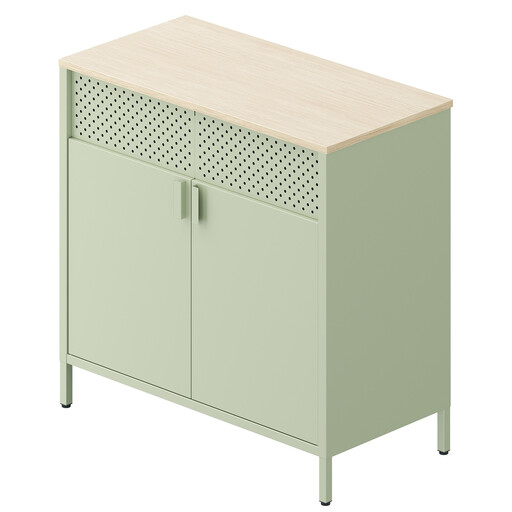
Why it suits this need: This steel cabinet with a door and adjustable shelf combines concealed storage with compact dimensions of 40 x 80 x 76 cm, making it suitable for a living room, dining room or home office.
The adjustable shelf gives you an alternative to a completely fixed layout. The supplied anti-tip kit helps you secure the cabinet to the wall correctly.
Steel construction, an adjustable shelf, a pegboard back panel and a stated static load capacity of 50 kg for the top.
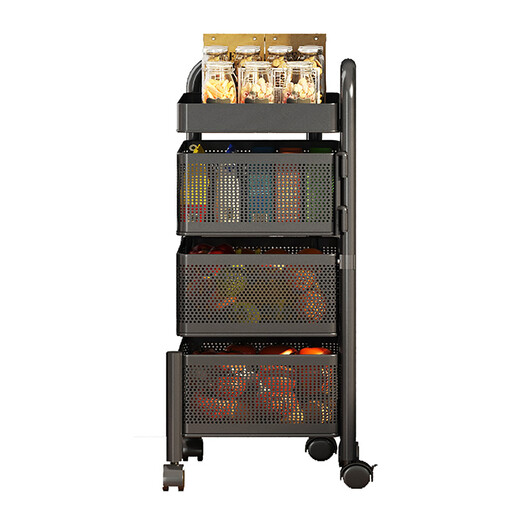
Why it suits this need: This four-tier kitchen trolley is designed for narrow spaces in the kitchen, utility room, bathroom or garage. Its rotating design gives you access from different sides.
The vertical layout takes up little floor space, and the wheels make it easy to move. Distribute the load evenly to reduce the risk of it tipping over.
Four tiers, 360° rotation according to the product specifications, carbon steel with a rust-resistant coating and swivel castors.
We’ve put together a complete, up-to-date list of products that meet these strict selection criteria and the applicable European safety requirements.
First, measure the available width, height and depth. A narrow trolley, a rotating storage rack or a cabinet that can be wall-mounted may be a practical choice. Check the space needed for doors, wheels and skirting boards, too. A low cabinet with a door can also double as a sideboard.
That depends on the finish and the manufacturer’s information. According to product specifications, steel with a rust-resistant coating is designed to protect the surface better during everyday use, but prolonged contact with water should still be avoided. Place the cabinet on a level surface, keep ventilation openings clear and wipe up any spills promptly.
Assemble all the parts according to the instructions, check the screws after assembly and store heavy items at the bottom. Use the supplied anti-tip kit if one is specified for the model. On a trolley, locking wheels can help prevent it from moving during use. Always check the stated load capacity for each shelf or the top.
