
Vandaag of morgen in huis

Kwaliteit gegarandeerd

Welkomstaanbiedingen ontgrendelen: GRATIS bezorging | Tot 80% korting | Gratis 30 dagen JoyPlus-proefperiode
Download de app
At first glance, choosing a storage cabinet seems straightforward: pick a size, a colour and enough compartments. Yet problems often only appear after assembly. A cabinet turns out to be too deep for the hallway, drawers run stiffly, or the material isn't suitable for heavy items. Features like LED lighting, plug sockets and castors can also be handy, but only if they suit the space and how you'll use it.
So don't just focus on the looks. Pay particular attention to dimensions, weight capacity, stability and maintenance. That way, you'll find a home storage unit that stays practical in the bedroom, kitchen, living room or home office.
A cabinet that's 40 cm deep might look compact on paper, but in a narrow hallway or small bedroom it can still eat up a lot of floor space. Alongside width, depth and height, also check:
For a bedroom cabinet, depth is especially important. A fabric chest of drawers with shallow drawers is fine for clothes and accessories, but not automatically suitable for large blankets or heavy shoes.
A cabinet with drawers offers good organisation, but the weight capacity varies per drawer. Manufacturers sometimes only state the maximum load for the top panel or the whole cabinet. So look at the weight capacity per drawer and per shelf.
For documents, tools or equipment, a sturdy mobile filing cabinet is more suitable than a lightweight model with fabric drawers. Place heavy items low down and follow the assembly instructions. An anti-tip device is important for tall cabinets and furniture with several extended drawers.
A cabinet with LED lighting or one with plug sockets can be practical in the kitchen, living room or studio. Do check:
According to the product description of the HaluPeit model, it features two plug sockets, two USB ports and adjustable LED modes. These are verifiable product specifications; whether it's actually suitable depends on your devices and your existing electrical installation.
Measure the available space at three points: width, depth and height. Leave a few centimetres of clearance all round for assembly and ventilation. Then look at the layout. A cabinet with drawers works well for small items, clothes, cables or office supplies. A cabinet with adjustable shelves is more flexible for crockery, books and appliances.
For a kitchen sideboard or kitchen cabinet, the height of the worktop and the position of the connections are also relevant. A wide top panel can provide extra work surface, but it shouldn't block a walkway or window.
Many models combine particle board, metal and fabric. This can keep weight low and make assembly easy. However, fabric drawers aren't intended for damp rooms or heavy objects. The product information for the JOYFURNOS 7-Drawer Fabric Dresser states that the drawers are not washable and should be cleaned with a damp cloth.
For a kitchen or entrance hall, a smooth surface is often easier to clean. Check whether the material is resistant to moisture, stains and daily use according to the product description. Treat such information as a product specification from the brand, not a guarantee for every home environment.
A tall bedroom cabinet, vanity table or kitchen cabinet should stand firmly. Look for adjustable feet, the quality of the joints and the presence of an anti-tip device. Secure the furniture to the wall when the instructions require it. Check beforehand whether the supplied fixing materials are suitable for your wall type; concrete, brick and plasterboard may need different wall plugs.
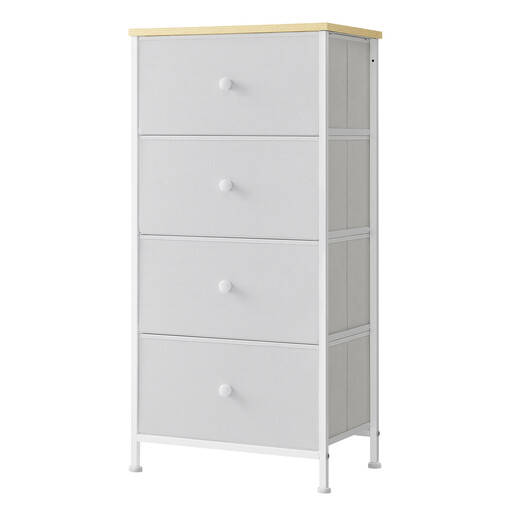
Why it fits this profile: This compact fabric chest of drawers is ideal for students, first-time buyers and smaller rooms where lightweight everyday items need to be stored neatly.
The product information states the dimensions of 30.1 x 45.1 x 92.4 cm and includes an anti-tip device. The maximum static load capacity is 27 kg total according to the specifications.
Four drawers, a metal frame and a relatively narrow width. Suitable for accessories, cables and lightweight clothing.
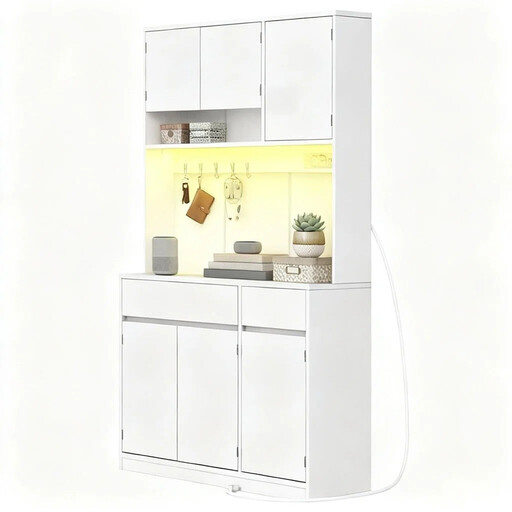
Why it fits this profile: This tall kitchen cabinet suits households that want to combine storage space, a worktop and electrical connections in one piece of furniture.
The cabinet has adjustable shelves, an anti-tip device and a protective back panel. Do check the wall, cable route and available space yourself before assembly.
Dimensions of 40 x 100 x 180 cm, a worktop of 100 x 38.5 cm, two plug sockets, two USB ports and adjustable LED lighting according to the product description.
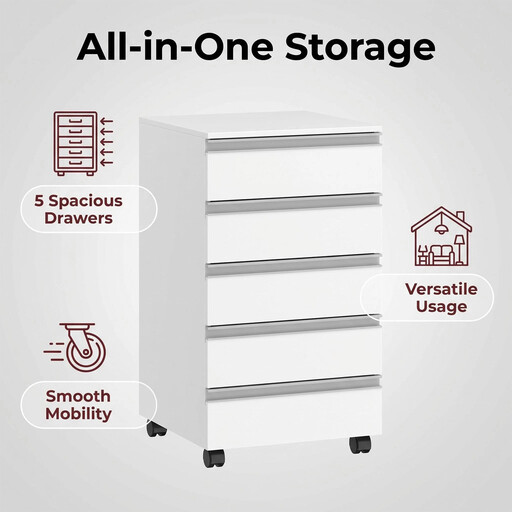
Why it fits this profile: For homeworkers, offices, workshops and studios, this filing cabinet on castors offers mobile storage for documents, tools and materials.
The five drawers are designed for frequent access and the front castors can be locked according to the product description. Check the floor and maximum load before heavy use.
Size of 40.5 x 40.5 x 65.5 cm, swivel castors and a stated total load capacity of up to 50 kg.
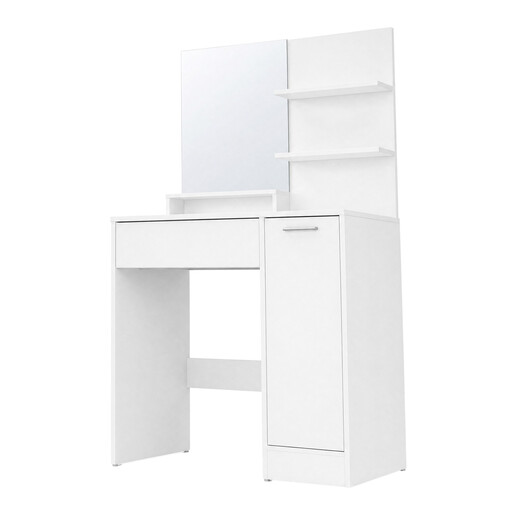
Why it fits this profile: This vanity table with mirror combines a work surface, open compartments and a drawer for beauty products in a bedroom or studio.
The adjustable shelves help you adapt the layout. The product information mentions an anti-tip device; a stool is not included.
Dimensions of 40 x 80 x 132 cm, a large mirror surface, two open shelves and one drawer. According to the specifications, the top panel has a static load capacity of 60 kg.
We've put together a full, up-to-date list of products that fully meet these strict selection criteria and comply with current European safety regulations.
First measure the free wall space and take into account the opening direction of doors and drawers. A narrow chest of drawers or fabric chest of drawers generally takes up less room than a deep wardrobe. Choose several small drawers if you want to sort accessories and clothing. Always check the actual external dimensions, not just the product photo.
Place the cabinet on a level surface, distribute heavy items across the lower compartments and don't open several heavy drawers at once. Use the supplied anti-tip device and secure the furniture to the wall following the instructions. If in doubt, use fixing materials that suit your wall type.
The cost depends on the wattage of the lighting and how long it's on. Check the product label or manual for the wattage. Plug sockets and USB ports generally don't consume power on their own when no device is connected, but connected devices can draw power. Unplug the cabinet from the mains when it's not going to be used for a long period.
