
Vandaag of morgen in huis

Kwaliteit gegarandeerd

Welkomstaanbiedingen ontgrendelen: GRATIS bezorging | Tot 80% korting | Gratis 30 dagen JoyPlus-proefperiode
Download de app
A storage cabinet may seem simple to choose, but small differences in dimensions, materials and layout can determine how well it works day to day. A model might look spacious in a product photo, only for the shelves to turn out too narrow for towels, toys or ring binders. A bathroom cabinet that doesn’t fit around your pipes can also mean extra work.
So keep an eye out for these common pitfalls:
Before buying, note the maximum width, depth and height available. Leave a little extra space around doors, skirting boards and pipes. For a bathroom cabinet, also check:
A cabinet with compartments is handy for baskets and boxes, while one with drawers works better for smaller items. Adjustable shelves are more practical than fixed compartments for storing tall bottles.
MDF and chipboard are commonly used in furniture. Check the finish on the edges and surfaces, especially if the cabinet will be in the bathroom. A moisture-resistant cabinet can cope better with normal humidity and light splashes, but don’t leave it standing in water and wipe up spills quickly.
A back panel is useful on an open shelving unit to stop items falling behind and to keep out dust. In a child’s bedroom or living room, securing the cabinet to the wall is especially important. Ideally, put heavier items on the bottom shelves and follow the assembly instructions.
The maximum load capacity doesn’t always apply to each shelf or drawer; sometimes it refers to the whole cabinet. Check exactly what the manufacturer specifies. A cabinet with metal components, sturdy drawer runners or a wide base may be suitable for heavier use, but the floor surface and correct assembly are still important.
For an office, a filing cabinet on wheels or mobile pedestal can be practical, as long as the wheels can be locked and won’t damage the floor. For tools or paperwork, pay particular attention to drawer capacity, the total load and how smoothly the drawers open.
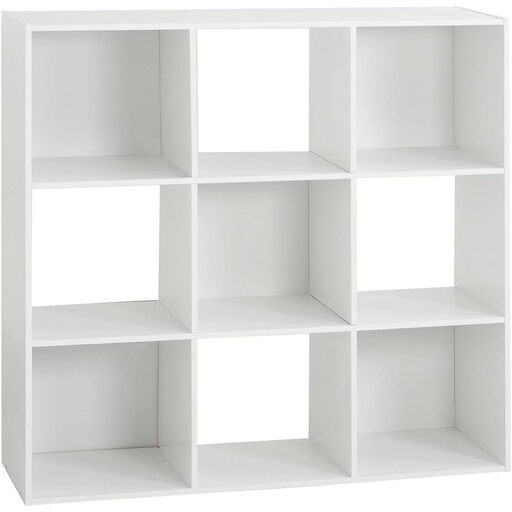
Why it suits this buyer: This open shelving unit has nine compartments for books, toys, baskets or decorations. At 32 cm deep, it fits in many living rooms and children’s bedrooms.
The layout is clear from the outset: nine open compartments rather than one large, disorganised space. According to the product information, the cabinet can be secured to the wall or placed on the floor.
100.5 × 32 × 100.5 cm, maximum load capacity of 65 kg according to the specifications, assembly by two people and an estimated assembly time of around 30 minutes.
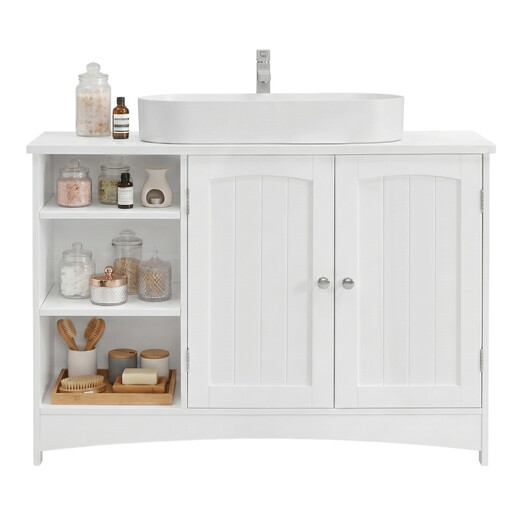
Why it suits this buyer: This vanity unit combines an open section with a closed cupboard for toiletries, towels and paper products.
The product information lists two adjustable shelves with three height settings. Be sure to check the specified 20 × 15 cm trap cut-out and your basin dimensions beforehand.
Dimensions: 30 × 88.5 × 60 cm; made from MDF; open and closed storage space; anti-tip fittings included.
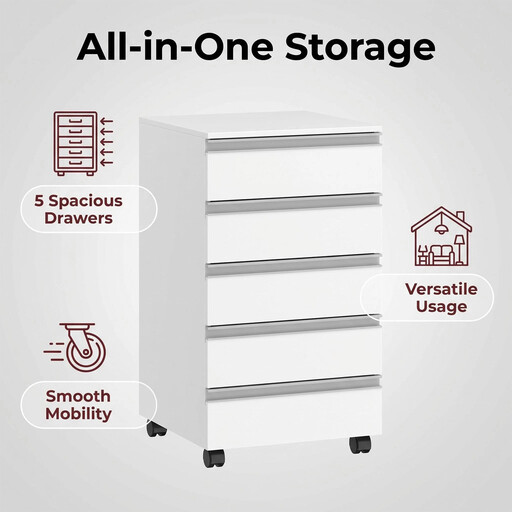
Why it suits this buyer: Designed for a home office, office, studio or workshop, this cabinet on wheels can hold documents, tools, materials and office supplies.
The wheels make it easy to move the cabinet without having to empty it each time. According to the product description, the two front wheels can be locked to keep the cabinet in place.
Five drawers, dimensions of approximately 40.5 × 40.5 × 65.5 cm and a total load capacity of 50 kg according to the product information.
A bathroom vanity unit, such as a cabinet beneath the basin, makes use of space that would otherwise often go to waste. Choose this type if you want to keep towels, toiletries and cleaning products close to the basin. A freestanding bathroom storage cabinet offers more flexibility, but takes up extra floor space.
A multifunctional storage cabinet makes more sense if you might want to use it in another room later. Look for a neutral design, adjustable shelves and a load capacity suited to different uses. In a damp room, the finish matters more than appearance alone.
We’ve put together a complete, up-to-date list of products that meet these strict selection criteria and the applicable European safety regulations.
Use the anti-tip fittings supplied, if included, and choose wall plugs suited to your wall type. Check for pipes and electrical cables before drilling. Put heavier items at the bottom and don’t let children hang from doors, drawers or shelves.
Its lifespan depends on the materials, load, assembly and maintenance. Keep MDF and chipboard as dry as possible, use coasters or trays where leaks are a possibility, and check the screws and drawer runners from time to time. A cabinet used within its specified load capacity is generally less likely to warp.
A standard cabinet doesn’t use electricity. The main costs are the purchase price, assembly and any accessories, such as baskets, drawer dividers or wall fixings. For a mobile filing cabinet, the quality of the wheels and whether they’re suitable for your floor are also worth considering.
