
Vandaag of morgen in huis

Kwaliteit gegarandeerd

Welkomstaanbiedingen ontgrendelen: GRATIS bezorging | Tot 80% korting | Gratis 30 dagen JoyPlus-proefperiode
Download de app
At first glance, a storage cabinet seems simple: choose a size, a colour and enough compartments. Yet many poor purchases are caused by details that only become apparent after assembly or during everyday use. A cabinet may be too deep for the hallway, for example, have insufficient load capacity for a printer or be difficult to clean in the bathroom.
So don’t focus solely on appearance. Pay particular attention to the dimensions, construction and how you intend to use the cabinet. With this practical buying guide, you can compare a home storage cabinet, office storage cabinet, bathroom cabinet or chest of drawers based on points you can check in advance.
Product dimensions are usually given as depth × width × height, but they are not always listed in the same order. Measure the available space yourself and leave room for doors, drawers and skirting boards.
A narrow storage cabinet may fit well in a hallway, but a door that opens a long way forwards can still block the passage. For a cabinet under a desk, you should also check that its height fits beneath the worktop.
Chipboard, MDF, metal, plastic and fabric each have different characteristics. For a bathroom cabinet, moisture-resistant materials and sufficient clearance from the floor are important. In a home office, sturdy drawer runners and a stable construction matter more than the finish alone.
Terms such as ‘waterproof’, ‘extra strong’ or ‘durable’ are marketing claims unless they are supported by specific product details. Check the stated material, load capacity, care instructions and warranty terms.
A cabinet with drawers for clothing has different requirements from a mobile filing cabinet with a printer on top. Check whether the stated weight applies to the entire cabinet, each drawer or only the top panel. Place heavy items low down and distribute the weight across several compartments.
Also check whether an anti-tip device is included. Tall cabinets, shoe cabinets with full doors and cabinets with drawers should be secured to the wall in accordance with the assembly instructions whenever this is specified.
Before you start looking, note down:
A chest of drawers is practical for small items and clothing, while a storage unit with adjustable shelves works better for boxes, bottles and books. A cabinet for the hallway and living room should also be narrow enough to keep walkways clear.
For everyday use, a scratch- and stain-resistant finish and easy cleaning are useful features. Product information about melamine, MDF or metal tells you more than a general style description. In damp areas, it is advisable not to leave water standing on the cabinet and to protect the underside properly.
A white storage cabinet can make a room look brighter, but dust and stains may be more noticeable. A plastic cabinet is often lightweight and easy to wipe clean; a cabinet made from board material may feel sturdier, but requires more care when it comes to moisture and assembly.
A mobile filing cabinet is useful in a flexible workspace or studio. Pay attention to the type of castors, whether they can be locked and how stable the cabinet is when the drawers are open. For a fixed cabinet, adjustable feet, a sturdy back panel and an anti-tip kit are relevant considerations.
According to HaluPeit’s product information, the Rolling Cabinet has 360° swivel castors, with the front castors able to be locked. This makes the model suitable for anyone who regularly changes the layout of an office or studio. Do check the exact dimensions before buying: the product title states 40 × 40 × 70 cm, while the specifications list 40.5 × 40.5 × 65.5 cm.
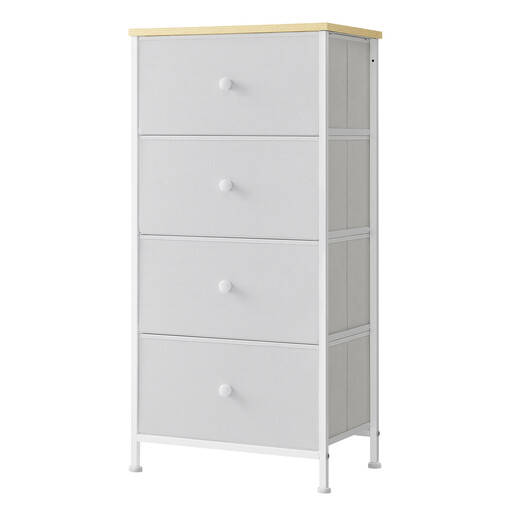
Why it suits this profile: This lightweight cabinet with four drawers is suitable for a bedroom, student room or small home workspace where flexible storage is needed.
The stated dimensions are compact: 30.1 × 45.1 × 92.4 cm. This means the cabinet takes up little floor space, but check beforehand that its height is suitable.
Four drawers, a metal frame, a chipboard top panel and a stated maximum static load of 27 kg.

Why it suits this profile: A fixed chest of drawers for anyone with a larger bedroom, study or storage room who values a specified load capacity.
The stated maximum load capacity is 80 kg for indoor use. The drawers do not have a soft-close function, so bear this in mind when setting your expectations.
Three drawers, steel fittings and drawer runners, assembly by one person and a statutory warranty of at least two years, as stated in the product information.
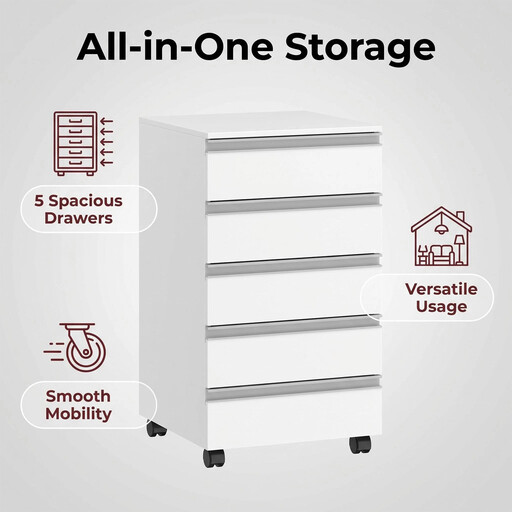
Why it suits this profile: For an office, studio or workshop storage cabinet where documents, tools and accessories are frequently moved around.
The product information lists five deep drawers, reinforced runners, lockable front castors and a total maximum load capacity of 50 kg.
360° swivel castors, a flat top panel for small equipment and dimensions that are approximately 40 × 40 cm according to the listed specifications.
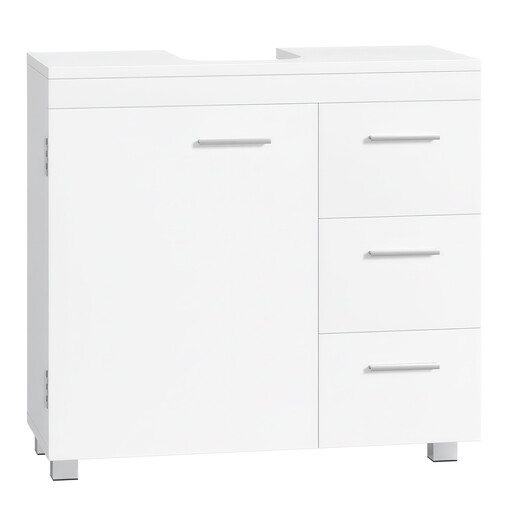
Why it suits this profile: This under-sink cabinet combines three drawers with two compartments and is designed for bathrooms with a pedestal or wall-mounted washbasin.
The adjustable shelf accommodates bottles of different heights. The manufacturer states that an anti-tip kit is included, along with a maximum static load of 36.2 kg.
Dimensions of approximately 30 × 70 × 64 cm, three drawers, two door compartments and feet that help keep the cabinet off the floor.
We have put together a complete, up-to-date list of products that fully meet these strict selection criteria and the applicable European safety regulations.
Place the cabinet on a level surface and follow the assembly instructions. Use the included anti-tip kit when required by the manufacturer. For a tall cabinet, securing it to a suitable wall is particularly important. Check beforehand that your wall type is suitable for the fixings being used.
Its lifespan depends on the material, load, assembly and maintenance. Do not open drawers with force, distribute heavy items evenly and avoid prolonged contact with water. Also check the statutory warranty and any additional manufacturer’s terms. A clearly stated warranty period is useful, but it does not replace correct use.
If space is limited, look for a cabinet with a depth of around 20 to 30 cm. A narrow shoe cabinet with adjustable shelves makes good use of vertical space and keeps shoes out of sight. Measure the door-swing radius and check whether the cabinet can be secured to the wall. For loose keys, post and accessories, a cabinet with drawers beside or above the shoe storage can be practical.
