
Builder who mainly writes code
You’re building the tracker yourself and want easy access to coding symbols, arrow keys and any shortcuts you use.


Start with what you do most often: choose a compact layout if you mainly write code, or a keyboard with a numeric keypad if you regularly enter stock figures. For long typing sessions or shared workspaces, the keyboard’s shape and typing noise matter too. A programmable key can help with an action in your workflow, but Git handles version control.
You’re building the tracker yourself and want easy access to coding symbols, arrow keys and any shortcuts you use.
You update stock regularly and want to weigh up whether a numeric keypad matters more than a compact footprint.
You spend long sessions building or updating the tracker and want to consider the keyboard’s shape alongside your overall workstation setup.
A good fit if: you mainly write code and want to save desk space; a 75% layout can retain the arrow and function keys.
Bear in mind: this compact layout has no integrated numeric keypad, and switch options can vary in feel and sound.
A good fit if: you often enter stock figures and like having the number keys close at hand.
Bear in mind: the larger size takes up more desk space; programmable actions depend on compatible software and your working environment.
A good fit if: you want to give the keyboard’s shape and positioning particular consideration during longer typing sessions.
Bear in mind: a split design may take some getting used to; two separately positionable halves offer different adjustment options from a fixed design.
| What to consider | What to look for when buying | Who should prioritise this? |
|---|---|---|
| Coding and shortcuts | Check the physical layout, the position of coding symbols, and whether the keys match your selected keyboard language and editor. | If I mainly write code, I want to reach symbols and navigation keys without extra effort. Around 33% of consumers make coding layout their top priority. |
| Entering figures | Check whether the model has an integrated numeric keypad and whether you’re happy to use the extra desk space it needs. | If I often enter stock figures, I want to work with numbers quickly without changing my workflow. Around 25% of consumers prioritise number entry. |
| Posture during longer sessions | Compare straight, fixed curved and split designs. For adjustable models, check the positioning options and accessories included with that version. | During longer typing sessions, I want the shape to suit my hands and arms, and I also want to assess my whole workstation. Around 25% of consumers make posture their top consideration. |
| Typing noise | Check the switch option and, if possible, listen to the typing sound of the specific version, especially if you share your workspace. | If I work alongside other people, I want the typing noise to suit the space. Around 17% of consumers make quiet typing their top priority. |
The physical position of punctuation and other coding symbols can vary between layouts. So the QWERTY label alone won’t tell you where every key is.
Compare the image and stated physical layout with your current keyboard and computer settings, paying particular attention to the symbols you use when coding.
A different key position may take some getting used to when coding.
A 75% model has no integrated numeric keypad. That may be inconvenient if your stock data consists mainly of numbers.
Decide in advance whether writing code or entering figures is your most common task, and check which keys the specific version actually has.
If you later decide to use a separate numeric keypad, it will take up extra desk space.
A keyboard on its own won’t prevent or treat physical complaints. Positioning options and accessories also vary by version.
Consider your screen, desk, chair and work breaks too. Check what comes with the version you choose, and seek appropriate professional advice if discomfort persists.
A different shape may take some getting used to; also check whether any adjustment accessories are included with that version.
The V1 Max is an example of a compact mechanical keyboard with programmable keys.
The MX Keys S and ERGO K860 illustrate different options: a low-profile keyboard with programmable actions and a fixed split model with a numeric keypad.
The Freestyle2 is worth considering if you want to adjust the distance and angle between the keyboard halves.
The wired AK820 is a compact mechanical option with arrow keys, a function row and a rotary knob.
The MX BOARD 3.0S is a wired mechanical range to compare with compact or split options.
This selection includes compact keyboards for coding and models with a numeric keypad for entering stock figures.
 No image available
An option to consider if you regularly enter figures and want a wired setup.
Full-size layout with numeric keypad, navigation keys and arrow keys.
The description lists a plug-and-play connection and backlighting.
 No image available
A compact option to compare if you want to save desk space when coding and don’t need an integrated numeric keypad.
The product information lists Bluetooth, 2.4 GHz and USB-C connectivity.
The listed version has a US QWERTY layout; check that it matches your input settings.
 No image available
A compact wired option if you want to keep the arrow and function keys and can work without a numeric keypad.
The product information lists hot-swappable linear switches, PBT keycaps, a volume knob and a USB-C cable connection.
The listed layout is US QWERTY. Compatibility with PC, Windows and Mac is noted; check that this version suits your setup.
 No image available
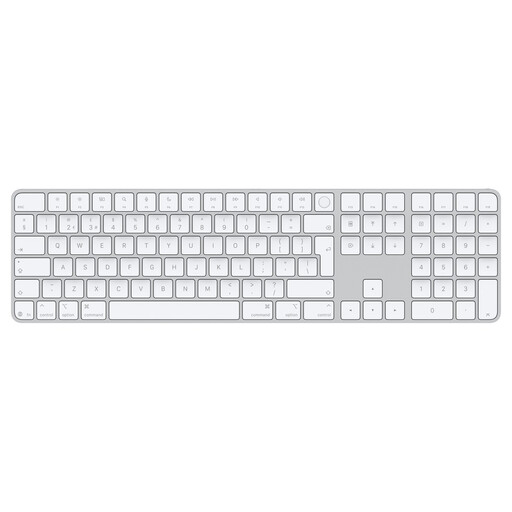
A model to consider if you enter lots of figures and want a Dutch version for a Mac with Apple silicon.
The product information lists a numeric keypad and document navigation keys.
Touch ID is mentioned in the product name; check that this version is compatible with your Mac model.
 No image available
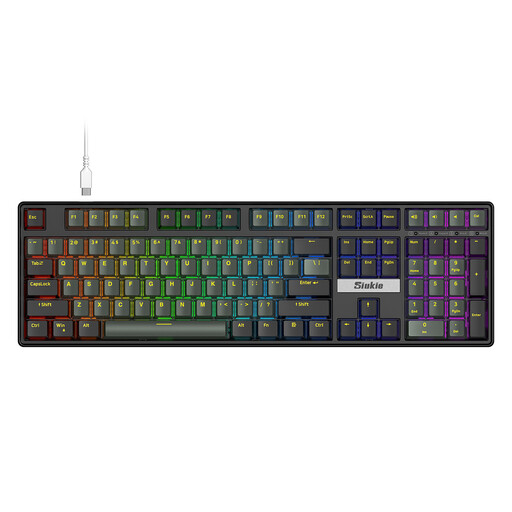
A wired full-size option to compare if you enter figures and are looking for a mechanical keyboard.
The product information lists a numeric keypad, a USB connection and hot-swappable switches.
No. Git is version control software and doesn’t require a special keyboard. Choose based on the input you use in your editor and working environment. Key remapping can help with a repeated action, but it isn’t necessary for Git.
Check the physical layout, your computer’s language settings, the operating system and the connection for the exact version. Keychron lists support for Windows, macOS and Linux for the V1 Max; that doesn’t automatically apply to other models.
Assess the keyboard alongside your screen, desk, chair and work breaks. The Arboportaal highlights the risks of prolonged screen work; changing the keyboard alone won’t treat discomfort.
For an employee who works at a screen for more than 2 hours a day, the Arboportaal states that the screen and keyboard must not be attached to each other. When using a laptop, it must be possible to use a separate screen or keyboard; this isn’t a general requirement for every private buyer.
For a standard online consumer purchase, ACM ConsuWijzer says you generally have up to 14 days after delivery to change your mind, subject to applicable exceptions. The statutory guarantee also applies: if a product doesn’t meet reasonable expectations under normal use, the retailer is responsible for providing an appropriate solution.