
Sticky rice fans with limited cupboard space
You’re mainly looking for a way to prepare sticky rice without having to store an extra appliance. Choosing between a rice cooker programme and steaming matters to you.


Start by considering how to prepare sticky rice and the appliance’s external dimensions, rather than looking at capacity in litres alone. A compact rice cooker can be useful if you regularly make small portions, but check that the instructions for the exact model suit your rice. If you prefer steaming and already have a suitable pan, you may not need an extra appliance.
You’re mainly looking for a way to prepare sticky rice without having to store an extra appliance. Choosing between a rice cooker programme and steaming matters to you.
You often cook rice for one or a few people and want to be able to put the cooker away after use. So, check both the portion information and the model’s external dimensions.
You want to use a compact cooker for more than one type of rice. The programmes available and their preparation instructions are important to you.
Choose this option: if you regularly make small portions and want straightforward controls. Tristar lists a capacity of 0.6 litres and three portions for the RK-6117.
Trade-off: straightforward controls don’t automatically mean there’s a special sticky rice setting; check the instructions for the model.
Choose this option: if you cook different types of rice and want more settings to choose from. Reishunger lists several rice settings and external dimensions of 32 × 23 × 12 cm for the digital mini.
Trade-off: compare the external dimensions with your available cupboard and worktop space. A recipe using a particular setting doesn’t prove that every version will give the same result.
Choose this option: if sticky rice is your main priority and you don’t want to store another electrical appliance. The Netherlands Nutrition Centre suggests using a pan with a heatproof colander and a lid for steaming.
Trade-off: you use the cookware you already own and need to keep an eye on the cooking yourself; whether this saves space depends on what you have already.
| What to consider | What to look for | Who is this important for? |
|---|---|---|
| Preparing sticky rice | Check the type of rice, the recipe and whether the manual describes a suitable setting or preparation method. Don’t assume that a ‘sushi’ setting in a recipe will work for every model. | I want the preparation method to suit the sticky rice I’m making, even if it needs soaking or steaming. Around 33% of consumers prioritise preparation and texture. |
| Storage space | Measure the available width, depth and height, then compare them with the appliance’s external dimensions. When using it, also allow for the space specified in the manual. | I want to be able to put the cooker away in my cupboard after use, so I can’t judge by capacity alone. Around 33% of consumers put cupboard fit first. |
| Portion size | Compare the portions and measuring cup specified by the manufacturer with the amount you usually prepare. Check what the stated capacity refers to. | I usually cook for one or a few people and want a capacity that suits the way I use it. Around 25% of consumers prioritise portion size. |
| Programmes and maintenance | Read about the rice settings in the manual and follow the cleaning instructions for the inner pot. | I want to use the cooker for other types of rice too, and suitable settings matter to me. Around 9% of consumers put programme convenience first. |
A cooker with a small capacity isn’t necessarily small on the outside. Nedis lists the KARC06WT as 238 mm wide, 210 mm deep and 258 mm high, so measure the space where you plan to store it.
Measure the space available in your cupboard and compare it with the external dimensions of the exact version.
Recipes may also call for washing and soaking the rice, as well as a particular cooking method. A recipe that uses a ‘sushi’ mode doesn’t prove that every model or programme will suit your sticky rice.
Choose your recipe first, then check whether the manual for the exact model supports the preparation method it requires.
A keep-warm function doesn’t replace advice on storing leftover rice. The Netherlands Nutrition Centre recommends cooling cooked rice quickly and putting it in a sealed container in the fridge or freezer.
Use the keep-warm function as described in the manual, and follow the Netherlands Nutrition Centre’s separate advice on storing leftovers.
Tristar describes the RK-6117 as a compact rice cooker with a capacity of 0.6 litres, designed for small portions.
According to Nedis, the Nedis KARC06WT combines a capacity of 0.6 litres with an included steam basket.
Reishunger lists a capacity of 0.6 litres and several rice settings for the digital mini.
Yum Asia describes the Panda Mini as a small rice cooker with several settings.
This selection includes rice cookers for preparing rice, with a range of capacities and features. Before choosing, check the external dimensions and the preparation instructions for your sticky rice.
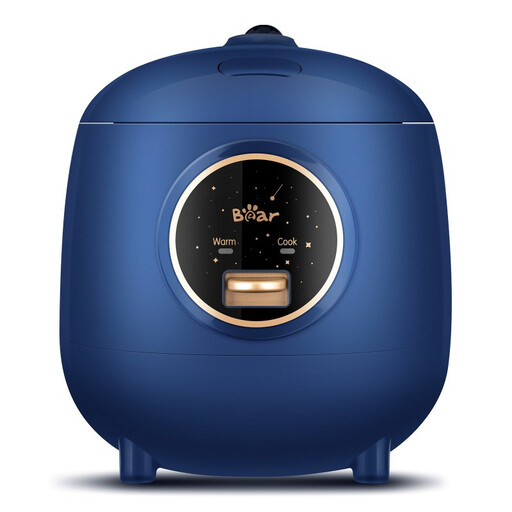 No image available
The product name says it’s suitable for 1–2 people; compare the stated capacity with the portions you usually make.
Listed features: 1.2L, 200-238W, keep-warm function, non-stick inner pot and one-button operation.
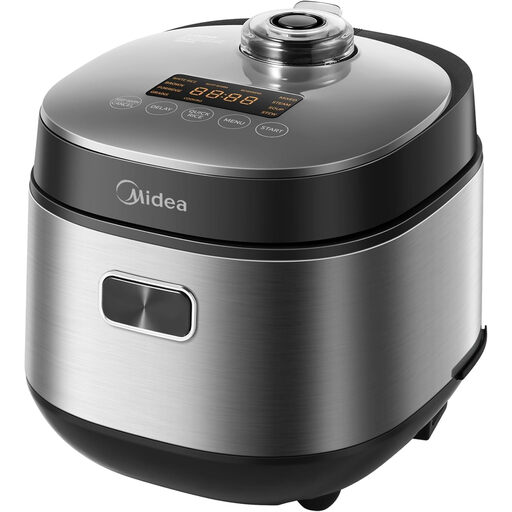 No image available
The product name says it’s suitable for 1–3 people; check that the capacity suits the portions you usually make.
Listed features: 2L, 4 cups, 9 functions, timer, keep-warm function and a steam insert.
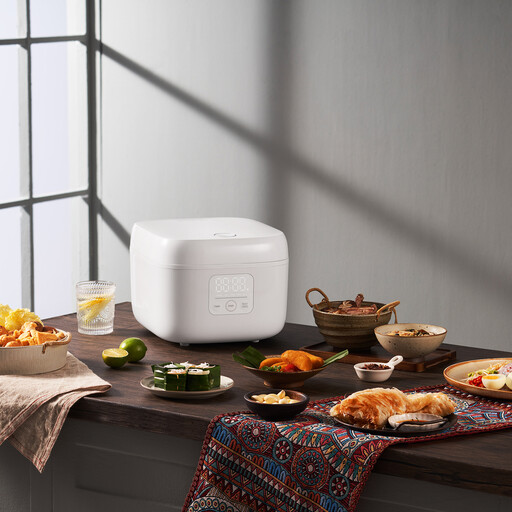 No image available
The product name gives a rice capacity of 1.6 l; compare this with the amount of rice you usually prepare.
Listed features: rice capacity 1.6 l, water capacity 4 l and 220V.
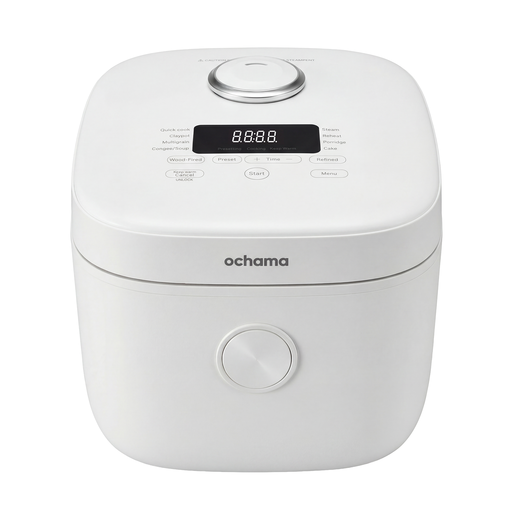 No image available
The product name says it’s suitable for a household of 3–4 people; check that the version suits your portions and storage space.
Listed features: 4L, 860W, timer, keep-warm function and a steam basket.
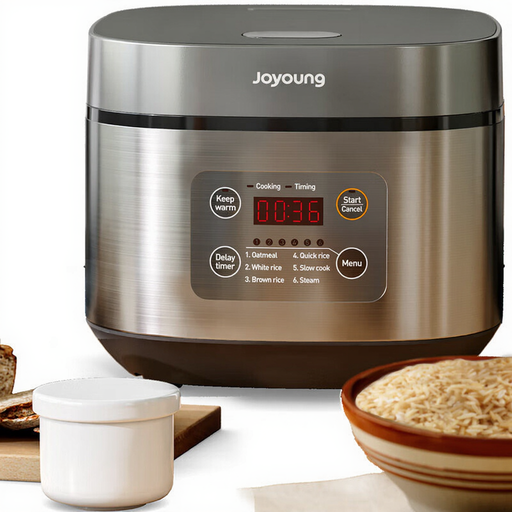 No image available
The product name gives a capacity of 4L; check the external dimensions of the exact version before making space for it in your cupboard.
Listed features: 860W, smart timer and LED indicator.
No. One cooking recipe describes soaking and steaming the rice in a pan with a suitable steaming setup. Reishunger also publishes a method that involves soaking the rice for two hours and using a ‘sushi’ mode. Follow the instructions that suit your rice and appliance.
The Netherlands Nutrition Centre recommends cooling cooked rice quickly, storing it in a well-sealed container in the fridge or freezer, and not leaving leftovers out of the fridge for more than two hours. It gives two days in the fridge and three months in the freezer as storage times.
No. According to ACM ConsuWijzer, the legal guarantee depends on what you could reasonably expect from the product under normal use; it doesn’t simply have a fixed two-year end date. The seller is responsible for providing a legal remedy if a product is faulty.
Yes. The Netherlands Food and Consumer Product Safety Authority states that CE marking is compulsory for electrical consumer products. The marking represents the manufacturer’s declaration that the relevant product rules have been met; on its own, it doesn’t prove that a specific model has been independently checked or will deliver a particular cooking result.