
Cook with a full kitchen cupboard
Want to make cold tomato soup without having to store a large jug? Start by comparing stick blenders and remember to include any accessories. The Voedingscentrum also uses a stick blender to make gazpacho.


If cupboard space is limited, a stick blender is a sensible choice if you want to blend tomatoes directly in a suitable bowl or pan, without having to store a large blender jug. A compact blender is better suited to making small portions in a sealed cup, while a larger jug is worth considering if you want to make several portions at once. Always compare the space needed for the complete appliance and its accessories, the usable capacity and the cleaning instructions.
Want to make cold tomato soup without having to store a large jug? Start by comparing stick blenders and remember to include any accessories. The Voedingscentrum also uses a stick blender to make gazpacho.
If you’re making one or a few portions, compare the usable capacity of a blending cup with the quantity in your recipe. The Consumentenbond highlights small portions as a factor when choosing between a blender and a stick blender.
If you want to blend several portions at once, weigh up the convenience of a larger jug against the space it needs and the extra washing-up. The Consumentenbond describes these differences in how blenders and stick blenders are used.
| What to consider | What to look for when buying | Who might find this more important? |
|---|---|---|
| Storage without a large jug | Measure the available cupboard space and compare it with the appliance and the parts you want to store. | If your cupboard is already full, you’ll also need room for measuring cups and attachments. Around 36% of consumers put storage space at the top of their list. |
| Enough soup per blending session | Compare the usable capacity and maximum fill line with the quantity of ingredients in your recipe. | If you want to make several portions without having to blend repeatedly, check that the capacity suits the quantities you need. Around 29% of consumers prioritise having enough capacity for each blending session. |
| Blending with less splashing | Check whether the appliance is suitable for liquid ingredients and how the jug or cup is sealed. | If your main concern when making cold soup is how you blend it and how to reduce splashes, compare blending directly in a bowl with using a sealed jug. Around 21% of consumers prioritise texture and reduced splashing. |
| Less washing-up | Check the cleaning instructions for each part, including the cup, lid, blades and attachments. | If you want to clean as few separate parts as possible after blending, check what’s required for your model. Around 14% of consumers put ease of cleaning at the top of their list. |
The motor unit alone won’t tell you how much space the complete set will take up. You’ll also need somewhere to store a cup, jug or accessory.
Measure your cupboard and compare the dimensions with the complete appliance and the parts you want to store.
According to the Consumentenbond, power alone doesn’t tell you everything about the results. Its comparison information also looks at how well appliances blend ingredients.
First, choose the type of appliance and portion size that suit your kitchen. If you want to compare models on texture, look for a relevant blending test.
Cleaning instructions can vary between parts and models. Cleaning parts in a way that goes against the instructions could damage them.
Check the manual for the cup, lid and blades individually, and let the parts dry before putting them away.
The ErgoMixx MSM64110 is a stick blender with a detachable blending foot. Bosch Netherlands lists two speed settings and a measuring cup for this model.
Philips Netherlands describes the 3000 Series HR2620/40 as a compact blender with a tumbler and a 350 W motor.
According to nutribullet Netherlands, the Original 600 NB603DG comes with a 700 ml cup. The manufacturer lists dimensions of 343 × 140 × 140 mm.
Tefal Netherlands lists 400 ml and 700 ml bottles, a self-cleaning setting and removable blades for the Blend Up BL19H4F0.
This product selection includes a stick blender, compact blenders and a blender with a larger jug. Compare how much space each complete appliance takes up, the portions you want to make and how you want to blend your soup.
 No image available
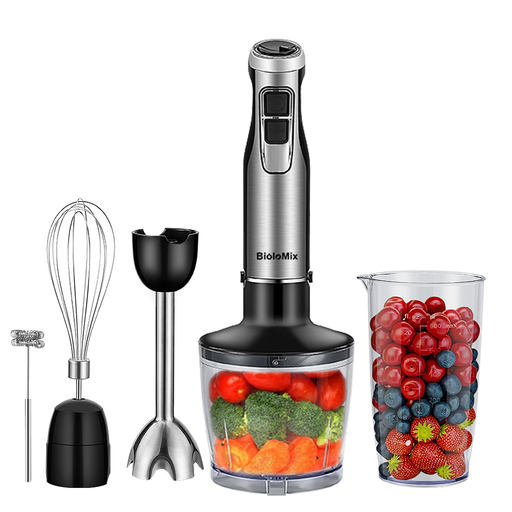
A stick blender for blending tomatoes directly in a suitable bowl or pan.
The product name lists 6 speeds, 1200 W, a detachable design, a stainless steel blade and an anti-splash system.
 No image available
A compact blender option if you want to blend a smaller portion in a jug.
The product name lists a 0.6-litre capacity, 350 W and a compact design.
 No image available
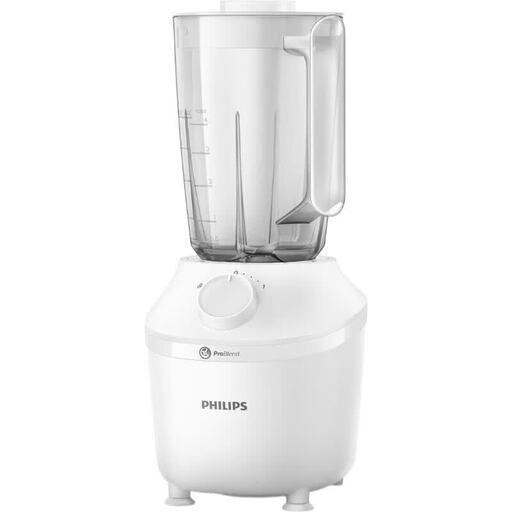
A blender with a larger jug to consider if you want to make several portions at once and have enough cupboard space.
The product name lists a 1.9-litre jug and 450 W of power. Bear in mind the space the jug will need.
 No image available
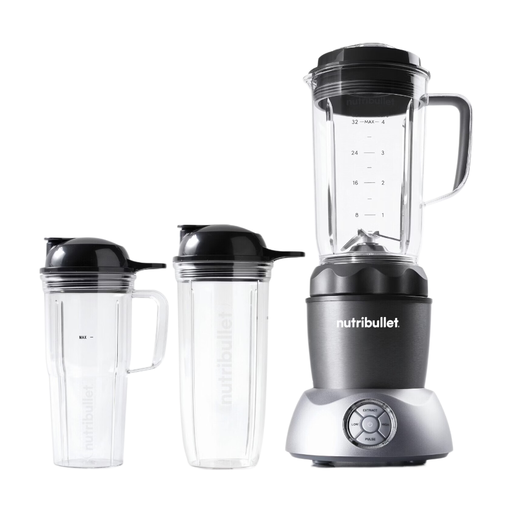
A blender option for cold soup if you want to compare a jug model with blending directly using a stick blender.
The product name lists a 1000 W motor and a set with several cups and lids. Include these parts when working out how much storage space you’ll need.
No. In the Voedingscentrum’s gazpacho recipe, the tomatoes are blended without being cooked first. The recipe then says to leave the soup in the fridge for at least one hour. Follow the instructions for other recipes.
Check the manual to see which removable parts of your model are dishwasher-safe, and don’t clean the motor housing like a jug. The Voedingscentrum advises refrigerating leftovers within two hours and keeping them in the fridge for no more than two days.
In the Netherlands, the seller is your point of contact if there’s a problem with a product and you need a solution, according to the Rijksoverheid. There is no fixed statutory guarantee period; what is appropriate in a particular case depends, among other things, on the problem and how the product has been used.
CE marking is required for electrical equipment covered by the EU rules on low voltage. These rules apply to equipment designed for 50–1000 V AC. Check the stated voltage and product information for the model, as this does not automatically apply to every battery-powered blender.