
Workshop leader who purées soup in the pan
Wants to demonstrate how to purée soup while keeping splashes and interruptions between participants to a minimum. Focus on the controls, the pan setup and cleaning.


If you mainly purée white bean soup in the pan, start by looking at the controls, the shape of the blending foot and how easy the appliance is to clean after use; you may not need extra accessories. For workshops that also involve chopping or whisking, variable speed and the contents of the exact set may be worth considering. Place the blending foot in the soup before switching on the stick blender to help prevent splashes.
Wants to demonstrate how to purée soup while keeping splashes and interruptions between participants to a minimum. Focus on the controls, the pan setup and cleaning.
Wants to chop or whisk ingredients as well as make soup, so compares the accessories included with the exact set.
Best suited when: the workshop is mainly about puréeing soup.
Bear in mind: also check the speed control, whether the blending foot is detachable and the instructions for use.
Best suited when: participants will also chop ingredients or whisk something.
Bear in mind: extra parts also need storage space and cleaning; the contents vary by model.
| What to consider | What should you look for? | Who might find this especially important? |
|---|---|---|
| Puréeing soup with control | Check the speed control and the shape of the blending foot. Place the foot in the soup before switching on the stick blender. | If I’m puréeing directly in the pan during a demonstration, I want to be able to adjust the controls smoothly. Around 38% of consumers put controlled puréeing first. |
| Cleaning between sessions | Check whether the blending foot is detachable and read the cleaning instructions for each part. Unplug the appliance before removing any parts. | With several participants, I want to be able to clean the appliance properly between sessions. Around 31% of consumers prioritise cleaning when the appliance will be used repeatedly. |
| Other cooking tasks | Decide which chopping or whisking tasks are planned and check the accessories included with the exact version. | If we’ll be chopping ingredients or whisking something as well as making soup, I want the set to include suitable attachments. Around 16% of consumers prioritise these extra cooking tasks. |
| Choosing a simple set | Compare the parts included and check that the model suits the pan and the way the workshop is run. | For a single puréeing task, I don’t want to buy accessories we won’t use. Around 15% of consumers are mainly looking for a basic model. |
A chopper and whisk aren’t automatically needed to purée soup. Extra parts take up storage space and need to be cleaned after use.
First, make a note of any other recipes on the workshop programme, then compare the contents of the exact set.
A splash-resistant design doesn’t guarantee that soup won’t splash. The way you switch on the stick blender also matters.
Place the blending foot in the soup before switching on the appliance and follow the model’s instructions. The Consumers’ Association also recommends this as a usage tip.
Philips describes the HR2683/00R1 as refurbished. The description of a Joybuy product with HR2683/00 in the title refers to the HR2681/00.
Before buying, check the full model number, the product condition and the accessories included.
The MultiQuick 5 Pro range includes the MQ 55001 M and MQ 55254 M. Compare the exact set if variable speed or accessories are important to you.
The ErgoMaster MSM6M622 is worth considering if one-handed operation and a set with a chopper and whisk suit your workshop.
The Quickchef+ HB67MB combines a stick blender with a whisk and an XL chopper-blender, among other accessories, making it suitable for workshops that involve more than just soup.
The 5000 Series is an option to compare for soup-making. Check the full model number and product condition carefully.
The Joybuy products below are stick blenders for puréeing soup; several sets also include accessories for other cooking tasks.
 Image unavailable
The product information lists puréeing soup, as well as chopping and whisking, as possible uses.
Detachable stainless steel blending foot, chopper, whisk and turbo function.
Do not use with boiling liquids.
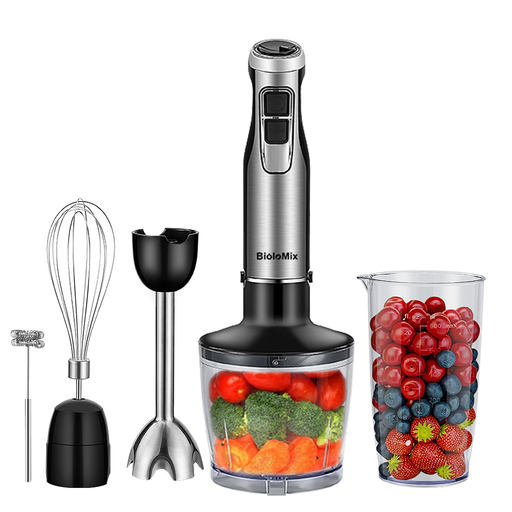 Image unavailable
The product information lists puréeing soup, chopping and whisking for anyone looking to tackle several cooking tasks.
1200 W, 6 speeds, a detachable shaft and a stainless steel blade.
The product information states that it has splash protection and dishwasher-safe parts.
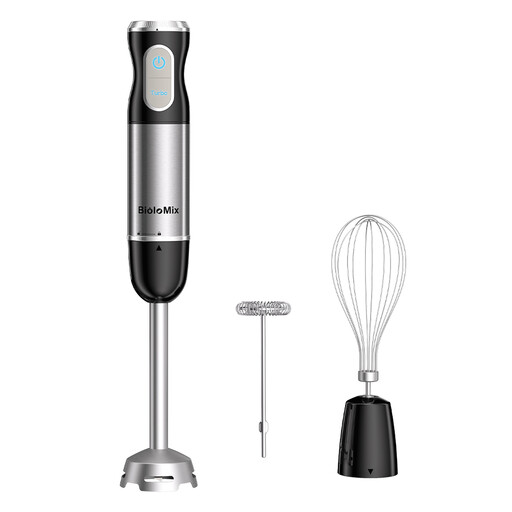 Image unavailable
The product description lists puréeing soup and use in different types of bowls and jugs.
Detachable design and splash protection, according to the product information.
 Image unavailable
The product information lists one-handed operation and adjustable speeds for soup and other preparations.
25 speeds plus turbo; the product information recommends a low speed for liquids.
Detachable attachments and dishwasher-safe parts. Do not use with boiling liquids.
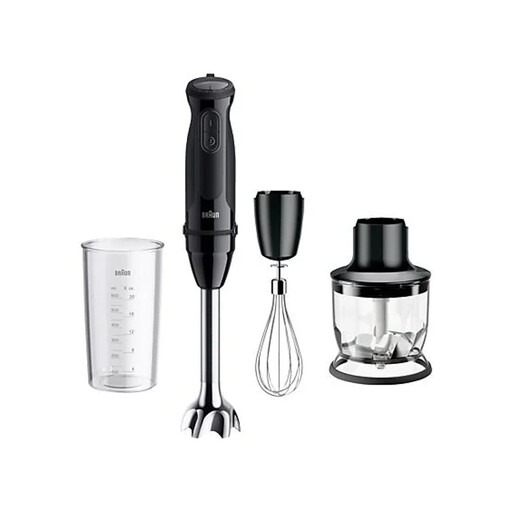 Image unavailable
The product information lists puréeing and blending, plus a whisk for anyone who also wants to whisk ingredients.
21 speeds, 1000 W, a detachable foot, measuring beaker and whisk.
The product information states that it has splash protection and dishwasher-safe parts.
Place the blending foot in the pan or bowl first, then switch on the stick blender. A splash-resistant design may be worth considering when choosing a model, but it doesn’t replace this technique.
Check the instructions for the exact model before puréeing hot soup. The product information for the Emerio HB-130492 and Braun MQ55254M states that they must not be used with boiling liquids.
Check the instructions for the exact model and each individual part. Unplug the appliance before removing attachments and cleaning it.
Not if you only want to purée soup. A chopper and whisk are for other tasks, such as chopping and whisking; check what’s included in the pack you choose if those tasks are also on the programme.
For a business that prepares, processes or sells food, the NVWA explains that it must work with an HACCP food safety plan or an applicable approved hygiene code. If a business sells prepared food to customers, it must also tell them about any allergens present. Whether these requirements apply depends on how the workshop is organised.