
For quick blending straight in the pan
If the soup is already cooked, you can blend it straight in the pan with a stick blender, without having to transfer it. The Consumers’ Association describes this as a handy use for a stick blender.


If the soup is already cooked in the pan and your guests are nearly here, a stick blender is usually the practical choice: there’s no need to transfer the soup, and you’ll generally have less washing up. A jug blender may be a better fit if a smooth result or a larger quantity in one go matters more; a soup maker makes most sense if you want the appliance to do the cooking too. For a specific appliance, check the instructions for hot preparations and the product documentation, including the applicable CE marking and EU declaration of conformity.
If the soup is already cooked, you can blend it straight in the pan with a stick blender, without having to transfer it. The Consumers’ Association describes this as a handy use for a stick blender.
Compare the amount of soup with the appliance’s usable capacity and any MIN and MAX markings. A serving recommendation applies to the specific model it refers to; for example, Philips lists four servings for its SoupMaker HR2204/80R1.
A jug blender may be a good fit if an even texture is your priority and you’re happy to transfer the soup. The Consumers’ Association notes that a stick blender may sometimes produce a slightly less even result than a jug blender.
First, check whether the soup is already cooked and in the pan. Then consider the quantity you need, the texture you want and how easy the appliance is to clean. The Consumers’ Association describes a stick blender as handy for blending directly in the pan, while a jug blender is more likely to give you a smooth result.
A good fit if: the courgette soup is already cooked and you want to blend it without transferring it.
Bear in mind: the texture may be a little less even than with a jug blender; follow the instructions for hot preparations.
A good fit if: a smooth result or a larger quantity in one go is important, and the specific model is suitable for hot soup.
Bear in mind: you’ll need to transfer the soup and clean the jug; not every blender jug is suitable for hot ingredients.
A good fit if: you’re starting with raw ingredients and want the appliance to heat the soup too.
Bear in mind: usable capacity and serving recommendations vary by model; a fixed capacity may mean making several batches.
| What to consider | What to check before buying | Who is this most important to? |
|---|---|---|
| Quick blending in the pan | Check whether the blending foot is detachable and what the instructions say about hot preparations. | If the soup is already cooked in the pan and guests are nearly here, I want to blend it straight away without transferring it or making a mess. Around 36% of consumers in this courgette soup scenario make blending in the pan their top buying priority. |
| Quantity for guests | Compare the quantity in your recipe with the usable capacity and the MIN and MAX markings. | When I’m cooking for friends, I want to know whether the quantity will fit in one batch. Around 29% of consumers prioritise the amount of soup they can make per batch. |
| A smooth texture | Check whether the specific appliance is suitable for hot soup and whether you can work in smaller batches if needed. | When an even texture matters more to me than minimising washing up, I want to choose an option that delivers it. Around 21% of consumers make smoothness their top buying priority. |
| Cleaning and extra uses | Check which parts are included, how they can be cleaned and whether you’ll use them for other tasks too. | If I mainly want to blend soup, I don’t want to have to store or clean unnecessary attachments. Around 14% of consumers prioritise ease of maintenance and versatility. |
Heat suitability varies by model. For example, Philips advises against using hot ingredients in the specific models HR3756/00, HR3752/00 and HR3868/00; this does not automatically apply to every Philips blender.
Before transferring hot soup, check the instructions for your specific model to see what temperature and filling method are permitted.
The permitted fill levels determine whether your recipe will fit in one go. Philips lists a serving recommendation for the SoupMaker HR2204/80R1; it does not necessarily apply to other appliances.
Compare your recipe with the MIN and MAX markings and the instructions for the specific model.
Limited capacity may mean you need more than one batch when cooking for several guests.
A chopper or whisk is designed for tasks other than blending alone. Extra parts also take up storage space and need cleaning.
Choose the included attachments based on the tasks you genuinely expect to use them for.
More parts mean more to store and clean.
Braun offers MultiQuick stick blenders for blending soup in the pan.
Philips offers both blenders and a SoupMaker option.
The Perfectmix Cook BL83SD30 is a heated jug blender option.
Depending on the model, ErgoMixx stick blenders offer different speed settings and attachments.
This selection of Joybuy products includes stick blenders for blending soup straight in the pan, as well as jug blenders that require you to transfer the soup. Always check the instructions for the specific model when preparing hot soup.
 No image available
A good fit for blending in the pan when the soup is already cooked and you don’t want to transfer it.
 No image available
This hand blender is ideal for blending soup without first transferring it from the pan.
The product description lists variable speed control and a stainless steel blending foot. Bear in mind that it can be used continuously for up to 1 minute, followed by a 1-minute rest.
 No image available
A jug blender may suit you if you want to blend soup in the jug; if the soup is already in the pan, you’ll need to transfer it first.
The product description lists a 1,500 ml mixing jug for soup and sauce, two speeds and a pulse function. Check the instructions to see whether hot liquids are suitable.
 No image available
This jug blender may be suitable if you want to blend hot soup in a jug; you’ll need to transfer it from the pan first.
The product description lists a heat-resistant glass jug for hot and cold preparations, with a usable capacity of 1.5 litres.
 No image available
A heated blender may suit you if you’d also like a soup function; if the soup is already in the pan, you’ll need to transfer it.
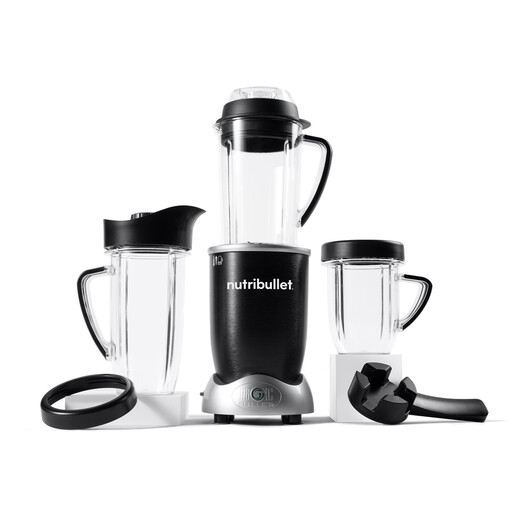
The product description lists a soup programme, cups for hot and cold preparations and a vented lid for hot ingredients. Check the instructions for the specific model.
No. Check the instructions for the specific model before adding hot soup to a blender jug. The Consumers’ Association says a heat-resistant jug is essential; Philips advises against using hot ingredients in the specific models HR3756/00, HR3752/00 and HR3868/00. This does not apply to all Philips blenders.
The Consumers’ Association’s usage tips recommend placing the blending foot in the pan or bowl before switching the stick blender on. Unplug it after use and check the instructions to see which removable parts are dishwasher-safe.
For the relevant SoupMaker models, Philips recommends using smaller pieces, adding liquid up to between the MIN and MAX markings and, if necessary, blending manually. Check whether these instructions also apply to your specific model.
According to Ondernemersplein, the Dutch government’s business information portal, once conformity has been established, the manufacturer must affix a CE marking to an electrical appliance placed on the market and draw up an EU declaration of conformity. Check the documentation for the specific model; a product page alone is not a substitute for that documentation.
The Netherlands Nutrition Centre advises storing leftovers covered in the fridge once they have cooled, within two hours of cooking.