
Student with one saucepan
You make small batches and want to blend the soup straight in the pan, with limited storage space and minimal washing-up. The Consumers' Association describes blending in the pan as a typical use for a stick blender.


For small batches of carrot and ginger soup that you want to blend straight in the pan, a stick blender is the obvious choice. It generally takes up less space and means less washing-up than a blender jug. If you often make several portions or smoothies too, compare jug blenders that the manufacturer says are suitable for hot preparations. Let boiling soup cool slightly first, and always follow the instructions on the maximum fill level and lid, as advised by the Consumers' Association.
You make small batches and want to blend the soup straight in the pan, with limited storage space and minimal washing-up. The Consumers' Association describes blending in the pan as a typical use for a stick blender.
You make several portions at once and compare a jug’s usable capacity and suitability for hot soup. For example, Tefal lists a total capacity of 2 litres and a usable capacity of 1.5 litres for the PerfectMix Essential BL771BF0.
You want one appliance for soup and other liquid preparations, and are weighing versatility against the space it takes up and the cleaning involved. The Consumers' Association advises letting boiling liquids cool slightly before putting them in a blender jug.
Choose this if: you mainly blend small batches of cooked soup straight in the pan and have limited cupboard space.
Bear in mind: the texture may be less smooth; hard carrots need to be cooked first.
Choose this if: you often make several portions or smoothies and have room for a jug.
Bear in mind: you’ll need to transfer the soup, and the jug generally takes up more space and creates more washing-up; check that the model is suitable for hot mixtures.
The percentages below relate to consumers choosing an appliance for carrot and ginger soup in a small kitchen; each row shows one main purchasing priority.
| What to consider | What to look for | Who is this important for? |
|---|---|---|
| Portions, space and washing-up | Compare the dimensions, detachable blending foot and cleaning instructions for the exact model. | If I make a small pan of soup and have limited cupboard space, I want to blend it straight in the pan and avoid unnecessary washing-up. Around 36% of consumers in this decision-making context rank small portions, space and washing-up as their top priority. |
| Blending hot soup | Check whether the specific jug is suitable for hot mixtures; let boiling soup cool and follow the instructions on fill level and lid. | If I blend hot soup, I want to know what the model allows before using it. Around 29% of consumers rank handling hot soup safely as their top priority. |
| Care and accessories | Check which accessories are included and which parts the manual says can be cleaned. | If I use the appliance often, I only want extra attachments that I actually need and can clean easily. Around 21% of consumers focus mainly on care and accessories. |
| Larger portions and extra preparations | For a jug blender, compare the usable capacity and check whether it is suitable for hot mixtures. | If I make soup for several portions or smoothies too, I want to know whether the jug suits my recipes and available space. Around 14% of consumers rank larger portions or extra uses as their top priority. |
Suitability varies from jug to jug. Even if a jug is designed for hot mixtures, you still need to follow the instructions.
Check the manual for the exact model, let boiling soup cool slightly, and follow the instructions on fill level and lid.
Tefal lists a total capacity of 2 litres and a usable capacity of 1.5 litres for the PerfectMix Essential BL771BF0.
Compare the usable capacity with the amount you want to make, and stay below the stated maximum fill level.
A chopper and whisk are designed for preparations other than blending soup; extra parts also need storage space and cleaning.
Check what’s included with the exact version and choose accessories to suit the dishes you actually make.
ErgoMixx stick blenders are an option if you want to blend straight in the pan; the MSM66110 is one documented version.
MultiQuick 5 models may suit you if you want to use a chopper or whisk as well as blend.
The range includes stick blenders and jug blenders; the PerfectMix Essential BL771BF0 is an example of a jug model for larger quantities.
These product picks are stick blenders for anyone who wants to blend cooked carrot and ginger soup straight in the pan.
 No image available
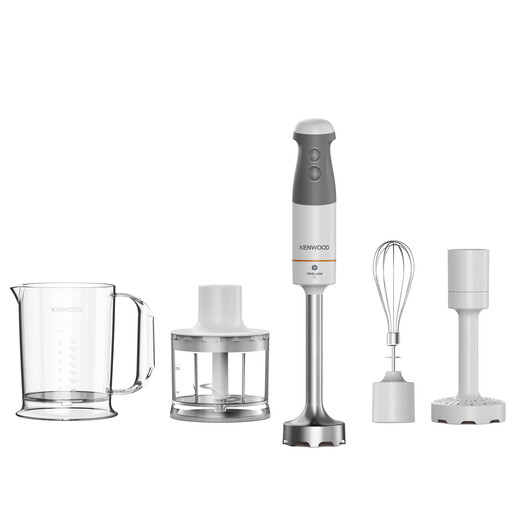
A hand blender for anyone who wants to blend soup straight in the pan; the product description also mentions sauces and smoothies.
 No image available
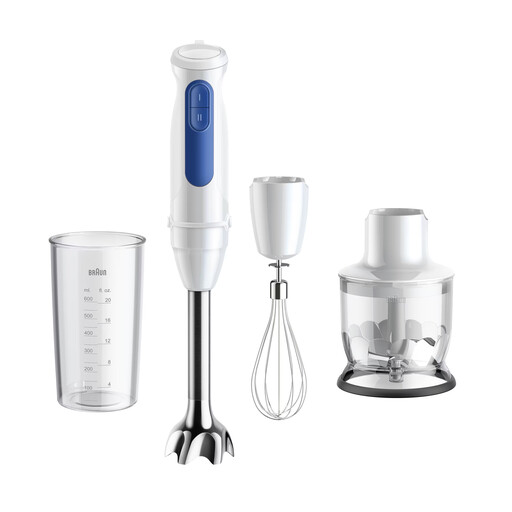
A hand blender for anyone who wants to blend soup; the product description lists blending and soups among its uses.
 No image available
A hand blender for soup and sauces; check the model’s cleaning instructions before washing any parts.
 No image available
This set combines a hand blender with a chopper and whisk for anyone who makes other preparations as well as soup. For hot ingredients, the product description mentions a heat-resistant bowl and small batches; the accessories need extra storage space and cleaning.
 No image available
A hand blender for anyone who wants to blend soup and other liquid or thick mixtures. The product description warns against processing boiling liquids; the included chopper needs extra storage space and cleaning.
Yes, cook hard vegetables such as carrots until tender first; they’ll be easier to blend afterwards. The Netherlands Nutrition Centre’s ginger soup recipe explains that the vegetables are cooked first and the soup is then blended with a stick blender.
Don’t assume you can. Let boiling liquid cool slightly first, check that the specific jug is suitable for hot mixtures, and follow the instructions on maximum fill level and lid, as advised by the Consumers' Association.
Check the manual for the exact model before putting any removable parts in the dishwasher. The Consumers' Association advises drying a blender jug thoroughly and washing the blades carefully by hand; clean the housing of a jug blender with a damp cloth.
In the Netherlands, a product must meet reasonable expectations, and if it develops a fault you should generally contact the seller. According to the Government of the Netherlands, there is no set statutory warranty period of two years; what you can expect from a product depends, among other things, on the product itself.
Relevant European safety requirements apply to electrical kitchen appliances placed on the market in the Netherlands. The Dutch government states that, after establishing conformity, the manufacturer affixes the required CE marking and draws up an EU declaration of conformity; a statement on a product page does not, by itself, prove that an individual appliance meets those requirements.