
Cook making small portions
You cook leek and potato soup in a pan and want to blend one or a few portions straight in it, without transferring the soup.


For small portions of already-cooked leek and potato soup, a stick blender is practical if you want to blend it straight in the pan and avoid transferring it and washing up extra items. A jug blender is a better choice if a smooth result is your priority, provided the jug is suitable for hot ingredients. A soup maker is worth considering if you also want to automate the cooking, as long as your portion is between the MIN and MAX markers. If necessary, let boiling soup cool slightly first, and follow the instructions for the model you choose.
You cook leek and potato soup in a pan and want to blend one or a few portions straight in it, without transferring the soup.
You prioritise texture and want to weigh up whether a jug blender is worth the extra space and washing up. The Consumentenbond outlines the differences between blenders and stick blenders for making soup.
You want an appliance to heat and blend your soup, and need to check whether your preferred small portion falls within the fill markers for the model you choose.
If you already cook the soup in a pan, first decide whether blending it straight in the pan, getting a smooth result or automating the cooking matters most to you. The Consumentenbond describes blending soup in the pan as convenient; a jug blender requires you to check that it can handle hot ingredients and to follow the instructions.
Choose this when: you already cook the soup in a pan and want to blend it there.
The trade-off: you don’t need to transfer the soup to a separate jug; the texture may be less even than with a blender.
Choose this when: a smooth texture matters and the jug you choose is suitable for hot ingredients according to its product specifications.
The trade-off: you’ll need to transfer the soup and allow for space for the jug and extra washing up; a standard blender won’t cook the soup.
Choose this when: you want to combine heating and blending programmes.
The trade-off: a specified minimum fill may be impractical for one small portion; check both the MIN and MAX markers on the model.
| What to consider | What should you check? | Who is this important for? |
|---|---|---|
| Blending straight in the pan | Whether the stick blender is intended for soup, and which blending foot and cleaning instructions apply to the model. | If I already cook soup in the pan, I want to blend it without transferring it and wash as few separate parts as possible. This is the main priority for approximately 36% of consumers. |
| Blending hot soup | Whether the jug or blending foot is suitable for hot ingredients; follow the instructions for cooling, filling and closing it. | I only want to blend hot soup in a way that’s permitted for the model I choose. Hot preparations are the main requirement for around 29% of consumers. |
| A smooth result | Whether the portion and mixture are suitable for the appliance according to its instructions and fill markers. | If an even texture matters more to me than blending straight in the pan, I’ll look for a suitable blender and accept the extra space and washing up. This is the main preference for approximately 21% of consumers. |
| Automatic cooking and blending | Which hot programmes the model offers, and whether your usual portion falls between the MIN and MAX markers. | I want to combine heating and blending, but only if my small portion is within the specified fill limits. This is the main requirement for around 14% of consumers. |
A large maximum capacity doesn’t tell you whether a small portion is within the appliance’s working range. For the Philips SoupMaker models mentioned, the liquid level must be between MIN and MAX.
Compare the amount you usually make with both markers on the exact model.
A higher minimum fill could mean making more soup than you intended.
A jug designed for cold mixtures isn’t automatically suitable for hot ingredients. Boiling liquid and a hot jug call for care: check the instructions and the maximum fill level.
Check the model’s specifications and follow the instructions for cooling, filling and closing it. The Consumentenbond advises letting boiling liquid cool slightly first.
For small portions, the preparation method, texture, washing up and space required also matter. The power ratings for the Braun MQ50236M contradict each other on the same product page.
Choose your preferred preparation method first, then check the specifications and included parts for the exact model.
Philips describes both stick blenders for soup and SoupMaker models that heat and blend.
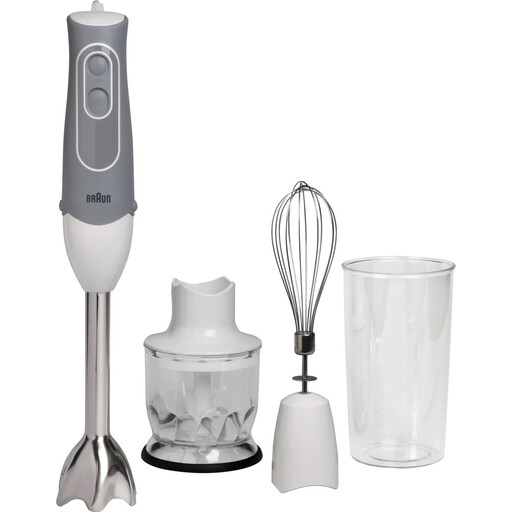
The MultiQuick 5 range includes stick blenders for blending in the pan; the MQ50236M mentioned comes with accessories.
Bosch describes stick blenders for making soup in the pan, and also offers the VitaPower MMB6177S jug blender.
According to Tefal, the Blendforce Cook BL5768F0 is a blender with a cooking function and hot programmes.
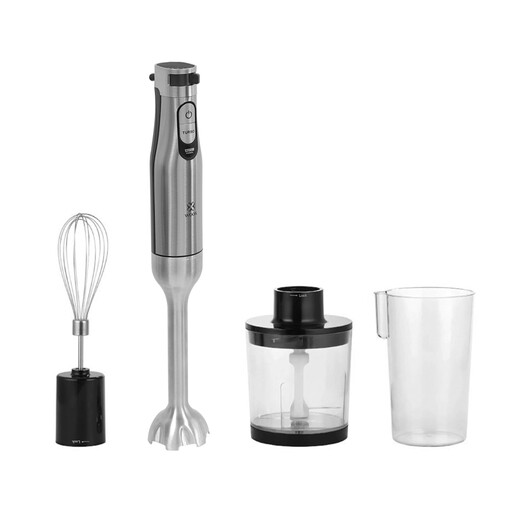
These Joybuy products are stick blenders for blending soup in the pan; check which accessories and settings suit your needs for each model.
 No image available
Suitable for blending in the pan; the product description mentions soup and purée.
220 V, 600 W and 2 speeds according to the product name. The product description lists a turbo button, removable dishwasher-safe parts and a 350 ml chopper.
 No image available
The stick blender design is suitable for blending in the pan; the product description mentions a measuring beaker for small portions.
The product description lists 21 speeds and dishwasher-safe parts.
 No image available
The product description lists soups as a suitable use, making it a good fit for blending in the pan.
800 W according to the product name. The product description lists 20 speeds, a turbo function and dishwasher-safe parts.
 No image available
The product name lists soup and purée as suitable uses, making it a good fit for blending in the pan.
600 W according to the product name. The product name lists 2 speeds, a whisk, a 500 ml chopping bowl and an 800 ml measuring beaker.
 No image available
The product name lists soup as a suitable use, making it a good fit for blending in the pan.
1200 W according to the product name. The product name lists variable-speed trigger control, a chopper, whisk and milk frother.
No. First check whether the specific jug is suitable for hot ingredients. The Consumentenbond advises letting boiling liquid cool slightly, not exceeding the maximum fill level, and securing the jug and lid properly.
Cook the vegetables until tender first, and add liquid if needed. The Consumentenbond advises against blending very solid ingredients such as mashed potato; soup with enough liquid is a different preparation.
It depends on the portion and the fill limits of the exact model. For the Philips SoupMaker models mentioned, the liquid level must be between MIN and MAX; a jug capacity of 1.2 l alone doesn’t tell you the minimum portion size.
Check the instructions for the exact model. According to the Consumentenbond, detachable blender parts can often, but not always, go in the dishwasher; clean the motor housing with a damp cloth.