
Colleague using a shared kitchen
Wants to make a smoothie with as little noise and splashing as possible, so pays attention to how the appliance works and to noise information for the exact model.


For a single avocado smoothie, a basic stick blender with a suitable beaker and detachable blending shaft is often the most straightforward choice; you won’t necessarily need a chopper or whisk. In a shared office, it’s worth paying extra attention to splashes, cleaning and noise. However, a manufacturer’s claim that a setting is quiet doesn’t prove that the appliance will disturb your colleagues less. Before buying, also check which product safety requirements apply to the specific model.
Wants to make a smoothie with as little noise and splashing as possible, so pays attention to how the appliance works and to noise information for the exact model.
Often makes a small portion and wants a beaker and blending shaft that are easy to clean after use.
Mostly wants to purée fruit and weighs up extra attachments against the storage space and washing-up they’ll require.
Start by deciding whether you’ll only be making smoothies or would also like to chop and whisk. Then consider how much time you’re prepared to spend cleaning up, and how important splashing and noise are in a shared space.
| What to consider | What to look for when buying | Who this matters to |
|---|---|---|
| Noise in a shared space | Look for independent noise test results for the exact model, measured under comparable conditions. Also check whether it’s appropriate to blend in the office at that time. | If I’m blending while colleagues are working nearby, I want to disturb them as little as possible; around 36% of consumers say noise is their top priority. |
| Splashes and quick cleaning | Check whether the blending shaft detaches, which parts the manual says are dishwasher-safe and whether the beaker is the right size for your portion. A claim about splash protection doesn’t rule out spills. | When I’m using a shared worktop, I want to be able to tidy up quickly after blending; around 29% of consumers put cleaning and splashing first. |
| Blending a small smoothie well | Check that the beaker and blending shaft are suitable for your portion. If texture is important, look for a smoothie test of the exact model; the stated motor power alone doesn’t prove how well it will blend. | If I mainly want to make a small avocado smoothie, the blending result matters more than extra features; around 21% of consumers say this is their top priority. |
| Keeping things simple, without unnecessary accessories | Check which parts are actually included, and only choose a chopper or whisk if you’ll use those functions. | If I mainly make smoothies, I don’t want to store or wash accessories I never use; around 14% of consumers put simplicity first. |
Electrical appliances placed on the market in the Netherlands must meet the applicable European safety requirements, including CE marking requirements where relevant. Business.gov.nl and the Government of the Netherlands explain these requirements; check the documentation for the exact model before buying.
Tefal describes the Quickchef+ HB67MB as having a quiet setting. But without an independent, comparable measurement for the exact model, you can’t know how disruptive it will sound in your office.
Where possible, look for independent noise test results for that exact model and check whether blending during working hours is allowed in your office.
You won’t necessarily need a chopper or whisk to make a basic smoothie.
Only choose extra attachments if you plan to use them for the tasks they’re designed for.
Extra parts take up more storage space and need cleaning after use.
Braun’s Dutch product page lists both 750 W in the technical specifications and 1000 W in the description for the MultiQuick 5 MQ 50001 M. A similar model name or retailer listing also doesn’t, by itself, prove that the information and applicable product safety documentation relate to the exact model.
Check the full model identity, technical details and applicable conformity documentation before choosing a specific appliance.
The ErgoMixx MSM66110 is an example of a basic stick blender supplied with a measuring beaker and detachable blending shaft.
The MultiQuick 5 MQ 50001 M may be worth considering if adjustable speed and a blending beaker are important to you.
The Quickchef+ HB67MB may suit you if you’d like to use a chopper and whisk as well as make smoothies.
This Joybuy selection includes stick blenders for smoothies, with options featuring a beaker, detachable parts or extra accessories.
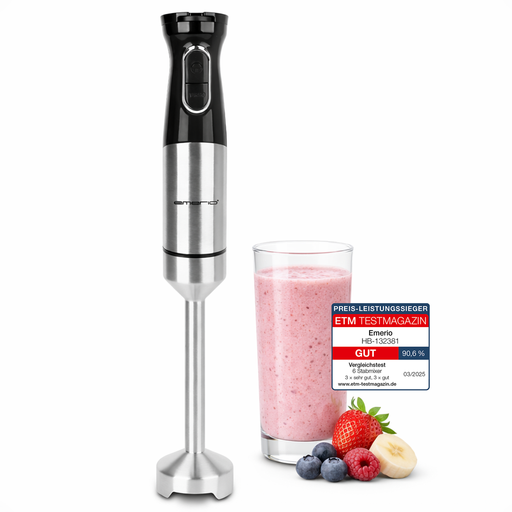 No image available
An option if you’re looking for a stick blender for smoothies with parts you can detach after use.
The product description lists a detachable stainless steel blending shaft and detachable parts that are dishwasher-safe.
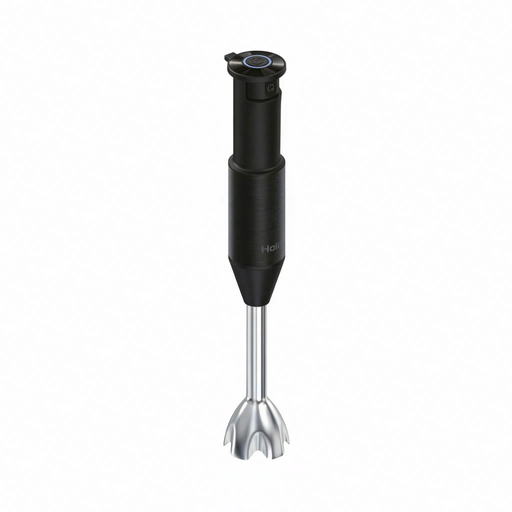 No image available
An option if you want to make a smoothie using the beaker supplied.
The product description lists a 0.9 l beaker and a blending shaft and blades that can be detached for cleaning.
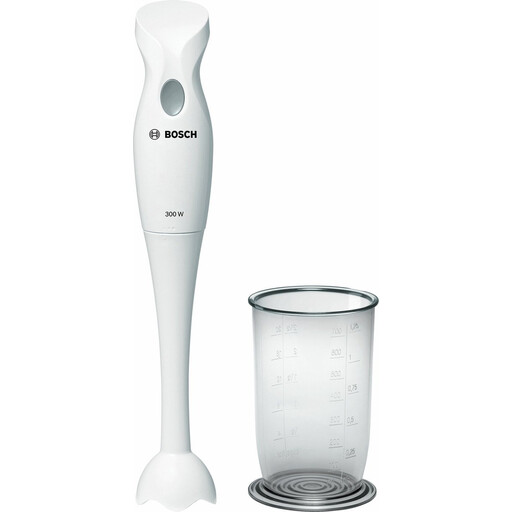 No image available
An option if you’re looking for a stick blender with a measuring beaker for a smoothie portion.
The product description lists a measuring beaker, a detachable blending shaft and detachable parts that are dishwasher-safe.
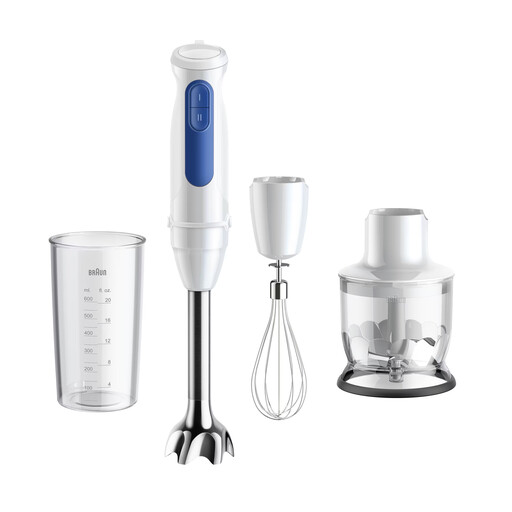 No image available
An option if you’d like to choose between two speeds when blending.
The product description lists two speeds, PowerBell VPlus and dishwasher-safe parts. Braun also mentions SplashControl; this doesn’t guarantee there won’t be any spills.
 No image available
An option if you’d like to use the supplied whisk or chopping beaker as well as make smoothies.
The product title lists two speeds, an 800 ml beaker, a 500 ml chopping beaker and a whisk. These extra parts take up space and need cleaning if you only make smoothies.
No, not for the basic preparation of puréeing fruit: the Consumers’ Association’s buying guide says you can also make smoothies with a stick blender. Only choose a chopper if you also want to chop ingredients separately.
Use a beaker that suits your portion and check the cleaning instructions for the blending shaft and other parts of the exact model. A detachable shaft can make cleaning easier; only parts specified by the manufacturer are dishwasher-safe.
Electrical appliances placed on the market in the Netherlands must meet the applicable European safety requirements; CE marking is relevant where it is required for the product. The Government of the Netherlands and Business.gov.nl explain these obligations, but check the documentation for the exact model before buying.
Keep the smoothie chilled if it contains ingredients that spoil quickly. The Netherlands Nutrition Centre recommends a fridge temperature of 4 °C and says that highly perishable ingredients such as milk should not be left out of the fridge for more than two hours; this isn’t a storage time that applies to every recipe.
For a consumer purchase in the Netherlands, the seller is responsible for the statutory guarantee. If the product breaks sooner than you could reasonably expect under normal use, the seller must offer an appropriate free solution, according to ACM ConsuWijzer; an additional manufacturer’s guarantee doesn’t replace that right.