
Soup cook with limited worktop space
You want to blend soup straight in the pan without taking up extra worktop space with a blender jug. Grip, splash control and room around the pan all matter.


If you mostly blend soup in the pan and have a small kitchen, start with a handy stick blender that doesn’t come with an extensive set of accessories. Also consider the grip, splash control, cord length and whether the blending shaft is removable; wattage alone won’t tell you how smooth your soup will be.
You want to blend soup straight in the pan without taking up extra worktop space with a blender jug. Grip, splash control and room around the pan all matter.
You regularly blend vegetables and compare how different models handle and blend your own recipes; motor power isn’t the only thing to consider.
You want to chop or whisk as well as make soup, and weigh up whether those extra functions are worth the storage space taken up by separate attachments.
When making fennel soup in a small kitchen, your choice mainly depends on your available worktop space, how easy the blender is to use around the pan and what else you’ll use it for.
| What to consider | What should you check? | Who should pay particular attention? |
|---|---|---|
| Splashes and control | Compare the grip, controls and shape of the blending shaft; check the instructions for using it in a pan. | If I’m blending soup straight in the pan in a small kitchen, I want to control the movement easily and keep splashes to a minimum. Around 36% of consumers say splash control and handling are their top priorities. |
| Worktop and storage space | Check the cord length, the size of the blending shaft and which separate parts are included with the version you’re considering. | I want to be able to use the blender by the hob without extra parts taking up space on the worktop or in an already full cupboard. Saving space is the top priority for around 29% of consumers. |
| Blending soup | Look at the controls, blending shaft and stated motor power; don’t treat wattage as a measure of soup texture. | If I mainly make soup, I want to be able to adjust the controls to suit what I’m making. Around 21% of consumers prioritise ease of blending. |
| Cleaning and other tasks | Check which parts are removable and whether the instructions say they can go in the dishwasher. | I want to be able to clean the blending shaft easily after cooking, or make sure I’ll actually use any extra attachments for other jobs. Easy cleaning or additional functions are the main consideration for around 14% of consumers. |
The Consumentenbond recommends at least 600 W for tougher jobs such as blending and chopping. This is buying advice, not a legal requirement or a guarantee of smooth fennel soup.
Wattage is a stated motor specification. On its own, it doesn’t tell you how well a particular model will blend fennel soup.
Compare the controls, blending shaft and intended use too. Treat manufacturers’ claims about speed or fineness as marketing claims, not independent test results.
A chopper or whisk adds extra functions, but also means more separate parts to store and clean.
Only choose extra attachments if you’ll actually use them for the tasks they’re designed for.
If the cord doesn’t reach the socket, it limits where you can use the stick blender. Cleaning instructions for the blending shaft can also vary between versions.
Measure the distance to your socket and check the product specifications and instructions for the exact model.
The MultiQuick 5 is worth considering if you want to weigh up the controls and the attachments you need.
The ErgoMixx MSM64110 is a basic model with a removable metal blending shaft and two speeds.
The Quickchef+ HB67MB is worth considering if you’ll use its extra chopping and whisking functions for more than just making soup.
ProMix models are worth comparing with stick blenders sold as accessory sets.
This selection includes basic stick blenders as well as versions with extra attachments. Compare them by their controls, storage needs and what you need to blend soup.
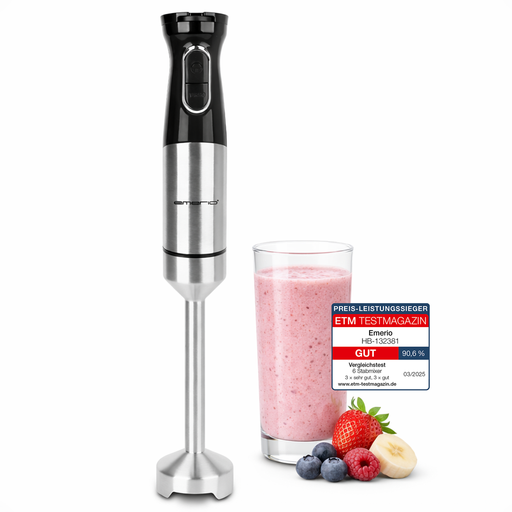 No image available
The product description mentions soup and hot ingredients; check the instructions before using it with hot soup.
1000 W; variable speed; removable stainless steel blending shaft; 1.2 m cord.
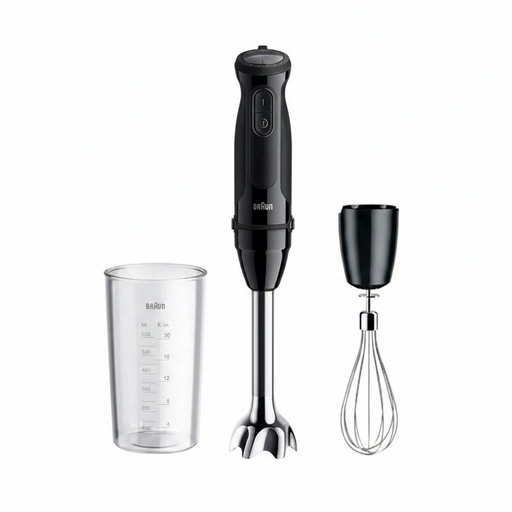
 No image available
Before buying, check whether this version is suitable for blending soup and which parts are included.
 No image available
The product description mentions soup and blending; compare the included parts with what you want to use and store in your kitchen.
The description lists three blades, a blender attachment and a measuring beaker.
 No image available
The product description mentions soup and SplashControl; check the instructions before using it in a pan.
1000 W; 21 speeds; one-handed operation; whisk and chopper. The listed food-contact parts are dishwasher-safe.
The whisk and chopper need extra storage space.
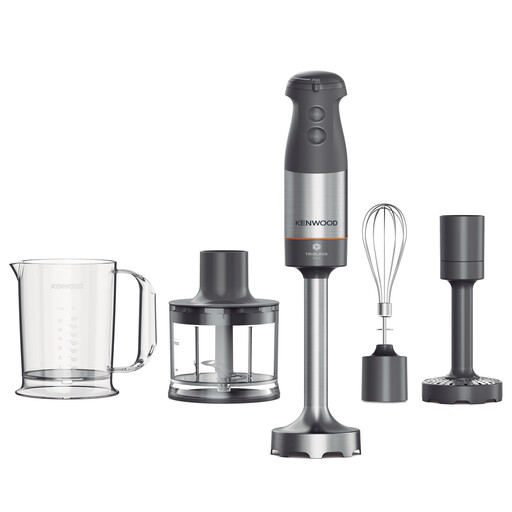 No image available
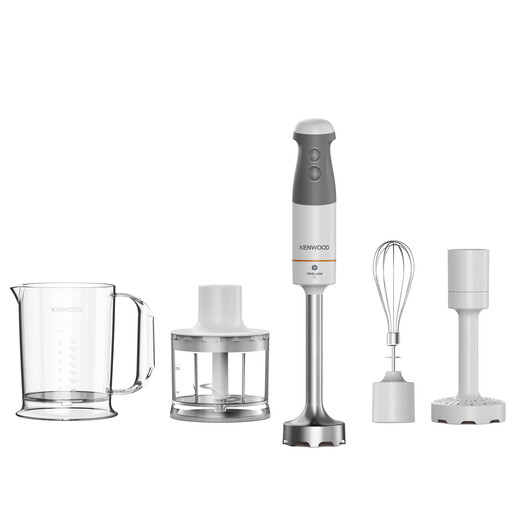
The product description mentions an extended XL blending shaft for larger quantities; check that it suits the pan you use.
1000 W; whisk, mini chopper, measuring beaker and masher.
The set includes several separate attachments that need storage space.
No, there’s no legal wattage requirement for blending soup. The Consumentenbond recommends at least 600 W for tougher jobs such as blending and chopping; also compare the controls and the instructions for the specific model.
Check that the blending shaft fits in your pan and that the cord reaches the socket. The Consumentenbond says a cord longer than 150 cm is handy if the socket is further away, while one shorter than 125 cm is short and inconvenient.
This varies by model and part. Check the manual; a removable shaft can be cleaned separately. Don’t assume the motor unit can get wet.
In the Netherlands, you’re entitled to a legal guarantee for as long as the product should reasonably be expected to last. If it breaks sooner during normal use, the seller must offer an appropriate solution at no cost, according to ACM ConsuWijzer. A manufacturer’s guarantee doesn’t replace your statutory rights.
Yes. The Netherlands Food and Consumer Product Safety Authority says CE marking is compulsory for electrical products. Electrical equipment with a voltage range of 50 to 1,000 V AC must also comply with the applicable EU Low Voltage Directive. The CE mark doesn’t tell you how well a stick blender blends soup.