
Vandaag of morgen in huis

Kwaliteit gegarandeerd

Welkomstaanbiedingen ontgrendelen: GRATIS bezorging | Tot 80% korting | Gratis 30 dagen JoyPlus-proefperiode
Download de app
A stick blender may seem like a straightforward purchase, but models vary considerably in power, controls, accessories and ease of cleaning. A budget hand blender may be perfectly adequate for soup and sauces, while a multifunctional stick blender with a chopper and whisk is better suited to families or keen cooks who prepare food regularly.
Before you buy a stick blender, pay particular attention to the following potential pitfalls.
Higher wattage sounds appealing, but it does not tell you everything about the results you can expect. The blade design, shape of the blending foot, rotation speed and speed control also play a part. A 300-watt stick blender may be suitable for soft ingredients and soup, while thicker purées, nuts or larger quantities may call for a more powerful model.
Also check whether the manufacturer specifies a maximum operating time. Some models may run continuously for around one minute before needing to cool down. This is important if you plan to prepare several portions one after another.
A stick blender with accessories may come with a whisk, measuring jug, chopper or masher attachment. This makes the appliance more versatile, but accessories also take up space and can increase the price. Think beforehand about the tasks you actually carry out:
Always check what is actually included in the box. Product titles may refer to several versions of the same model.
The motor unit must generally not be submerged in water. Check whether the blending foot is easy to detach and whether the removable parts are dishwasher-safe according to the instructions. Also pay attention to sharp blades, accessory locking mechanisms and protection against splashes.
Take extra care when working with hot liquids. Allow ingredients to cool if the instructions require this, and only use the stick blender in a suitable saucepan or measuring jug. Check the model’s specific safety instructions before buying.
For simple preparations such as soup, sauces, baby food and soft smoothies, a basic model is often sufficient. An electric stick blender with around 600 to 850 watts offers more reserve power for thicker mixtures. Models rated at 1000 watts or more are worth considering if you regularly process hard or fibrous ingredients, although they may be heavier or more expensive.
Power is not a guarantee of a finer result. According to Braun, the PowerBell VPlus technology in certain models is designed with an additional cutting blade and ribs in the blending foot. This is a product claim made by Braun; the practical result also depends on the ingredients, quantity and preparation method.
A single speed keeps operation simple. This suits users who mainly make soup, sauces or smoothies. With multiple speeds, you can start more gently with liquids and gradually increase the speed for thicker mixtures. A turbo setting provides additional power for a limited time, but it does not replace the correct operating time.
Variable speed control or a speed dial gives you more control than just an on/off button. Also consider the position of the buttons: controls that can be operated with one hand are practical while cooking.
A stainless-steel blending foot is well suited to everyday use and is usually easy to rinse clean. Its length is relevant when using tall pans. The Fritel HB 2870, for example, has a 25 cm blending shaft, while a compact model is easier to store in a kitchen drawer.
The capacity of the measuring jug varies. A 600 ml jug is suitable for small portions; 700 ml to 1 litre provides more room for a family or several portions. Bear in mind that the stated jug capacity is not automatically the maximum quantity suitable for blending. Follow the instructions for this.
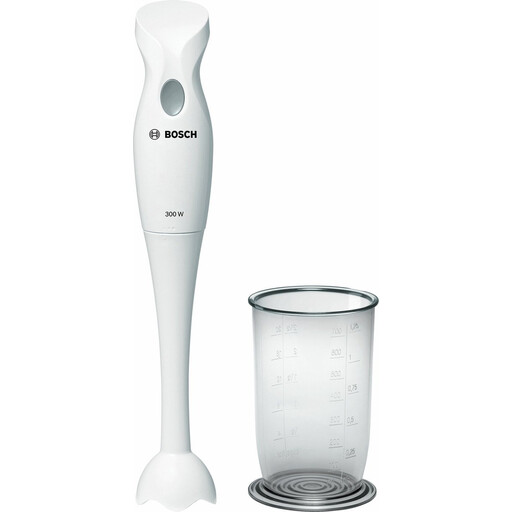
Why it suits this profile: This model has 300 W, a turbo function, one speed and a measuring jug. It offers straightforward everyday blending without a large selection of accessories.
The specifications are easy to assess: one speed, clearly stated power and removable parts that are dishwasher-safe according to the product information.
Compact size, turbo function and included measuring jug.

Why it suits this profile: With 1000 W, 25 speeds, turbo and a chopper, this model offers plenty of control for sauces, purées, smoothies and chopped ingredients.
You are not paying for wattage alone: the speed control, chopper and EasyClick exchange system are listed separately in the product specifications.
1000 W, 25 speeds, turbo setting and dishwasher-safe parts according to the product information.
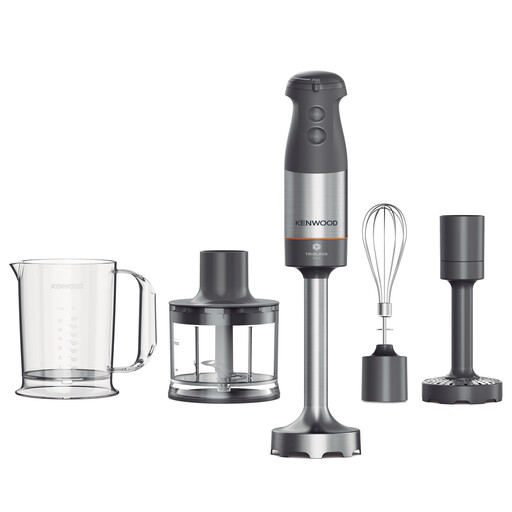
Why it suits this profile: The 1000W motor, longer XL blending foot and accessories for whisking, chopping and mashing are well suited to larger portions and a wide range of cooking tasks.
The longer blending foot is practical for tall pans, while the included accessories are clearly listed. However, check the dimensions and weight before ordering.
1000 W, XL blending foot, whisk, measuring jug, mini chopper and masher attachment.
We have put together a complete, up-to-date list of products that fully meet these strict selection criteria and the applicable European safety regulations.
It depends on your recipes. Around 300 to 650 watts may be sufficient for soup, sauces and soft vegetables. For thick purées, larger quantities or regular chopping, 800 to 1000 watts is more practical. As well as the wattage, look at the maximum operating time and the included accessories.
This varies from model to model. Only use a stick blender in accordance with the instructions. Some manufacturers recommend allowing hot liquids to cool first or removing the pan from the heat. Keep the blending foot fully submerged to reduce splashing, and never touch the blades while the plug is connected.
Its lifespan depends on use, maintenance and storage. Do not run the motor for longer than specified, avoid overloading it and clean the blending foot immediately after use. The motor unit must not be placed in water. In the European Union, consumers are generally entitled to a minimum two-year statutory guarantee in cases of non-conformity; additional terms may vary by seller or manufacturer.
