
Vandaag of morgen in huis

Kwaliteit gegarandeerd

Welkomstaanbiedingen ontgrendelen: GRATIS bezorging | Tot 80% korting | Gratis 30 dagen JoyPlus-proefperiode
Download de app
A stick blender takes up very little space but can handle a range of kitchen tasks. You can use it to purée soup, mix sauces, make smoothies or chop ingredients. However, not every model is suited to every job. A low price may be tempting, but a less powerful motor, awkward accessories or difficult-to-clean parts can quickly make a blender less practical.
A high wattage sounds impressive, but it doesn’t tell you everything about how practical a blender is. The blades, speed settings, operating time and accessories also affect how easy an electric stick blender is to use. A 500-watt model may be sufficient for soup, batter and soft ingredients, while more intensive use calls for closer attention to the maximum continuous operating time.
So, as well as checking the power, look at:
A 3-in-1 stick blender often comes with a whisk, chopper and beaker. That’s useful if you’ll actually use those functions. If you only plan to make soup and smoothies, you may end up paying for accessories that sit unused in a kitchen cupboard.
A stick blender with a chopper is handy for chopping onions, herbs and smaller portions of vegetables. A stick blender with a whisk is more practical for light mixtures, whipped cream or batter. Check the capacity, too: a 500 ml chopper and a 600 ml beaker are suitable for smaller portions, but aren’t necessarily large enough for a big pan or a full family recipe.
With a dishwasher-safe stick blender, this usually refers to the removable parts, not the motor unit. The motor, plug and cable must not go in water or the dishwasher. Check which parts the product description says are dishwasher-safe, and whether the blades can be removed safely.
For everyday blending, models with around 500 to 700 watts are a practical choice. Check the operating time as well. For example, the Braun MultiQuick 3 MQ3000WH specifies a maximum continuous operating time of one minute and automatic shut-off. This is useful to know if you plan to process larger quantities in succession.
A powerful stick blender isn’t automatically designed for prolonged use. Let the motor cool down between uses if the manual advises you to. Also, never use a stick blender in an empty beaker, and keep the blades clear of cutlery and other hard objects.
A supplied beaker makes it easier to blend smaller quantities. A 600 ml beaker is suitable for a smoothie, dressing or portion of sauce, for example. A 900 ml capacity gives you more room for soup or a larger batch, as with the Haier I-Master HHB5B2011.
Don’t fill a chopper above the marked limit. Too many ingredients can be processed unevenly and put extra strain on the motor. For hard ingredients, use short pulses instead.
Look for securely fitted accessories, a non-slip base and a comfortable grip. Always handle sharp blades carefully when cleaning. Unplug the blender before changing accessories.
Take extra care with hot liquids. According to the Russell Hobbs Desire product information, you should let hot liquids cool to below 80 °C before blending. To prevent splashing, fully submerge the blade before switching on the motor.
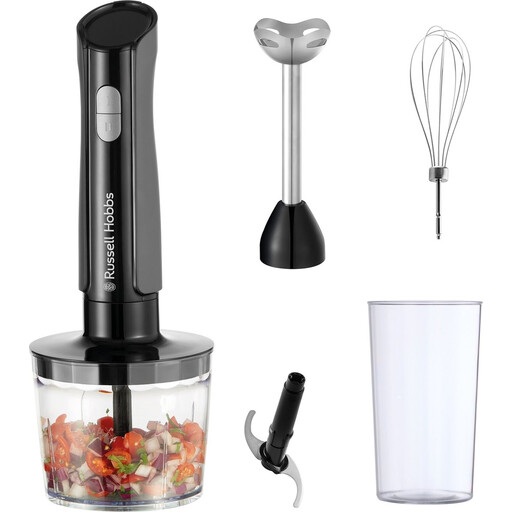
Why it suits this profile: This model combines blending, chopping and whisking in one set. It’s a good fit if you’d like to try different functions without buying several separate appliances.
The two speed settings and included accessories give you a clear idea of what this blender can do. The product description lists a 500 ml chopper bowl and a 600 ml beaker, so you can judge the portion sizes in advance.
500 watts, two speed settings, a whisk, chopper and beaker. The removable parts are described as dishwasher-safe in the product information.
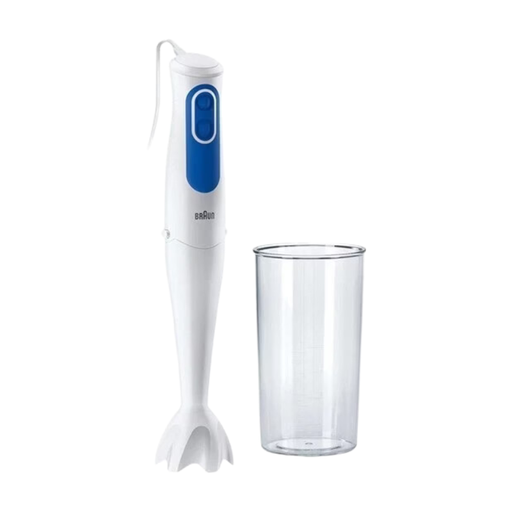
Why it suits this profile: This is a compact choice if you mainly want to blend and purée, and value a relatively high stated wattage and an included beaker.
The maximum operating time of one minute and automatic shut-off are clearly stated. You’ll know this model is designed for short blending sessions, rather than continuous use.
700 watts, two speed settings, a 600 ml beaker and removable dishwasher-safe parts, according to the product description.
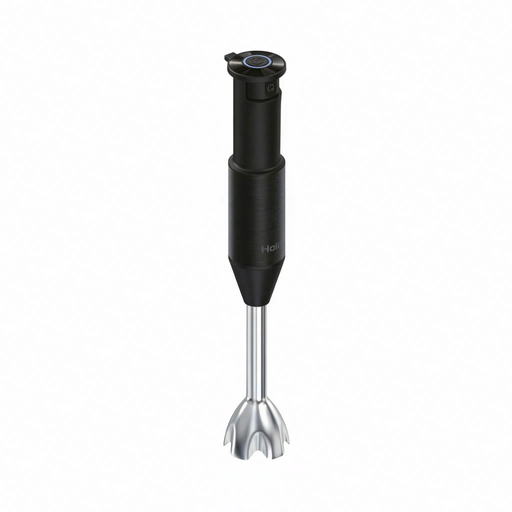
Why it suits this profile: The 0.9-litre beaker offers more room for family meals, soups and larger batches than many compact beakers.
The capacity is clearly specified upfront. The removable parts are described as easy to clean in the product information, so cleaning needn’t be a hidden drawback.
Three blades, a 0.9-litre beaker, an ergonomic handle and a design suited to soups, sauces, smoothies and purées.
We’ve put together a complete, up-to-date list of products that meet these strict selection criteria and the applicable European safety requirements.
That depends on the instructions for your particular model. Let hot liquids cool first, and check the maximum temperature in the manual. The motor unit must not come into contact with water. If possible, use a tall, sturdy beaker to reduce splashing.
Its lifespan depends on how you use it, clean it and how hard you push it. A model used only for short blending sessions will be under less strain than one used to chop hard ingredients every day. Follow the maximum operating time, avoid overloading the blender and regularly check that the blade, cable and fittings are undamaged. In the Netherlands, consumers are also entitled to at least the legal guarantee of conformity; any additional manufacturer’s warranty varies by product.
A stick blender is usually only used for short periods, so the energy used per recipe is limited. The stated wattage indicates the power while the blender is running; it doesn’t automatically tell you the total energy used per recipe. A shorter blending time and following the instructions matter more than the wattage on the packaging alone.
