
Vandaag of morgen in huis

Kwaliteit gegarandeerd

Welkomstaanbiedingen ontgrendelen: GRATIS bezorging | Tot 80% korting | Gratis 30 dagen JoyPlus-proefperiode
Download de app
A stick blender takes up very little space but can handle a surprising number of kitchen jobs. You can use one to make soup, sauces, smoothies and baby food, and sometimes to chop or whisk ingredients too. But it’s not a good idea to choose based on wattage or the number of accessories alone. Before buying a stick blender, compare how you plan to use it with the product specifications.
A powerful stick blender with 1,000 or 1,200 watts might sound appealing, but motor power alone doesn’t tell you how well it will blend. The shape of the blending foot, blade design, speed control and maximum operating time all play a part too.
A 150-watt model may be suitable for soft vegetables, milkshakes and simple sauces. For thick soups, nuts, hard vegetables or larger quantities, you’ll generally need more power and a suitable accessory.
A stick blender with accessories may look like good value, but check what’s actually in the box. A measuring jug, whisk and chopper each serve a different purpose. Pay attention to capacity too: a 350 or 500 ml chopper is designed for smaller portions, not a whole meal.
Also check whether the parts are dishwasher-safe. “Easy to clean” isn’t an official standard, so look at the product specifications to see which removable parts can actually go in the dishwasher.
A stainless steel stick blender can be a good choice if you often work with hot ingredients or want a sturdier build. That doesn’t automatically mean every metal model is suitable for boiling-hot liquids. Always follow the instructions and allow hot soup to cool sufficiently if the manufacturer recommends it.
Also look for a splash guard. A protective guard around the blending foot can help reduce splashes around the pan or bowl, but the result also depends on the speed, how full the container is and how you move the blender.
Models rated at around 300 to 650 watts are often designed for everyday tasks such as puréeing, making sauces and blending smoothies. More powerful models can be useful for thicker mixtures and more intensive use, but they’ll usually need to be run in short bursts and given enough time to cool down.
Variable speed control gives you more control than a single fixed setting. A low speed is useful for liquids and soft ingredients, while a higher setting or turbo function can help with firmer mixtures. More speed settings are only useful if the controls are easy to understand.
Look for:
For making soup and smoothies, a wide, stable blending foot is practical. If you plan to blend directly in a pan, check that the foot reaches deep enough and that the manufacturer allows the blender to be used with hot food.
A stick blender with a whisk is useful for whipping cream, making batter or preparing light, airy mixtures. A stick blender with a chopper is better suited to herbs, onions, nuts or small amounts of cheese. Check the maximum capacity, and don’t use a chopper as a substitute for a full-size food processor.
When buying a stick blender, also consider its weight and handle. A heavy model with lots of accessories may be versatile, but less comfortable to use for longer blending tasks.
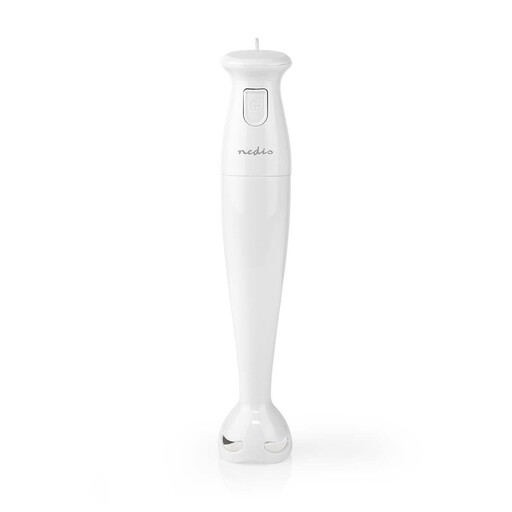
Why it suits this profile: A compact stick blender for simple tasks such as making soup, sauces, milkshakes and soft baby food.
The specifications are simple: one speed, 150 watts and no unnecessary accessories. That means you won’t pay for features you may never use.
One-button operation, compact design and a 1-metre cord.
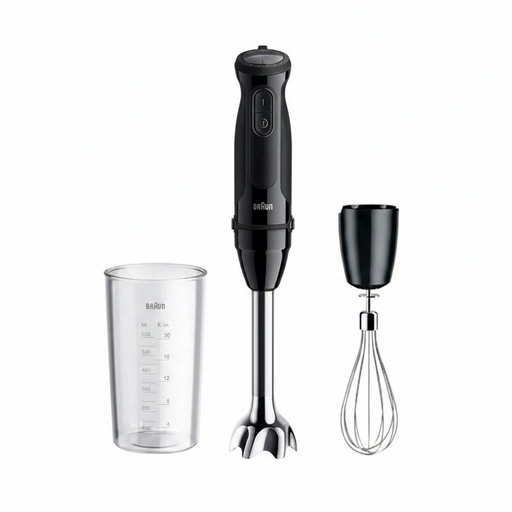
Why it suits this profile: A good fit for home cooks who want control over different preparations and regularly use a whisk.
This model offers 21 speeds, a turbo setting and an EasyClick system. The accessories aren’t just for show: they can be swapped to suit different tasks.
1,000 watts, whisk, 350 ml chopper and 600 ml measuring jug, according to the product information.
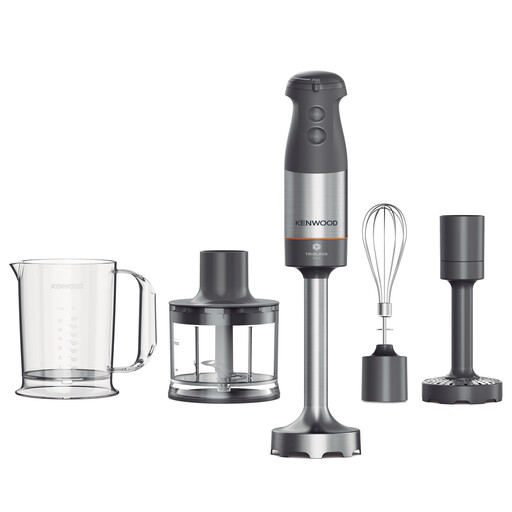
Why it suits this profile: An option for larger portions, deep pans and anyone who wants to handle several kitchen tasks with one appliance.
The longer XL blending foot is designed for larger quantities. Check the dimensions and weight before ordering, though, as a more fully equipped model needs more storage space.
1,000 watts, whisk, mini chopper, measuring jug and purée accessory, according to the product description.
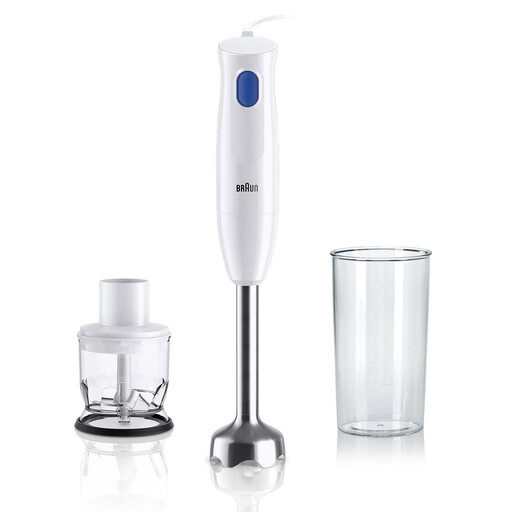
Why it suits this profile: A lightweight model for smoothies, desserts and sauces, with a system for quickly changing accessories.
You get a straightforward set rather than a large bundle of accessories. The product specifications list one speed, 450 watts and a 350 ml chopper.
Lightweight design, EasyTwist system and 600 ml BPA-free measuring jug, according to the product information.
We’ve put together a complete, up-to-date list of products that meet these strict selection criteria and current European safety requirements.
Only if the instructions say it’s safe to do so. Use a suitable pan or bowl, keep the blending foot sufficiently submerged and switch off the appliance before lifting the blender out of the liquid. Allow very hot liquids to cool first if the manufacturer recommends it.
Its lifespan depends on how you use, clean and store it. Don’t run the motor for longer than the instructions allow, and give the appliance time to cool down. Clean removable parts straight after use, and never immerse the motor unit in water.
A higher wattage can increase its theoretical energy use per hour, but stick blenders are usually only used for short periods. Actual running costs therefore depend mainly on the power rating, how long you use it for and how often you switch it on. As well as energy use, consider which features you really need.
