
Soup purée enthusiast
You want to purée cooked beetroot and other vegetables directly in the pan. The Consumers’ Association and Bosch describe puréeing in the pan as one way to use a stick blender.


For beetroot soup, choose a stick blender with a blending foot and controls that suit your pan and the way you work. A removable metal foot can be handy for brightly coloured soup. Choose a chopper or whisk only if you want to use those extra attachments, and follow the model’s instructions when blending hot soup.
You want to purée cooked beetroot and other vegetables directly in the pan. The Consumers’ Association and Bosch describe puréeing in the pan as one way to use a stick blender.
You want to purée your soup in a controlled way and reach the whole pan easily. The Consumers’ Association recommends placing the blending foot on the bottom of the pan or bowl before switching on the stick blender.
As well as making soup, you might want to chop ingredients such as onions or herbs, and weigh up whether a chopper is worth the extra parts. The Consumers’ Association treats this as a separate task from simply puréeing.
Start with the blending foot and controls for making soup, then decide whether extra attachments suit the other things you prepare.
| What to consider | What to look for when buying | Who is this important for? |
|---|---|---|
| Puréeing soup | Compare the blending foot and controls, and check whether the foot is removable. Wattage is a motor specification, not proof of a particular soup texture. | If you mainly want to purée cooked vegetables to your preferred soup texture, start by looking at the blending foot and controls. Around 38% of consumers put puréeing soup first. |
| Splashes and controls | Check the speed settings and the distance between the pan and the socket; follow the model-specific instructions for hot ingredients. | When blending soup in the pan, you’ll want to work steadily and position the blender properly. Around 31% of consumers prioritise controlled puréeing and easy-to-use controls. |
| Cleaning | Check the material and whether the blending foot is removable; consult the manual to see whether each part is dishwasher-safe. | After puréeing beetroot soup, you’ll want to clean the foot easily and allow for possible staining of plastic. Easy cleaning is a top priority for around 23% of consumers. |
| Extra preparation | Consider whether you really want to chop or whisk, and check which accessories are included with the exact version. | If you want to chop or whisk ingredients as well as make soup, an extra attachment can be useful, but it also takes up storage space and needs cleaning. Around 8% of consumers put this extra food preparation first. |
Wattage tells you the stated motor power, but on its own it doesn’t tell you how comfortable the controls are to use or whether the blending foot suits your pan. The Consumers’ Association also lists foot material, controls and intended tasks as factors to consider.
Compare the exact version for its speeds, materials, removable parts and included accessories. Treat manufacturers’ claims about results as just that—not as independent test findings.
The Consumers’ Association notes that a plastic blending foot can become stained by coloured food, and describes a stainless-steel foot as more robust than a plastic one.
Check the material of the blending foot itself, not just the finish of the body.
Puréeing beetroot can mean extra cleaning if the foot becomes stained.
A chopper and whisk are designed for tasks other than puréeing. You don’t need these extra attachments if you only make soup.
Decide in advance whether you’ll also regularly chop or whisk ingredients, and remember that extra parts need storage space and cleaning.
A manufacturer’s guarantee is an additional arrangement and is separate from your statutory rights. According to the Dutch Government, there is no fixed statutory guarantee period in the Netherlands.
Read any additional guarantee terms, but don’t judge your statutory rights solely by the number of years of cover stated by the manufacturer.
Bosch offers both straightforward stick blenders and more extensive sets with extra attachments.
The Braun MultiQuick 5 range includes the MQ50201M, which Braun offers with a 350 ml chopper.
According to Tefal, the Quickchef HB659838 combines a stick blender with a chopper and measuring jug.
Philips presents the 5000 Series HR2685/00 as suitable for soups and sauces, among other things.
This selection focuses on stick blenders for soup, from models designed mainly for puréeing to sets with extra accessories.
 No image available
A good fit if you want to purée soup and also use a chopper or whisk.
Removable stainless-steel blending shaft; the set includes a chopper and whisk.
For hot liquids, use a heat-resistant container and blend in small batches.
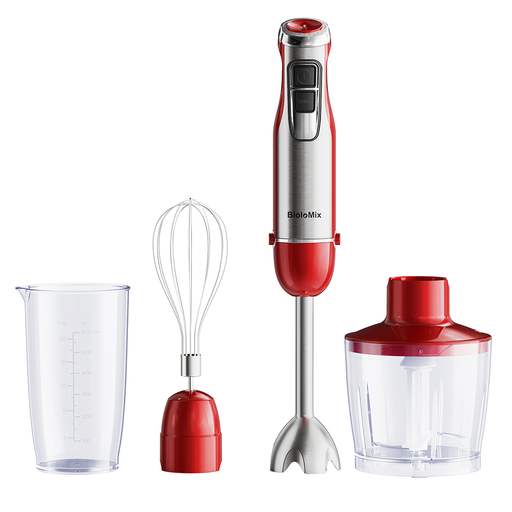 No image available
Suitable if you want to chop or whisk as well as purée soup.
The product name lists 1200 W and six speeds; the set description mentions a chopper and whisk.
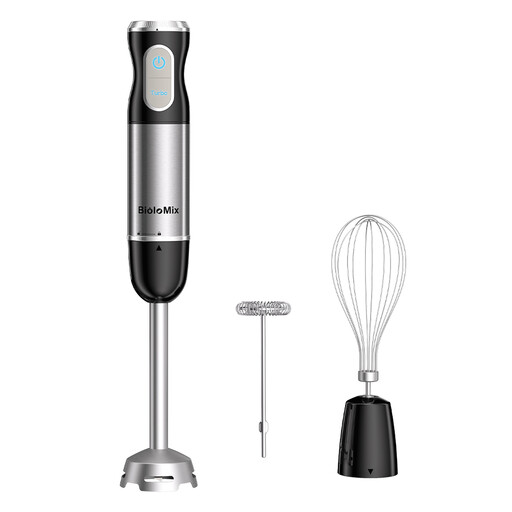 No image available
Worth considering if you’re looking for a hand blender with a removable design for puréeing.
The product name mentions a removable design and splash protection.
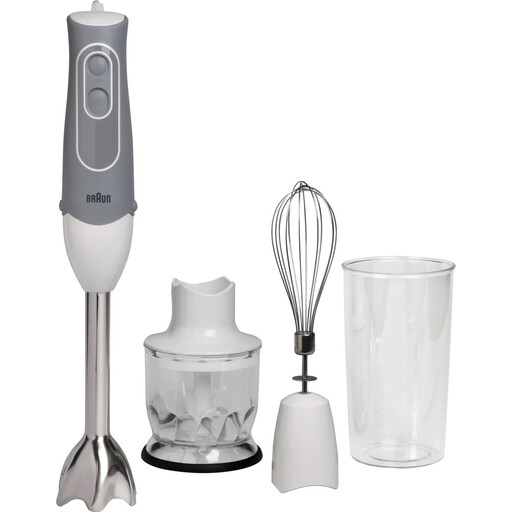 No image available
Worth considering if you want to purée soup and also use a chopper or whisk.
The product name lists 220 V, 600 W and two speeds; the description mentions a stainless-steel blending shaft, chopper and whisk.
Avoid running the appliance continuously for a long time; let it cool down between uses.
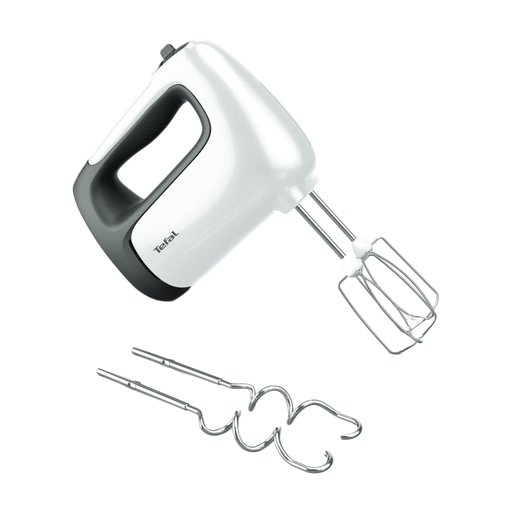 No image available
The description mentions a blending foot for soups and sauces. Consider this version if you also want to weigh up the stated speed settings.
Removable stainless-steel blending foot; the product name lists 450 W and five speeds.
No, you don’t need those extra attachments just to purée soup. The Consumers’ Association distinguishes puréeing from chopping or whisking, so only choose the extra parts if you want to do those jobs too.
The Consumers’ Association recommends placing the blending foot on the bottom of the pan or bowl before switching on the blender. Unplug it before removing attachments, and check the manual to see whether each part is dishwasher-safe.
According to the Dutch Government, you’re entitled to a product that works properly in the Netherlands. If it doesn’t, you may be entitled to a free repair, replacement or refund; there is no fixed statutory guarantee period.
CE marking is compulsory for electrical products covered by rules that require it. The Netherlands Food and Consumer Product Safety Authority explains that the Low Voltage Directive applies, among other things, to electrical equipment with a rated AC voltage of 50 V to 1000 V; check the electrical specifications of the exact model. The marking is a declaration made by the manufacturer, not proof of independent testing of its performance when making soup.