
Dip maker short on space
You mostly prepare small quantities and want to use and store a blending foot and beaker without needing a large set. The Voedingscentrum recommends using a stick blender to purée aubergine dip.


For roasted aubergine, a stick blender with a standard blending foot is usually the obvious first choice: you don’t necessarily need an extensive set of accessories. In a small kitchen, look for a detachable foot, a suitable beaker or bowl, and consider how much space the separate parts will take up. The Voedingscentrum also mentions a food processor as an option. Extra speed settings or a chopper are mainly useful if you’ll use those features for other recipes.
You mostly prepare small quantities and want to use and store a blending foot and beaker without needing a large set. The Voedingscentrum recommends using a stick blender to purée aubergine dip.
You want to purée cooked aubergine evenly and choose the speed as you blend. Compare the controls and blending foot on the exact model, not just its stated wattage.
You want to chop herbs, onions or nuts as well as make aubergine dip, and have space for a separate chopper.
Start with the blending foot and how you want to purée the cooked aubergine. Then consider whether extra attachments are worth the storage space they’ll take up for your other kitchen tasks.
| What to consider | What to look for | Who this matters to |
|---|---|---|
| Even puréeing | Check the blending foot and controls on the exact model; higher wattage alone doesn’t prove it will give a smoother result for this recipe. | If I want to purée the aubergine smoothly with the other dip ingredients, I look at the blending foot and controls. Around 33% of consumers pay the most attention to the puréeing result. |
| Limited space | Check which parts are included and measure the space available for use and storage. | In a small kitchen, I want to know whether the motor unit, beaker and any attachments will all fit in my cupboard. Around 27% of consumers prioritise saving space. |
| Easy cleaning | Check whether the blending foot is detachable and which parts the manual says are dishwasher-safe. | After puréeing, I want to clean the parts I’ve used without any fuss. The instructions for my model determine what’s suitable. Around 20% of consumers prioritise easy cleaning. |
| Chopping other ingredients | Check whether the exact version includes a chopper and whether its capacity suits the portions you usually make. | If I want to use the blender for herbs, onions or nuts too, a chopper could be useful, but I’ll need somewhere to store it. Around 20% of consumers consider versatility the most important factor. |
The Voedingscentrum’s recipe describes puréeing cooked aubergine with a stick blender or food processor; it doesn’t say you need a special puréeing foot.
Start with a standard blending foot, and choose an extra puréeing foot only if you’ll use it for other recipes too.
A stated motor power isn’t a measured result for aubergine dip. What’s more, a manufacturer’s claims about faster blending aren’t an independent comparison for this dish.
Compare the blending foot and controls on the exact models, and check independent test results for those models where available.
For the Braun MQ30001M, the series names differ between the manufacturer’s page and Joybuy’s. Braun also lists different power ratings in the product description and specifications.
Get clarification on the full version and any conflicting specifications before using them to compare models.
The ErgoMixx MSM66110 is an example of a stick blender with a detachable metal blending foot and measuring beaker.
According to Braun, the MultiQuick 3 MQ30001M has two speeds and a metal PowerBell VPlus blending foot.
The InfinyForce Pro HB95LD38 is an extensive set for anyone who wants to chop or whisk ingredients as well as purée them.
The SwissLine Silver is an alternative with several attachments, a processor mill and a stand.
These product picks focus on stick blenders for puréeing in a small kitchen, with a few options offering extra speed control or chopping functions.
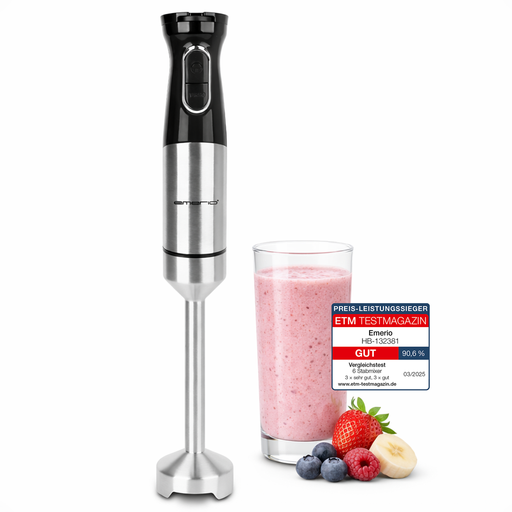 No image available
The product information lists puréeing sauces and making purées as uses. The detachable blending shaft can be handy if you want to clean it separately after use.
1000 W; variable speed; stainless steel shaft; two blades.
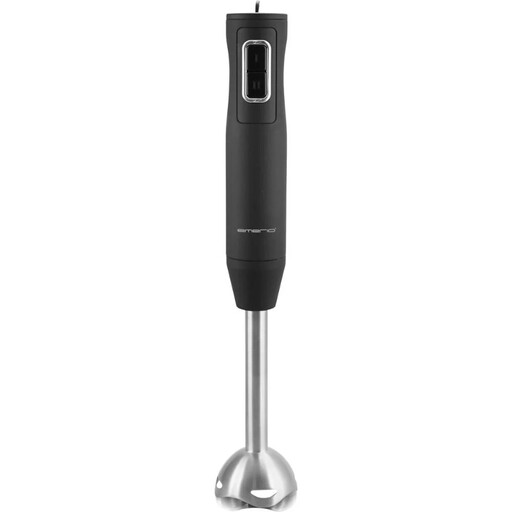 No image available
The product information lists sauces and purées among its uses. Two speeds give you a choice while blending.
Stainless steel shaft; two speeds.
 No image available
The product information lists puréeing and making sauces. The variable speeds could be useful if you want to adjust the speed while puréeing.
800 W; 20 speeds; turbo function; splash-proof design.
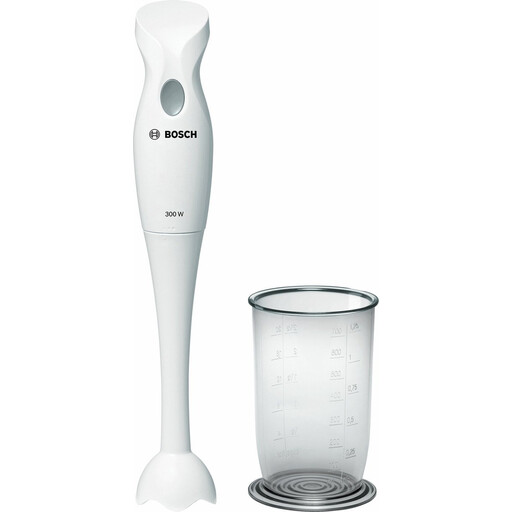 No image available
The product information lists puréeing and blending sauces. The included 0.6-litre measuring beaker could suit smaller portions.
0.6-litre measuring beaker; removable parts; parts are dishwasher-safe according to the product information.
 No image available
This version could suit you if you want to chop ingredients as well as purée them. The chopper adds parts to store and clean.
25 speeds; turbo function; chopper with three texture settings.
No, not to purée the dip. The Voedingscentrum recommends using a stick blender or food processor to purée cooked aubergine smoothly with the other ingredients. A chopper is mainly an optional extra for other chopping tasks.
Don’t assume so: which parts are dishwasher-safe varies by model. The Consumentenbond notes that a detachable foot is easier to clean. Follow the manual for your exact model, and don’t immerse the motor unit unless the instructions explicitly say you can.
There’s no evidence-based general wattage threshold for this recipe. The Voedingscentrum doesn’t specify a power rating for puréeing cooked aubergine. The Consumentenbond recommends at least 600 W for heavier tasks such as puréeing and chopping, but that isn’t a test result for aubergine dip or a legal requirement.
According to the Rijksoverheid, when you buy at a distance you usually have a 14-day cooling-off period. You also have a legal guarantee: if a product isn’t as it should be, the seller must provide a solution. Check the terms that apply to your purchase; an additional guarantee doesn’t replace your statutory rights.
The Nederlandse Voedsel- en Warenautoriteit states that CE marking is compulsory for electrical products. The low-voltage rules described by the NVWA apply to electrical equipment with a rated AC voltage of 50 V to 1000 V or a DC voltage of 75 V to 1500 V. Check which regulations apply to a specific appliance; CE marking isn’t an independent quality rating.