
Vandaag of morgen in huis

Kwaliteit gegarandeerd

Welkomstaanbiedingen ontgrendelen: GRATIS bezorging | Tot 80% korting | Gratis 30 dagen JoyPlus-proefperiode
Download de app
A steam iron can smooth out a shirt quickly, but not every model is suited to the same task. If you only look at the wattage or a striking marketing claim, you could end up with an appliance that needs frequent refilling, leaks water or produces too little steam for thicker fabrics.
The right choice depends mainly on how you plan to use it: do you want to iron a full basket of laundry every day, freshen up clothes just before heading out or steam garments vertically without an ironing board? Below, we explain what to look out for and which models suit different situations.
High wattage mainly means that an appliance can heat up quickly. It does not automatically indicate how much steam comes from the soleplate or how smoothly the iron glides over clothing. You should also consider the continuous steam output, the steam boost and the capacity of the water tank.
A garment steamer is handy for hanging shirts, dresses, coats and quick fresh-ups. However, a handheld steamer does not always leave clothes as crisp as a traditional iron, particularly when dealing with thick cotton, linen or sharp creases.
A compact handheld steamer is therefore not a direct replacement for every steam iron. Check the tank capacity too: 70 to 160 ml is practical for short sessions, but limited when steaming several garments.
A model with anti-drip, automatic shut-off or a self-cleaning iron still requires maintenance. Residual water can cause limescale and the soleplate can become dirty. Empty the tank after use and follow the manufacturer's maintenance instructions. Do not use perfume, fabric softener or other additives unless the manual explicitly permits them.
Continuous steam output is usually shown in grams per minute, for example 20, 40, 50 or 120 g/min. A higher figure can be useful when ironing a lot of clothes one after another, but your ironing technique and the soleplate remain important too.
The steam boost is a short, extra burst of steam for stubborn creases. Models such as the Braun TexStyle 1 offer, according to the product specifications, a steam boost of up to 120 g, while more powerful models list higher figures. Treat these figures as a point of comparison, not a guarantee that every crease will disappear in a single stroke.
A 200 to 350 ml tank is suitable for regular ironing sessions. For a larger household, a steam generator with a 1.3 to 1.7-litre tank may be more practical. These appliances do take up more space and often need around two minutes to be ready.
For last-minute use, a fast-heating iron or handheld steamer is an attractive option. The stated heat-up time for many compact models is between 15 and 35 seconds. Check whether this is the full ready-to-use time and always follow the garment label.
A ceramic soleplate or ceramic coating is often chosen because it glides smoothly over textiles. Also look at the shape of the tip, how easily you can reach areas around buttons and how the soleplate is cleaned.
Automatic shut-off is a useful safety feature, but it does not replace switching off and unplugging the appliance yourself. For travel, weight, dimensions, a foldable design and, where relevant, dual voltage are important. A standard Dutch model rated at 220-240 V is not automatically suitable for every country.
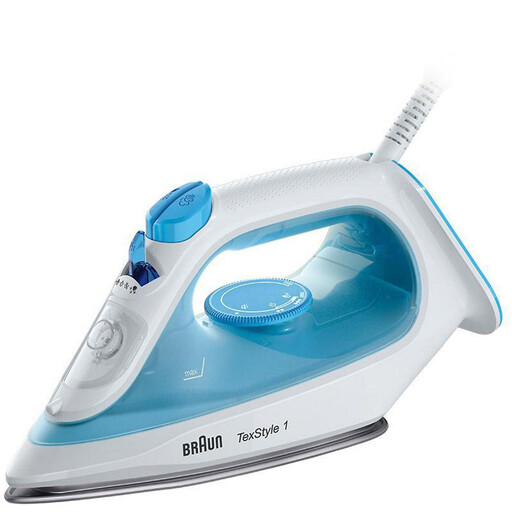
Why it suits this profile: A straightforward model for students, first-time buyers and households that mainly iron everyday clothes. The appliance has 2000 W of power, a 220 ml tank and a stated heat-up time of 35 seconds.
The specifications list more than just the power: they also state 25 g/min of continuous steam, a 120 g steam boost and anti-drip. This gives you a better idea of what you are getting than wattage alone.
Self-cleaning function, precision tip and continuous filling according to the product information.
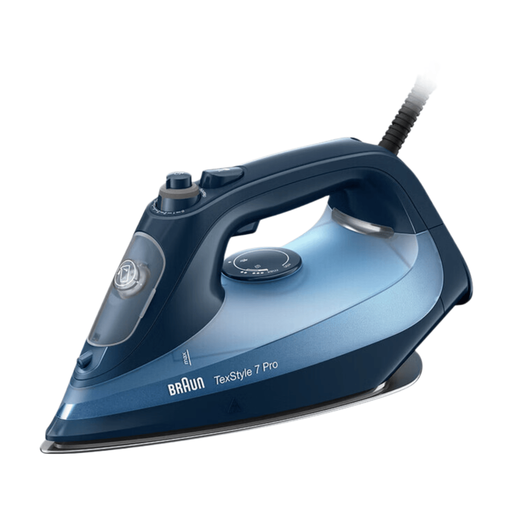
Why it suits this profile: Suitable for anyone who regularly irons shirts, bed linen and thicker fabrics, and values convenient controls and safety. The model lists 50 g/min of continuous steam, a 225 g steam boost and a 300 ml tank.
As well as the steam figures, self-cleaning, anti-drip and automatic shut-off are explicitly listed. This makes the maintenance requirements and safety features easy to verify.
FreeGlide 3D EloxalPlus soleplate according to the product specifications, plus a precision tip for seams and collars.
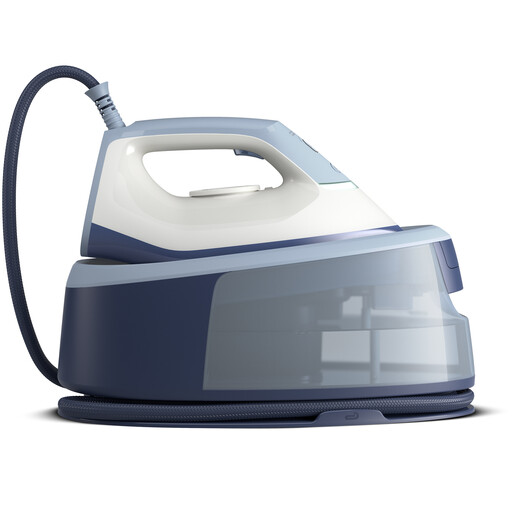
Why it suits this profile: A practical choice for larger households and long ironing sessions. The steam generator has a 1.4-litre water tank, 120 g/min of continuous steam and a vertical steaming function.
The large tank reduces the number of interruptions. At the same time, the stated heat-up time of around two minutes shows that this model is less suitable for a quick touch-up of a single garment.
Ceramic soleplate, automatic shut-off and a 350 g steam boost according to the product information.
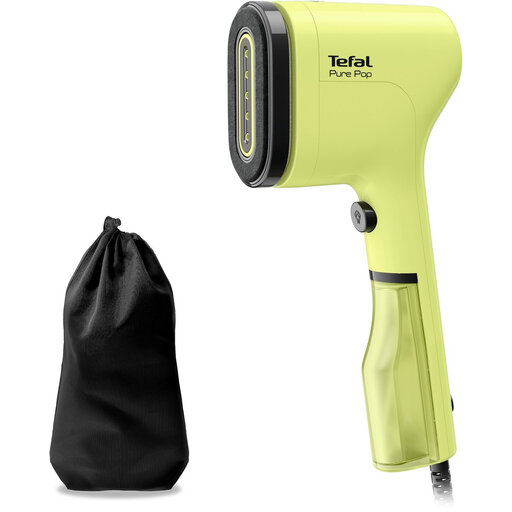
Why it suits this profile: This is a compact handheld steamer for freshening clothes on a hanger, without an ironing board. According to the product information, the appliance heats up in 15 seconds and weighs 0.71 kg.
The small 70 ml tank makes the appliance portable, but limits how long you can use it for. That makes it suitable for short sessions, not a full basket of laundry.
20 g/min steam output and a reversible attachment for removing lint and caring for clothes.
We have put together a complete, up-to-date list of products that fully meet these strict selection criteria and the applicable European safety regulations.
That depends on the length of use, the power rating and the amount of steam. A steam generator often has a larger tank, allowing it to work for longer without interruption, but it requires more space and has a separate base unit. For a few garments, a standard iron or handheld steamer is usually simpler.
Its lifespan depends, among other things, on water hardness, maintenance and how frequently it is used. Empty the tank after use, remove limescale according to the instructions and avoid scratching the soleplate. A self-cleaning function helps with maintenance, but does not always eliminate the need for descaling.
A handheld steamer is mainly suitable for light creases and hanging garments. Always check the care label and test delicate fabrics on an inconspicuous area first. For sharp creases in denim, linen or heavy cotton, a traditional steam iron generally offers more control thanks to the combination of heat, pressure and a targeted steam boost.
