
Cook with limited storage space
You want to steam Savoy cabbage without having to put an extra appliance away in a cupboard afterwards. Compare a basket for a pan you already own with an appliance that needs a permanent spot on the worktop.


You don’t need a steam oven to steam Savoy cabbage occasionally: the Netherlands Nutrition Centre also recommends using a steamer basket or heatproof colander in a lidded pan. If you also want to bake or reheat food regularly, a freestanding combination appliance could be worth considering if you have a permanent spot for it on the worktop. A built-in oven is only suitable if you have a compatible housing niche. For any appliance, check that it has a dedicated steam setting, how much space it needs and the instructions for its water tank.
You want to steam Savoy cabbage without having to put an extra appliance away in a cupboard afterwards. Compare a basket for a pan you already own with an appliance that needs a permanent spot on the worktop.
You’re looking for an appliance that can steam as well as bake, microwave or air-fry. Check which functions are available separately and whether the appliance would replace equipment you actually use.
You want to keep the worktop clear and have an existing or planned housing niche. Compare the appliance dimensions with the required installation dimensions; a freestanding appliance isn’t automatically suitable for a cupboard.
Start by thinking about where you’ll use or store the appliance. Then decide whether you need a dedicated steam setting or extra cooking functions, and finally consider maintenance.
A good fit if: steaming Savoy cabbage is your main need and you don’t want another appliance to put out or store away.
Bear in mind: you’ll need to use a hob ring and keep the water simmering; check that the basket fits inside your pan with the lid on.
A good fit if: you want to bake as well as steam vegetables and have a permanent spot for it on the worktop.
Bear in mind: the appliance takes up worktop space and its water system needs maintenance; don’t install it as a built-in appliance unless the manufacturer allows this.
A good fit if: you’re looking for one appliance that can steam, bake, grill and microwave.
Bear in mind: check the external dimensions and whether its functions could genuinely replace your existing appliances.
A good fit if: you have a suitable housing niche, or are adapting your kitchen, and want to keep the worktop clear.
Bear in mind: measure the niche and check the installation requirements; this isn’t a freestanding alternative.
A good fit if: you also want to air-fry and don’t need a full oven function.
Bear in mind: an air fryer with steam isn’t automatically a steam oven; check that the basket and portion size suit your needs.
| Consideration | What to check before buying | Who is this important for? |
|---|---|---|
| Placement and storage space | Compare the external dimensions with the space available and follow the appliance’s placement instructions. | If I don’t want to give up cupboard or worktop space, a pan basket or an appliance with a permanent spot becomes a bigger consideration. Around 33% of consumers give placement and storage space top priority. |
| Dedicated steaming | Check whether the model has a separate steam setting and which tray or container you’ll need for it. | If you want to steam Savoy cabbage without using a baking or grilling function, a dedicated steam setting is useful. Around 27% of consumers prioritise this feature. |
| Combining functions | Make a note of the functions you need and check whether they’re available separately. | If I want to use other cooking functions as well as steaming, I compare them with the appliances I already own. Around 20% of consumers place the combination of functions at the top of their list. |
| Maintenance and buying considerations | Check the instructions for the water tank, cleaning and descaling; also find out whether installation is required. | For consumers who prioritise maintenance and the overall buying decision, cleaning steps and installation requirements are important. Around 20% give these top priority. |
Some ovens use steam to help with baking. That doesn’t automatically mean you can use them to steam vegetables on their own.
Check the specifications and manual for the exact model to see whether it has a separate steam setting.
The Steba DG 40 manual explicitly states that it isn’t a built-in oven and sets out placement and ventilation requirements.
Measure a suitable permanent spot or choose a model designed to be built in.
An unsuitable location may mean you need a different setup or another appliance.
The external dimensions determine whether the appliance will fit; the internal space and accessories determine how you can arrange the cabbage inside.
Compare the external dimensions, the internal dimensions where provided, and the steam accessories required for the exact model.
Steba describes the DG 40 as a freestanding multifunctional steam oven for people who also want oven functions.
Smeg describes the COF01BLEU as a freestanding combination steam oven with a separate pure steam function.
According to Panasonic, the NN-DS59N combines steaming with oven, grill and microwave functions.
Bosch describes the CSG7361B1 as a compact built-in oven with full steam functionality, designed for a suitable housing niche.
Philips describes the NA541/00 as an air fryer with a dedicated steam function, for people who also want to air-fry.
This selection includes freestanding electric food steamers and hob-top steamers. Compare the space you’ll need to use the appliance with the room you have to store it afterwards.
 No image available
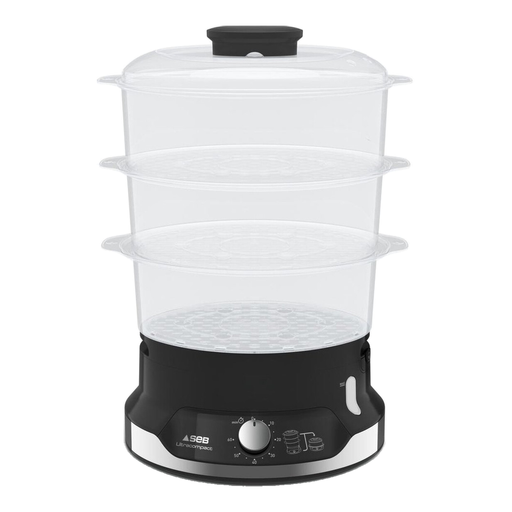
The three stackable steaming trays are a good option if you want to steam vegetables on their own and store the appliance compactly afterwards.
Capacity: 9 litres; three tiers. The product information lists a timer of up to 60 minutes, automatic shut-off and the ability to refill the water while steaming. The trays and steamer get hot, so let them cool before taking them apart or cleaning them.
 No image available
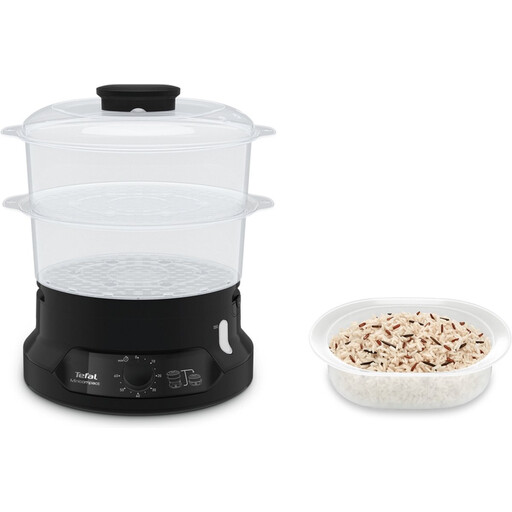
The foldable, nestable trays are designed for steaming vegetables and storing the trays compactly afterwards.
Two trays with a total capacity of 6 litres. The product information lists a timer of up to 60 minutes, automatic shut-off and the ability to refill the water while steaming.
 No image available
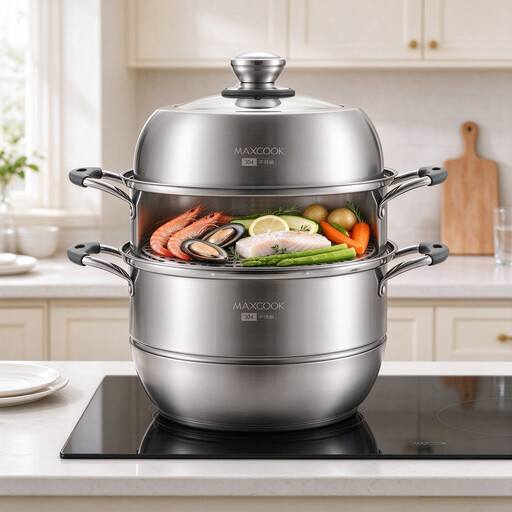
A hob-top steamer is an option if you don’t want to use an extra electric steamer; the product name says it’s suitable for induction and gas hobs.
Made from 304 stainless steel with heat-resistant silicone handles. According to the product information, the pan isn’t dishwasher-safe and hand-washing is recommended. The information advises using medium-low heat to help prevent discolouration.
 No image available
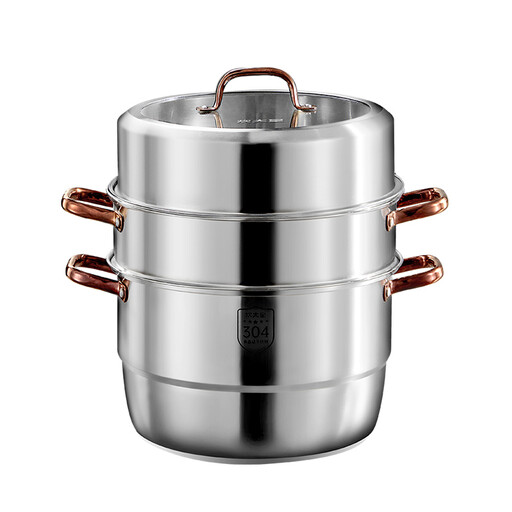
A steamer that sits on a pan could suit you if you want to steam vegetables on the hob without having to set up an electric appliance.
The product name describes a three-piece stainless steel steamer with a diameter of 26 cm.
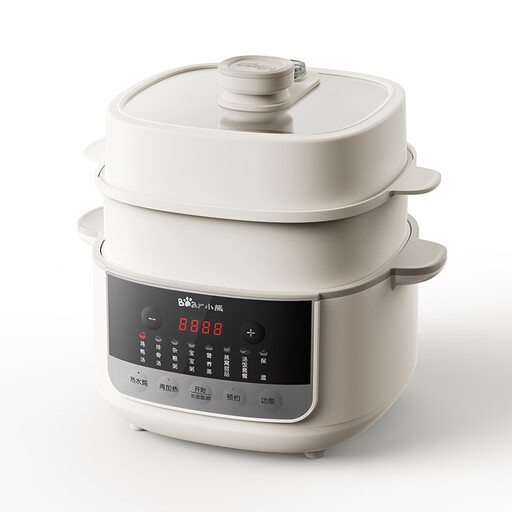 No image available
The product description mentions a steaming basket for vegetables while you cook rice or soup in the pot, for example.
The description lists a 2.5-litre pot, four small pots, a steaming basket and a clear glass lid.
No. The Netherlands Nutrition Centre also recommends using a steamer basket or heatproof colander in a lidded pan. If you’re using an electric appliance, follow the instructions for that specific model.
Only if the manual for that specific model allows it. The Steba DG 40 manual explicitly states that it isn’t a built-in oven; you should also follow the placement and ventilation requirements.
Look for a separate steam setting in the specifications and manual, and check which tray or container you’ll need for it. A mention of steam assistance alone doesn’t mean the appliance can steam vegetables on its own.
Follow the model-specific instructions for the water tank and descaling. Smeg lists a removable tank and descaling function for the COF01BLEU; Steba lists a descaling programme for the DG 40. This doesn’t indicate a universal descaling interval.