
Student with limited worktop space
Wants to know whether the appliance will fit, with enough space around it. The Netherlands Fire Service stresses that heat must be able to escape from appliances.


Choose a freestanding oven with its own steam function if you want to steam salmon and use the appliance as an oven too. A microwave with a steaming accessory may be a better fit if you mainly want to reheat food and have limited space. In either case, measure the space available and check how the exact model produces steam.
Wants to know whether the appliance will fit, with enough space around it. The Netherlands Fire Service stresses that heat must be able to escape from appliances.
Wants to know whether the appliance produces steam itself or whether the food is cooked in a separate steamer.
Weighs up steaming against reheating and baking, and wants to know which functions the chosen model actually has.
A good fit if: you want to steam salmon as well as cook dishes in the oven.
Bear in mind: the appliance takes up worktop space; check the clearance specified in the manual.
A good fit if: you also need a microwave and your portions fit in the supplied accessory.
Bear in mind: steaming with an accessory is not the same as using an oven with a built-in steam function.
A good fit if: your home already has a suitable, approved space for a built-in appliance.
Bear in mind: you need a suitable housing unit; this is not a freestanding appliance for your worktop.
| What to consider | What should you check? | Who is this important for? |
|---|---|---|
| Space and positioning | Measure the appliance, the doorway and the clearance specified in the manual. The Steba manual requires a 10 cm gap from the kitchen wall for the DG 30 and DG 40 and does not allow them to be built in. | If my worktop is small, I want to know whether the appliance will fit without blocking the required clearance. Around 34% of consumers say usable kitchen space is their top priority. |
| Steaming method | Check whether the model has a built-in water tank or steams using an accessory, and whether the required parts are included with that version. Panasonic describes these differences between the NN-DS59N and NN-GD39. | If you mainly want to know how the salmon is steamed, compare the method used by the exact model. Around 33% of consumers put the steaming method first. |
| Other cooking functions | Check which functions the model has, such as oven, grill or microwave functions; don't rely on the category name alone. | If I also want to reheat or bake food, I want to know which functions I’ll actually use. Around 20% of consumers say versatility is their top priority. |
| Cleaning and maintenance | Check how to clean the reservoir and steaming parts, and whether the model requires regular descaling. | If you want to keep post-cooking chores to a minimum, look for accessible parts and clear maintenance instructions. Around 13% of consumers say maintenance is their deciding concern. |
A microwave can steam food using a separate accessory. According to Panasonic, the NN-GD39 uses a Steam+ Pot, while the NN-DS59N has a built-in water tank and steam function.
Check how the exact model steams and which accessories are included with the version you choose.
An appliance may fit on paper but still be unsuitable for the space if there isn’t enough clearance for heat to escape, as specified in the manual. The Steba manual prohibits building in the DG 30 and DG 40.
Measure the entire space and follow the positioning instructions for the exact model before placing an appliance there.
The models mentioned use different steaming methods: the NN-DS59N has a built-in system, while the NN-GD39 uses a Steam+ Pot.
The DG 30 is a freestanding oven with a steam function, suited to anyone who also wants to cook dishes in the oven.
According to Smeg, the COF01BLEU is a freestanding combi steam oven with steam and conventional oven functions.
The MAX 49 MB is a compact freestanding microwave listed with a steam function.
These Joybuy options include freestanding steamers and a built-in steam oven; they are different types of appliance. Consider the steaming method and the space available. For a built-in model, you’ll also need a suitable housing unit.
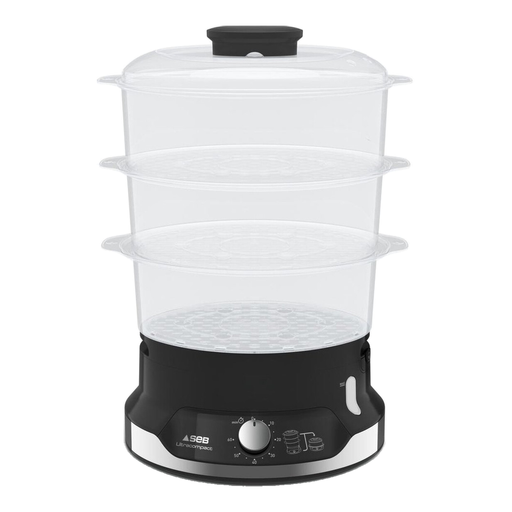 No image available
Could be a good fit if you’re looking for a freestanding steamer and want to store its stackable bowls compactly after use.
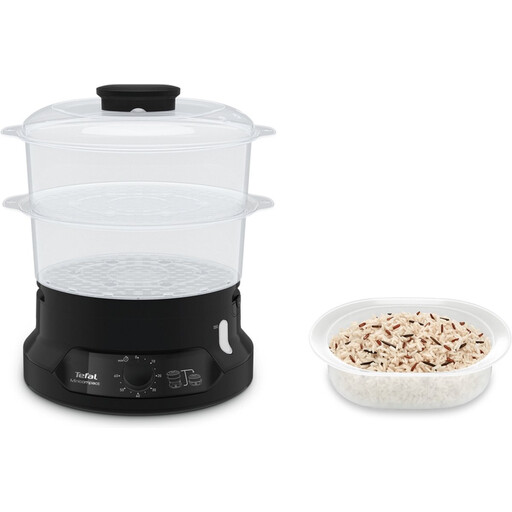 No image available
Could suit you if you want to steam fish and put the steamer away after use; check that the bowls are the right size for your portions.
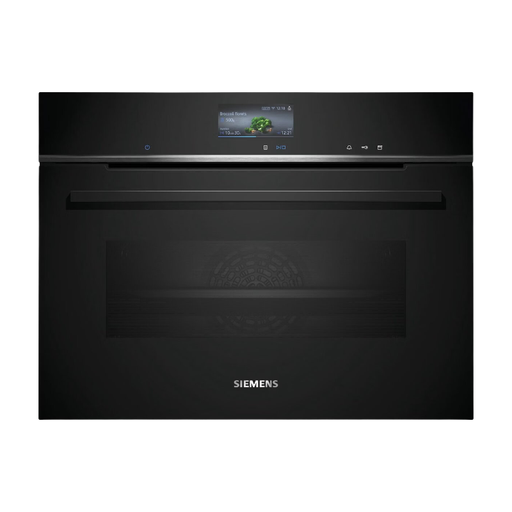 No image available
Only relevant if you have a suitable permanent space for a built-in appliance; the product information specifies installation in accordance with local regulations.
No, the method can differ. Panasonic describes the NN-GD39 as using a Steam+ Pot, while the NN-DS59N has a built-in water tank and steam function. Check which method and accessories come with the exact model.
Don’t assume that you can: follow the positioning instructions for the exact model. The Steba manual for the DG 30 and DG 40 says these appliances are not built-in ovens and specifies a 10 cm gap between the rear of the appliance and the kitchen wall. The Netherlands Fire Service recommends leaving enough clearance around appliances for heat to escape.
The Netherlands Nutrition Centre recommends cooking raw fish all the way through and storing it at 4 °C. Keep raw fish separate from cooked fish and defrost it covered in the fridge. Also follow the storage instructions and use-by date on the packaging; an automatic programme does not replace checking that the fish is cooked through.
Check the manual for instructions on cleaning the reservoir, drip tray and steaming accessories. Steba lists a descaling programme for the DG 30; Smeg lists a removable reservoir and descaling function for the COF01BLEU; and Panasonic says the NN-GD39’s Steam+ Pot is dishwasher-safe.
When you buy online from a business, you generally have 14 days to change your mind, according to the Dutch government. You’re also entitled to a product that works as it should, and the seller is your point of contact if something is wrong. The Dutch government says there is no fixed statutory two-year guarantee period in the Netherlands; a manufacturer’s guarantee is separate from your statutory rights.