
Rice cake baker with a narrow worktop
You want to steam a tin without the appliance taking over your available worktop space. The recipe will help determine which tin you need; the steamer’s capacity won’t tell you whether it will fit.


First, choose a steamer that fits your rice cake tin; the stated capacity in litres alone won’t tell you whether the usable width and height are sufficient. In a narrow kitchen, also compare the appliance’s dimensions when in use with your available storage space. Stackable tiers can be useful for preparing several small portions, provided the tin and lid fit on each tier.
You want to steam a tin without the appliance taking over your available worktop space. The recipe will help determine which tin you need; the steamer’s capacity won’t tell you whether it will fit.
You want to prepare several rice cakes or other dishes in one steaming session. So, check the usable space on each tier, not just the total capacity.
You want to store the baskets compactly after use, and take into account how easy the trays and water reservoir are to clean.
Start with the recipe and tin, then compare the usable space and external dimensions. Finally, consider whether extra tiers or compact storage would suit your routine.
| What to consider | What should you check? | Who is this important for? |
|---|---|---|
| Space for the tin | Measure the tin and compare it with the basket’s internal dimensions and clearance. A baekseolgi recipe by Maangchi uses a 20 cm cake ring; also follow the instructions on steam circulation in the manual. | If my recipe calls for a cake ring or individual moulds, I want to know whether they’ll actually fit in the steaming area. Around 34% of consumers put the fit of their rice cake tin at the top of their list when buying. |
| Worktop space | Compare the appliance’s dimensions when in use with the space available, allowing room to open the lid and top up the water. | With a narrow worktop, I want to know how much space the steamer takes up when in use. Around 33% of consumers give available worktop space top priority. |
| Portions per steaming session | Check the usable dimensions of each tier and whether the tin, food and lid will all fit together; the total capacity in litres doesn’t tell you the size of an individual basket. | If I want to make several small cakes at once, I look at the space on each tier. Around 20% of consumers prioritise making several portions in one steaming session. |
| Storage and care | Check the storage dimensions, which parts are dishwasher-safe and the care instructions for the model. | If my cupboard space is limited, I want to know how to store and clean the baskets. Around 13% of consumers give storage and care top priority. |
In a multi-tier steamer, the stated capacity is divided between separate baskets. A recipe may specifically call for a 20 cm ring.
Decide on the recipe and tin first, then compare the internal dimensions and clearance of the basket you’re considering.
If the tin doesn’t fit, you may need a different tin or an extra steaming session.
Stackable or nesting baskets may save storage space, but they won’t tell you how much room the assembled appliance takes up on your worktop.
Check both the dimensions in use and the storage dimensions, and allow room to open the lid.
The appliance may take up part of your worktop while steaming.
A rice bowl isn’t automatically the same as the ring, lined basket or individual moulds specified by a recipe.
Compare the supplied insert with your recipe’s method and check that the tin fits under the lid.
Some methods may require a separate tin or lining.
According to WMF, the KITCHENminis 0415090011 has two independently adjustable zones.
According to the manufacturer, the Cook@Home 19270-56 combines several steaming baskets with a separate rice bowl.
According to Tefal, the VC502D10 has three tiers and a rice bowl, while the Ultracompact VC2048 is designed for stackable storage.
Braun describes the TributeCollection FS 3000 as a steamer with nesting baskets.
These Joybuy products combine steaming with a steamer pot or rice cooker. For each model, check that the usable space and supplied insert are suitable for your rice cake recipe.
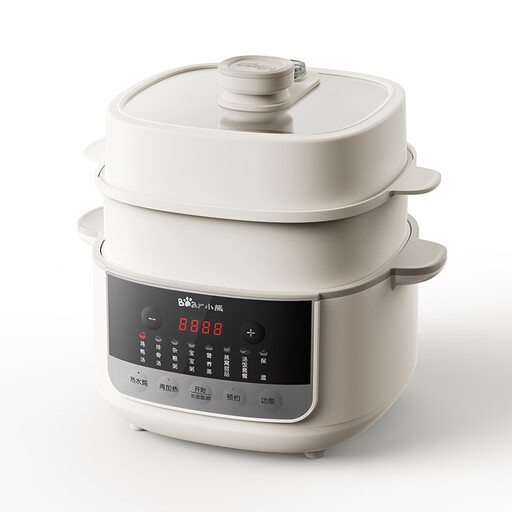 Image unavailable
The steaming basket and smaller pots offer different ways to arrange your food; check whether your cake tin will fit in the steaming area.
2.5-litre main pot; four 0.4-litre pots; transparent glass lid.
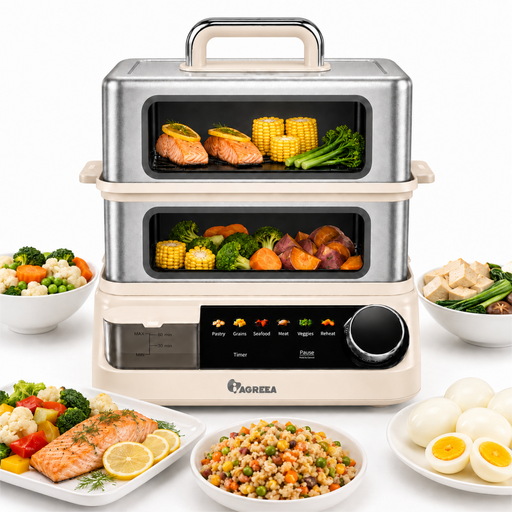 Image unavailable
The two removable trays provide separate tiers; check that your tin fits within the tray dimensions.
14 litres; 2000 W; 300 × 230 mm trays; 2.5-litre water tank; six programmes, including Pastry.
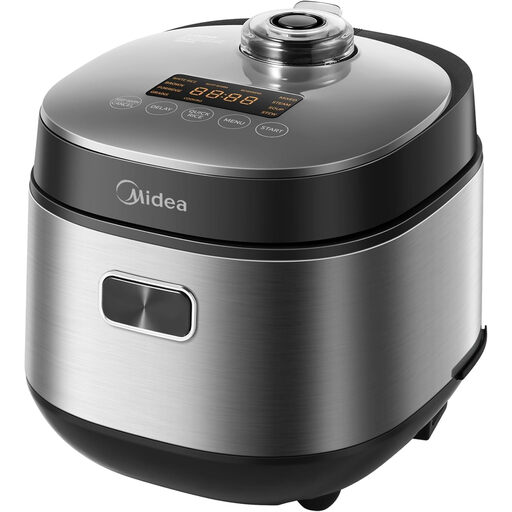 Image unavailable
The steaming insert lets you steam food; check that the insert and available space are suitable for your recipe.
2-litre capacity; timer; removable inner pot; six temperature settings.
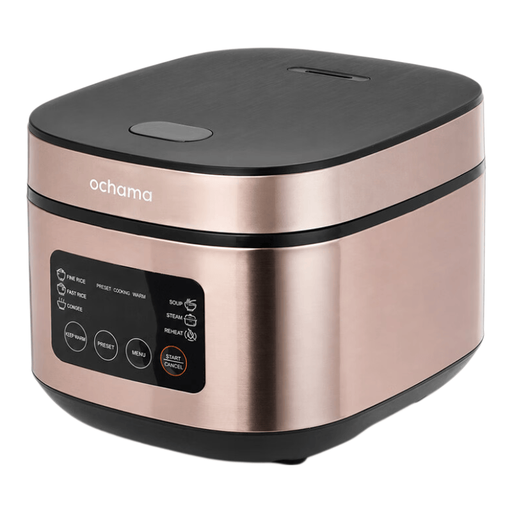 Image unavailable
The supplied steaming basket can be used alongside the rice cooker functions; check that its dimensions suit your cake tin.
4 litres; 930 W; six cooking functions; ceramic non-stick coating according to the product name.
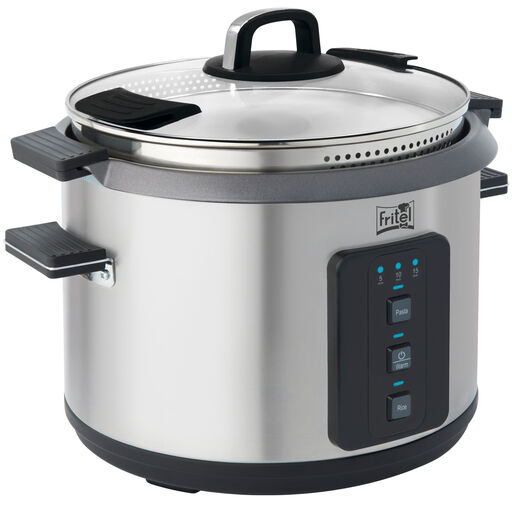 Image unavailable
The steaming function is explicitly listed; check whether the supplied bowl and steaming area are suitable for your rice cake recipe.
6-litre capacity; 1100 W; three functions; removable bowl.
No, it depends on the recipe. A baekseolgi recipe by Maangchi uses a damp cloth and a cake ring on the steaming rack; another rice cake recipe uses individual moulds. Choose the insert to suit your recipe and check that the tin and lid fit inside the appliance.
Follow the model-specific instructions for filling, cleaning and descaling. Philips lists limescale build-up as a possible reason for longer steaming times on certain models; check whether that advice applies to yours. Brandweer Nederland advises leaving enough space around electrical appliances for them to release heat.
Contact the seller. According to the Dutch government, statutory rights apply in addition to any manufacturer’s guarantee, but there is no fixed statutory guarantee period for all products. What you can expect depends, among other things, on the product and how it is used.
No. According to the European Union’s Your Europe website, CE marking is only required when the relevant EU rules prescribe it for the product; the manufacturer uses it to declare that the product complies with those rules. Parts that come into contact with food must also meet the relevant requirements for food contact materials, as explained by the Netherlands Food and Consumer Product Safety Authority.